
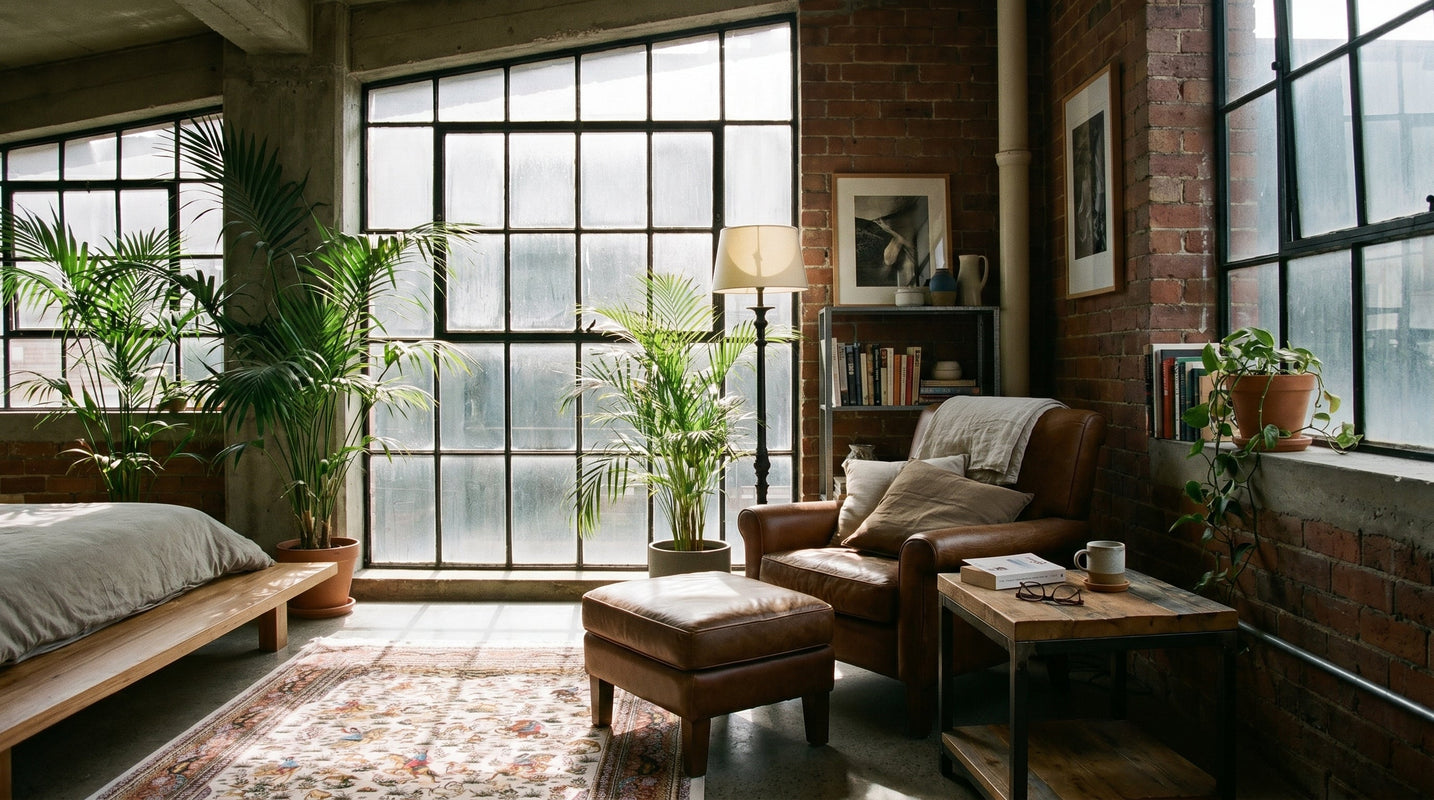

Inside a Melbourne Winter Living Room That Warm Minimalism Built
Zagrosa · Interior Living
Warm minimalism is reshaping how Australians furnish their homes, and the evidence is already on the floor. This composite Melbourne living room walks through every deliberate decision, raw texture, restrained palette, layered light, that makes the movement feel less like a trend and more like a return to something essential. The Ahoo anchors the space, but it does not work alone.
The rug does not decorate a warm minimalist room, it gives the room its gravity.
Pinterest searches for warm minimalism have risen sharply over the past twelve months. The floor is where it begins.
The Doorway: What Warm Minimalism Actually Promises
Stand at the entrance of this Melbourne living room and nothing announces itself. The walls carry a raw plaster finish in a tone that sits between bone and pale clay, a colour that does not read as white in afternoon light and does not read as grey by evening. The skirting boards are the same tone as the wall. The architecture recedes, deliberately, so that what sits within the room can speak without competition.
This is the first principle of warm minimalism: restraint is not absence. The room is full. It is full of texture, weight, and intention. The difference between this and a cold, sparse interior is felt before it is understood. There is warmth here because every surface contributes something tactile, something human.
Warm minimalism, as it is reshaping Australian interiors, is not about owning less. It is about choosing with more precision. Each object carries a reason for being in the room. Nothing is decorative in the dismissive sense. Everything is decorative in the original sense, from the Latin decorare: to make fitting.
The Floor: Setting the Emotional Temperature
Before a single piece of furniture is placed, the floor makes a decision about what kind of room this will be. Here, wide-format European oak runs in a direction that draws the eye toward the window. The boards are oiled, not lacquered, so the grain remains open and the surface absorbs rather than reflects. Warm timber at this scale becomes structural colour, a field of amber and honey that sets the room's undertone.
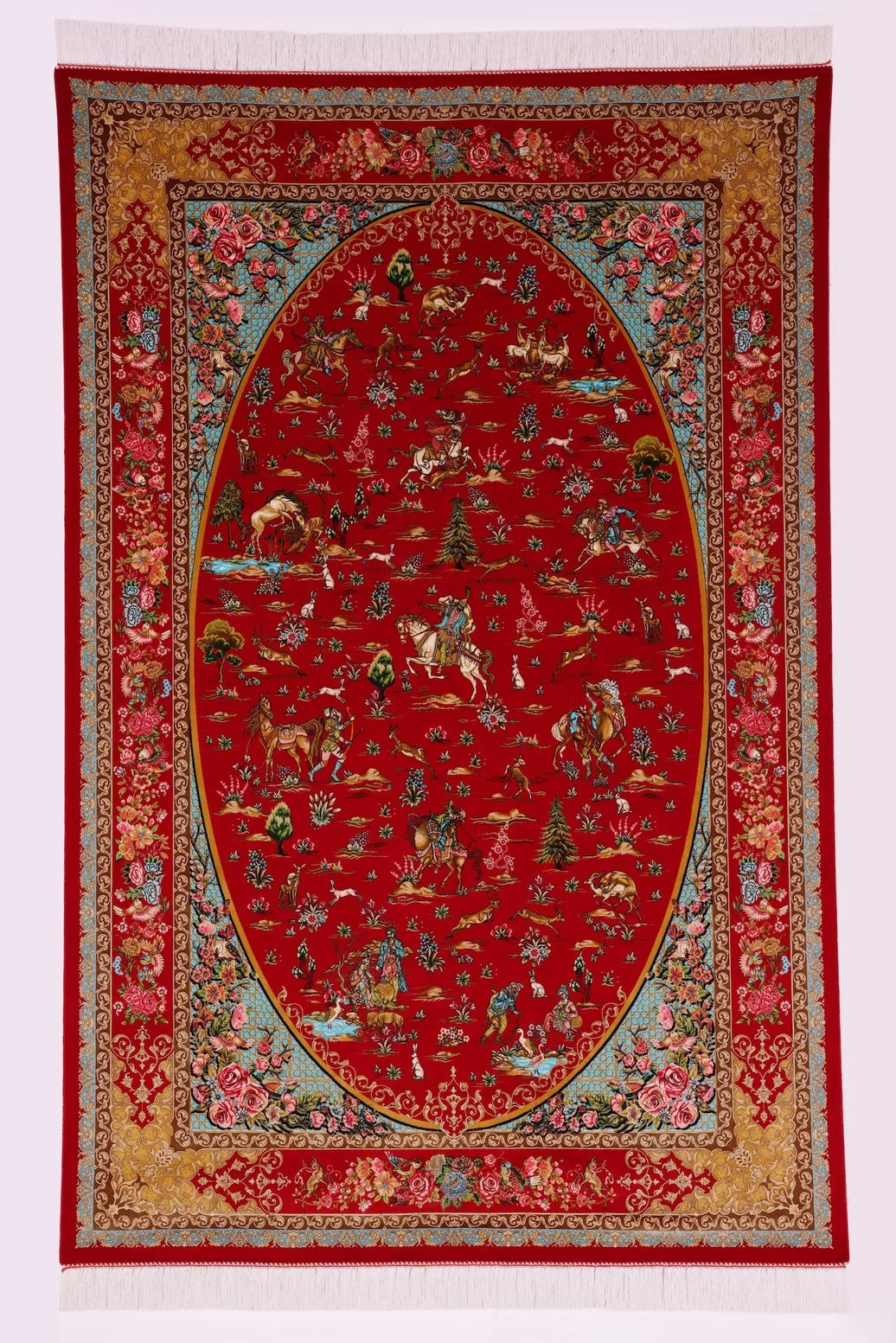
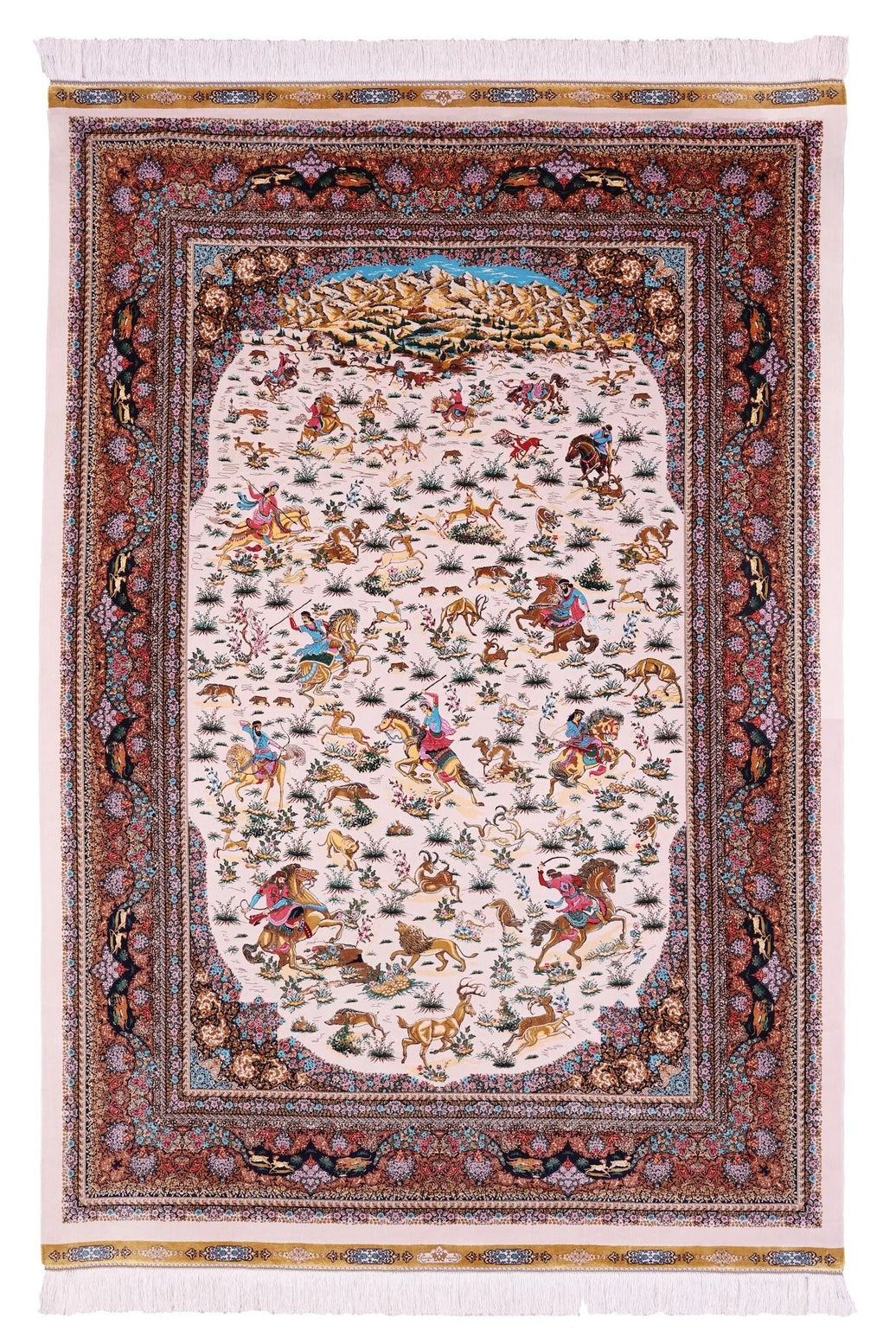
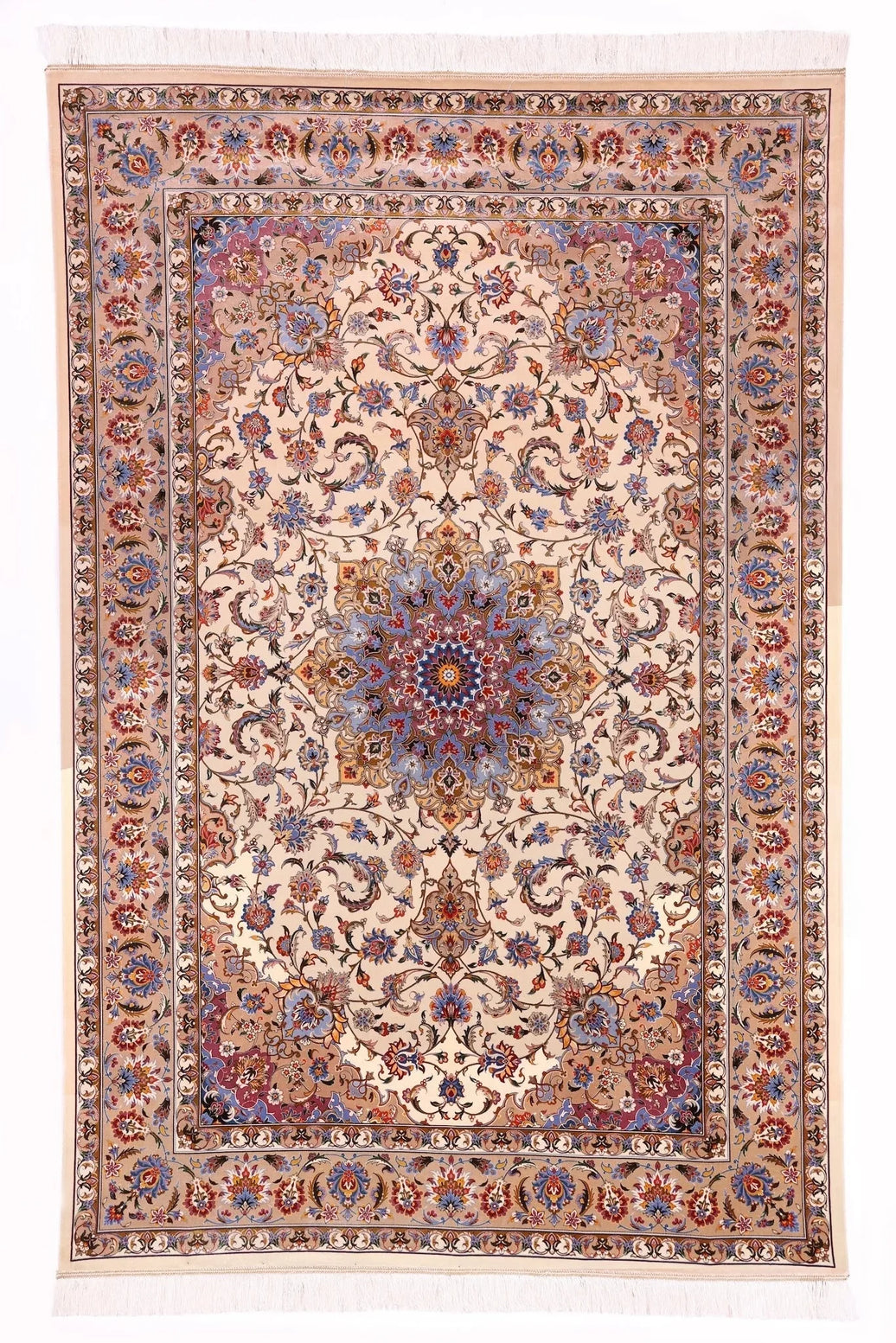
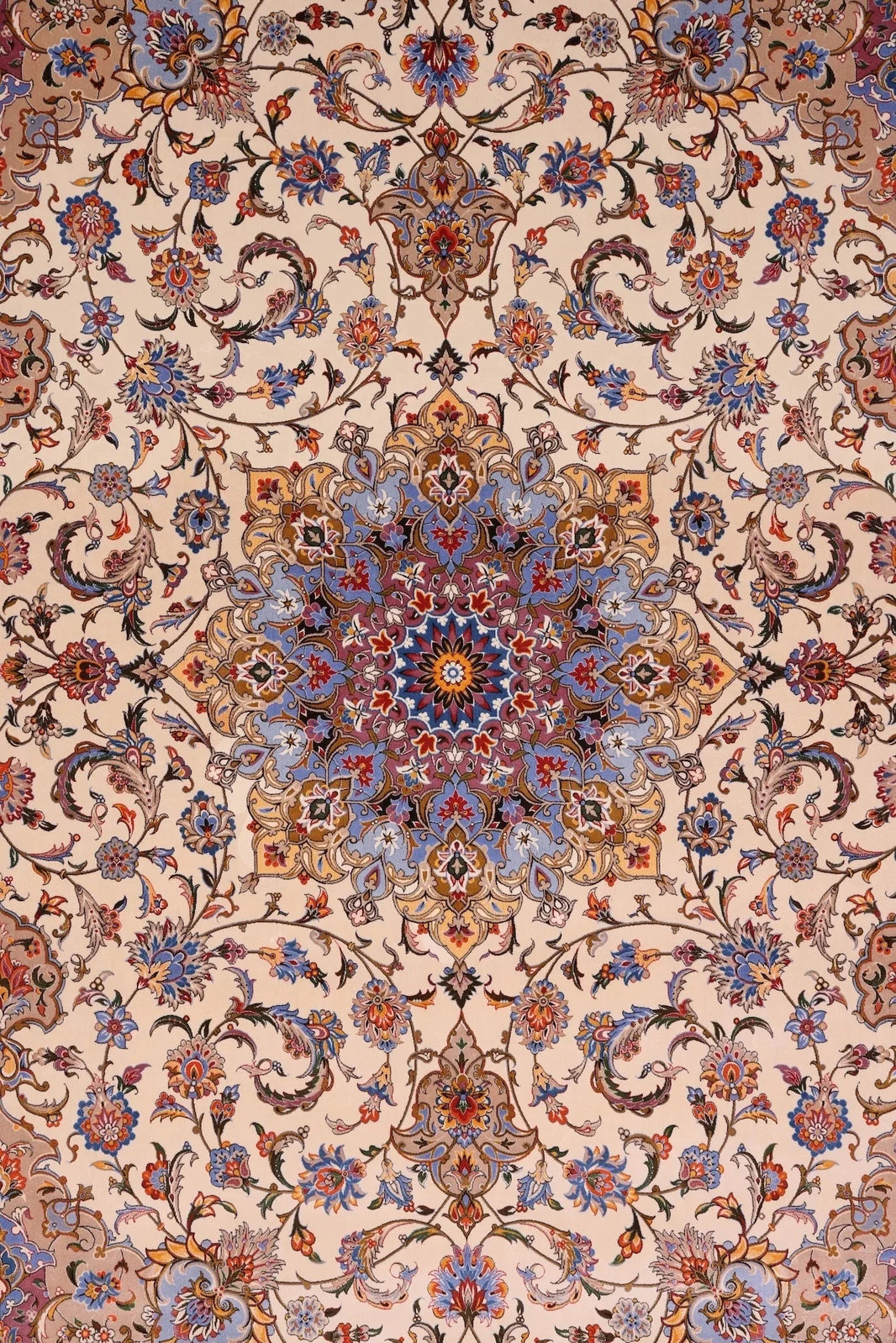
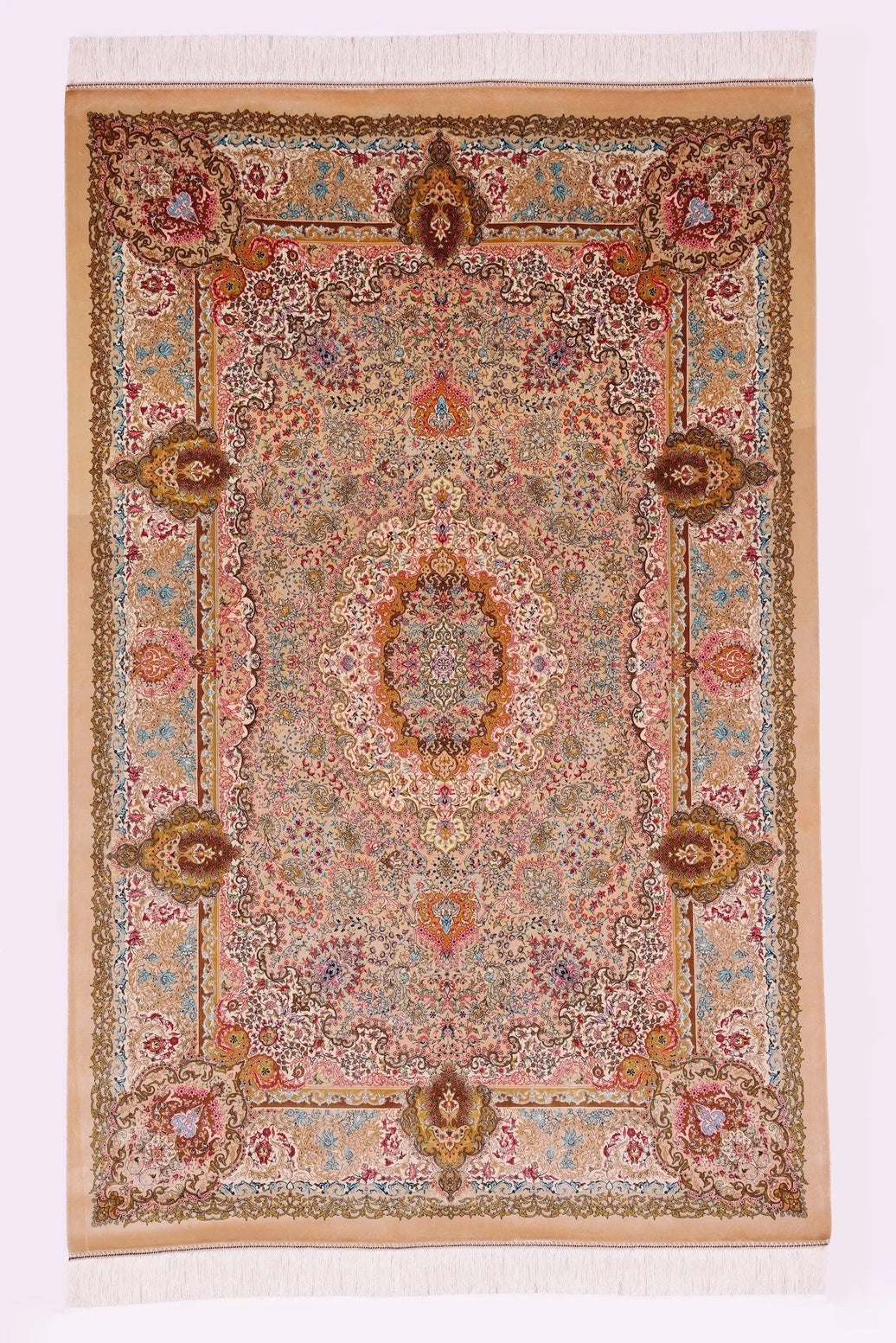
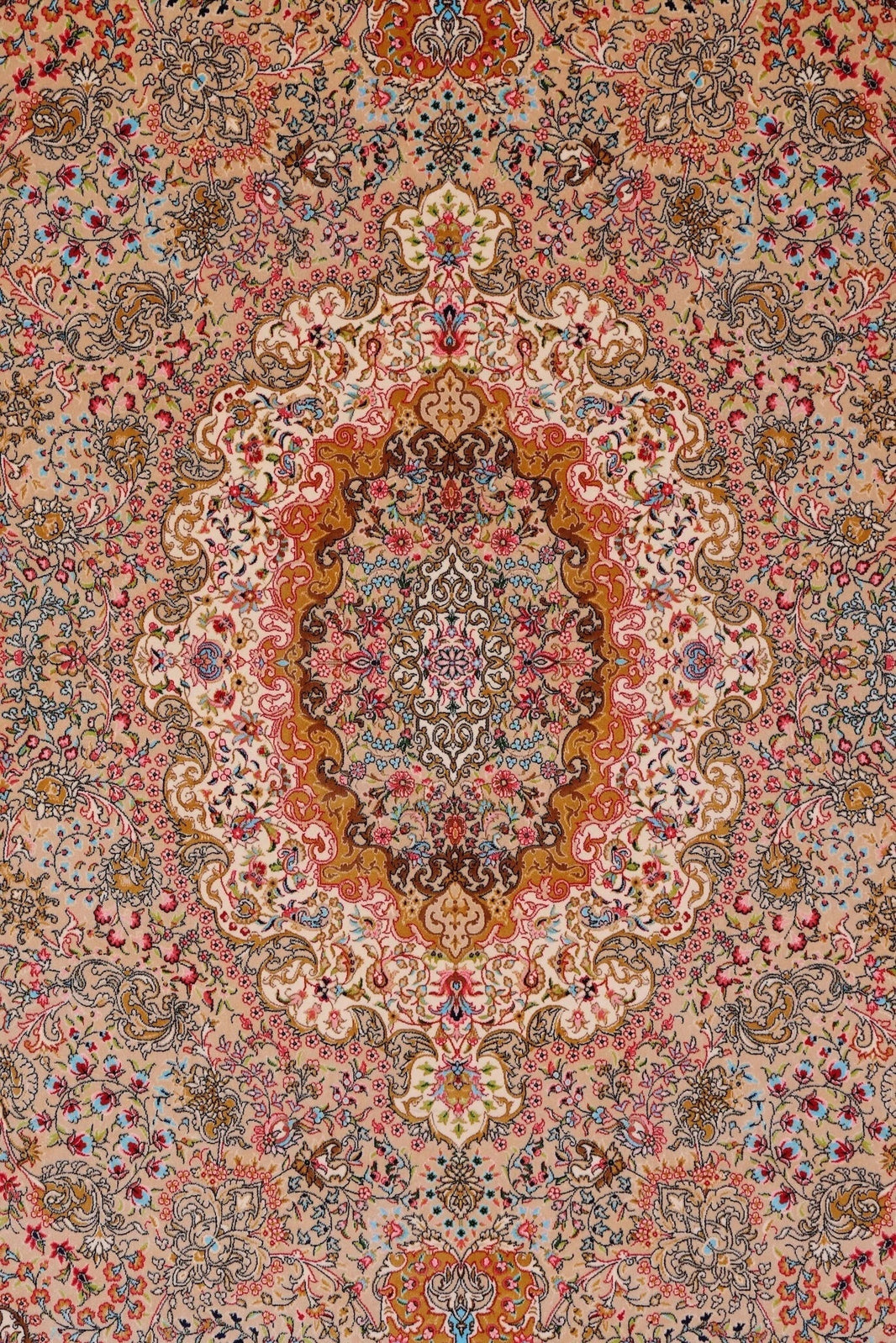
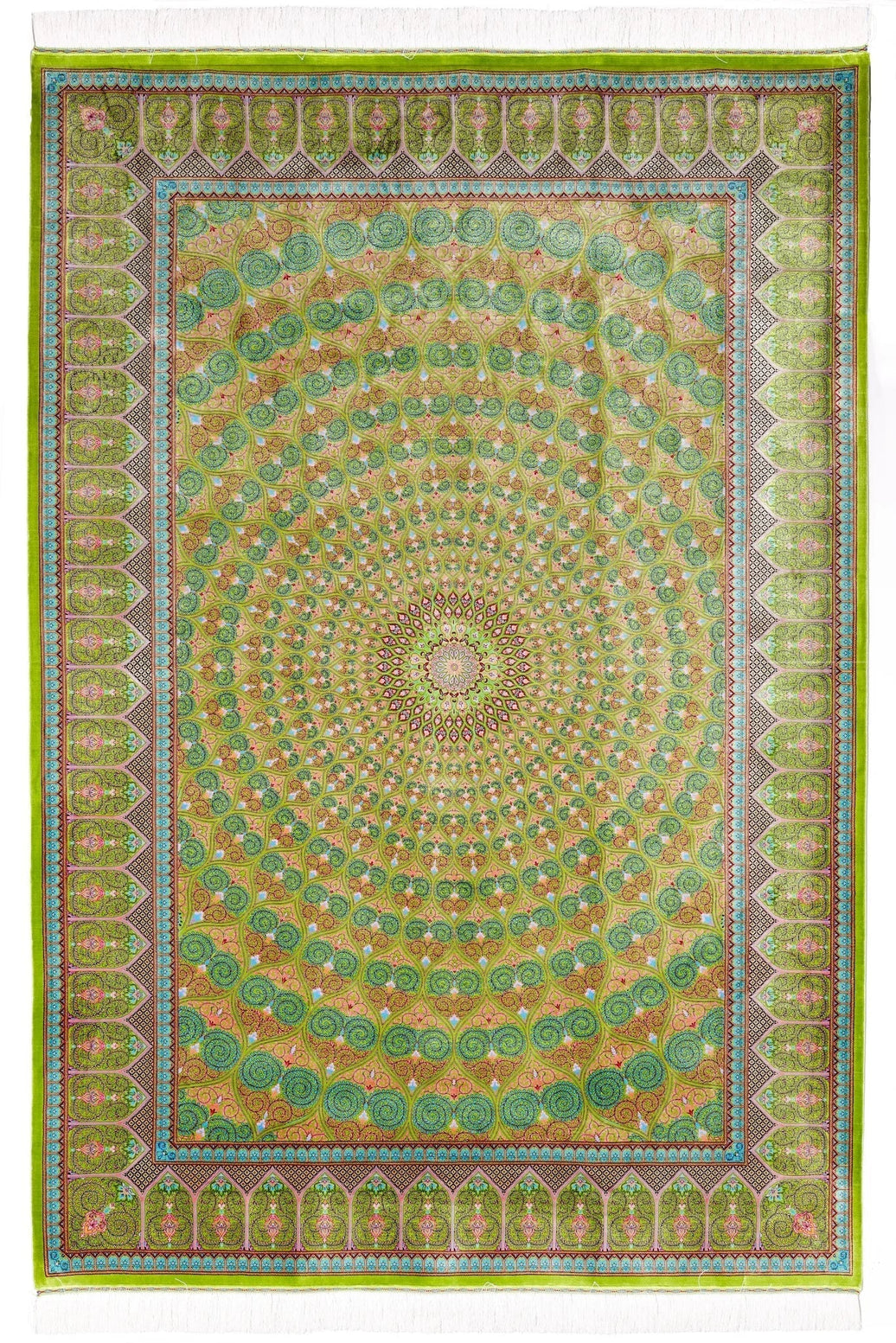
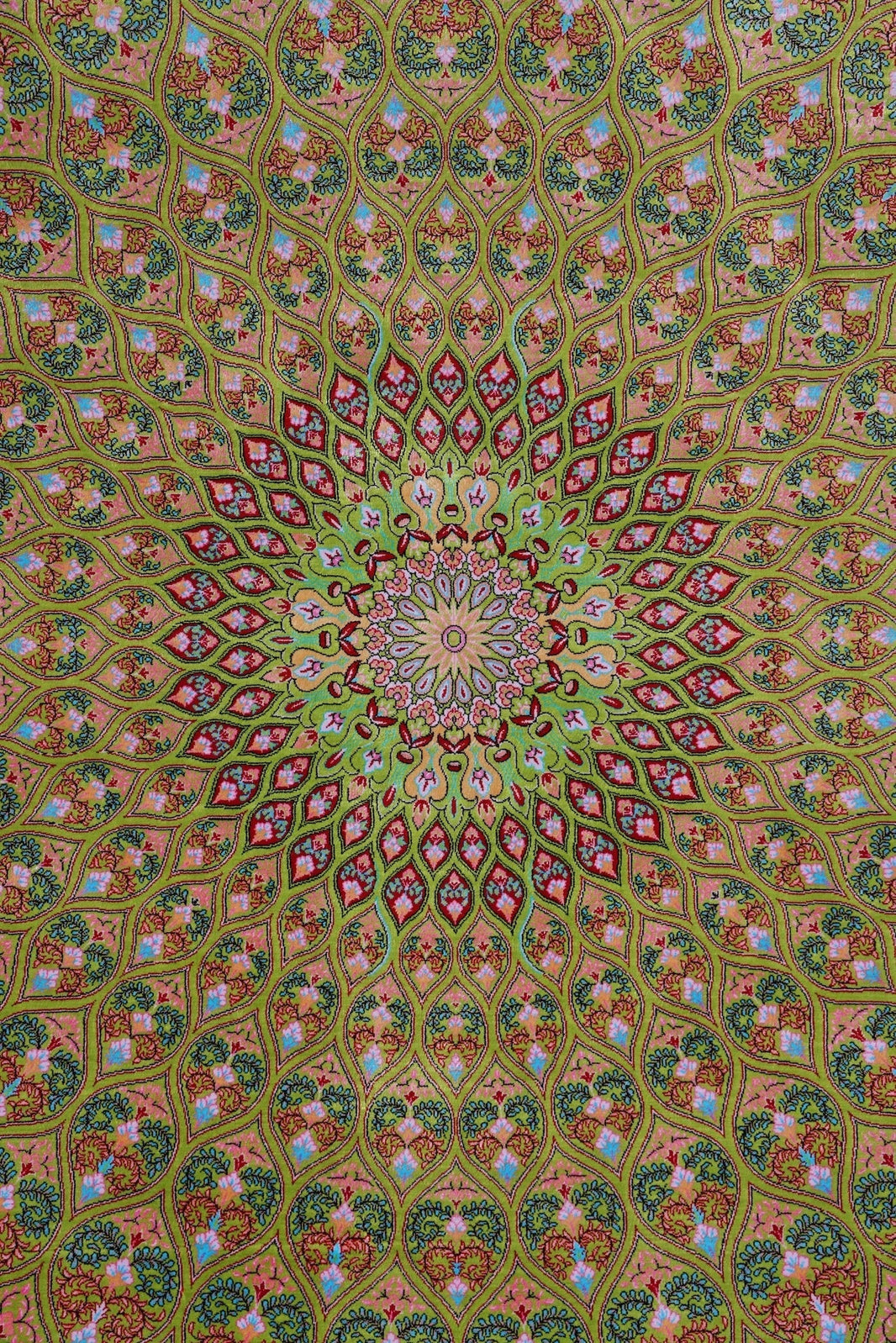
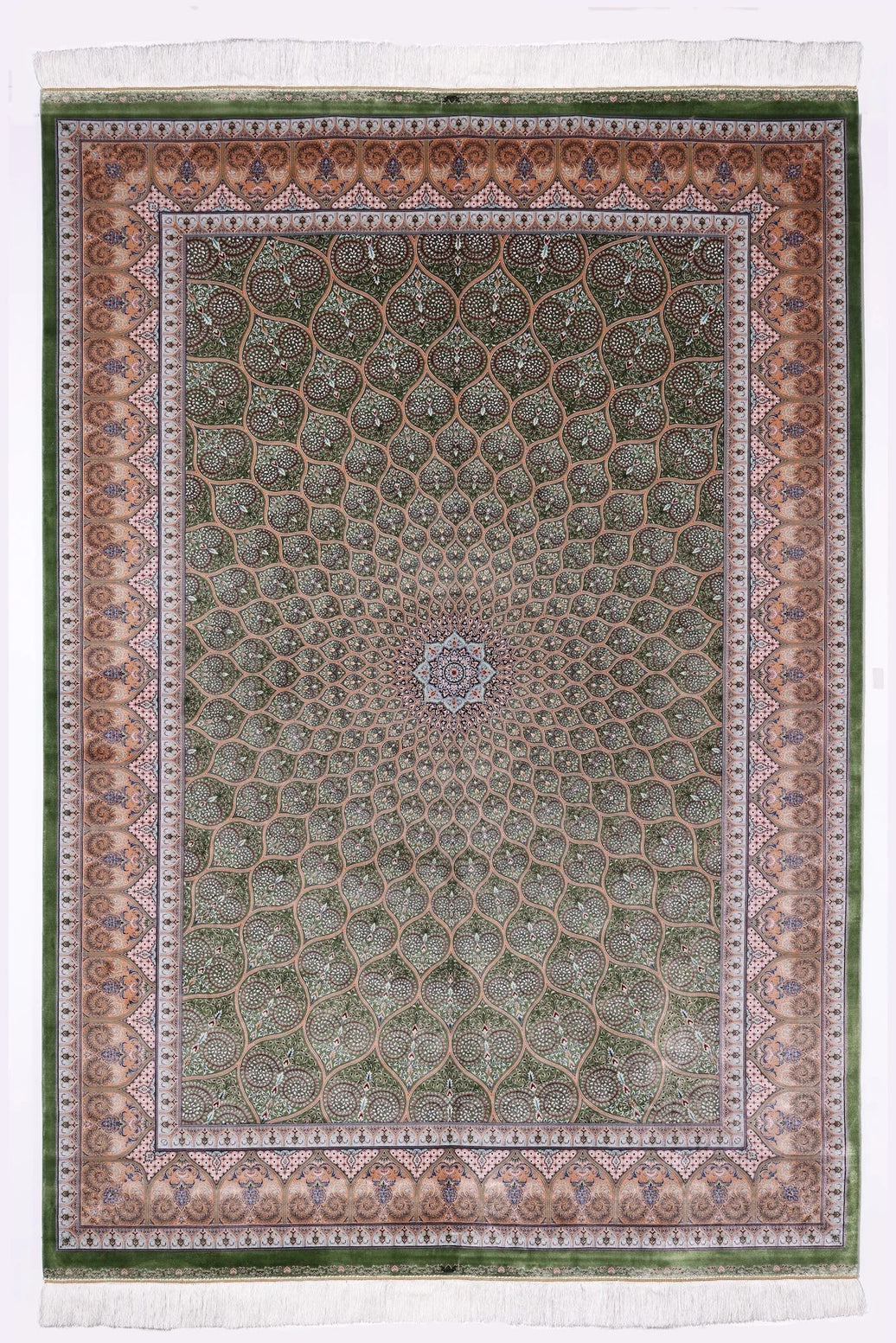
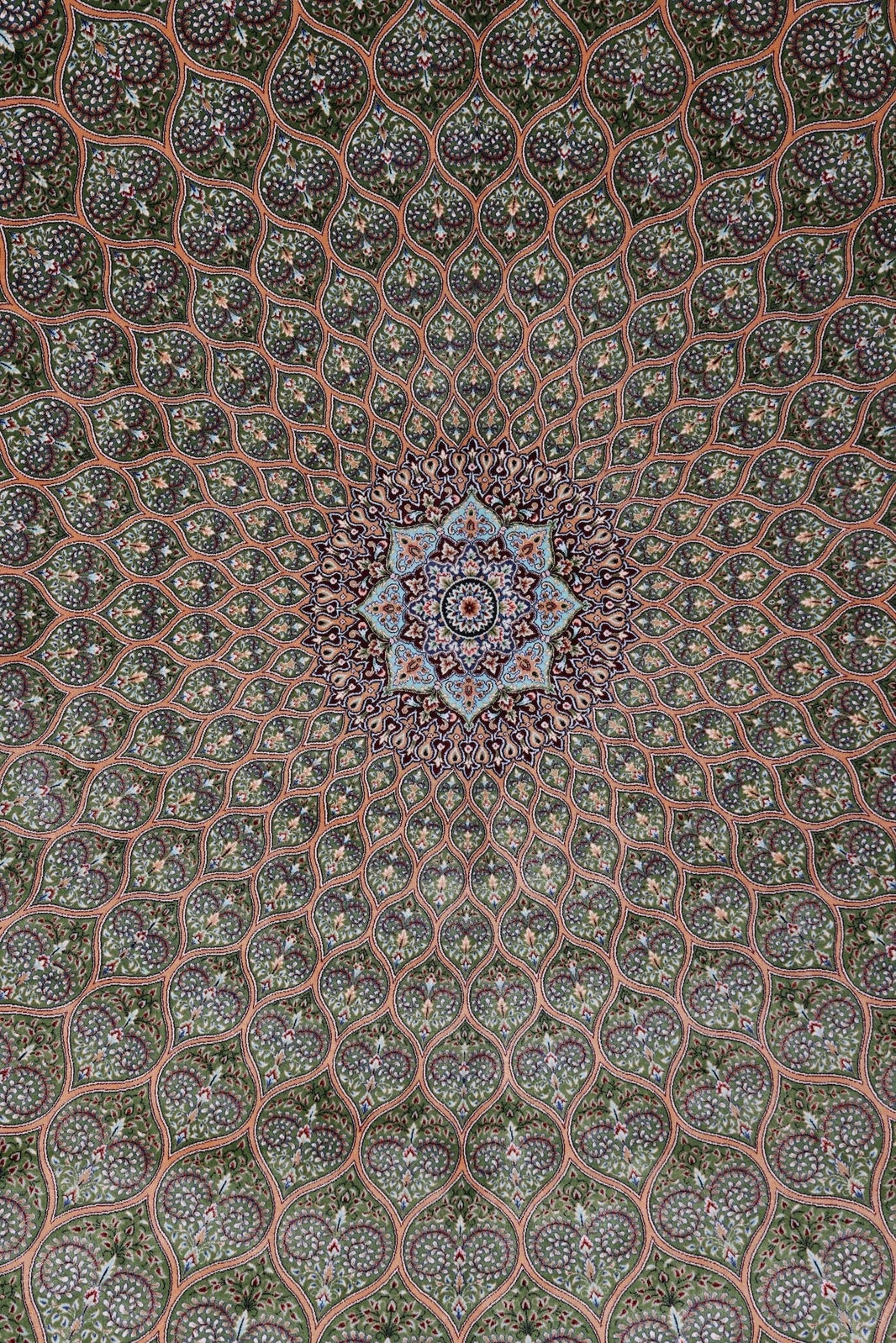
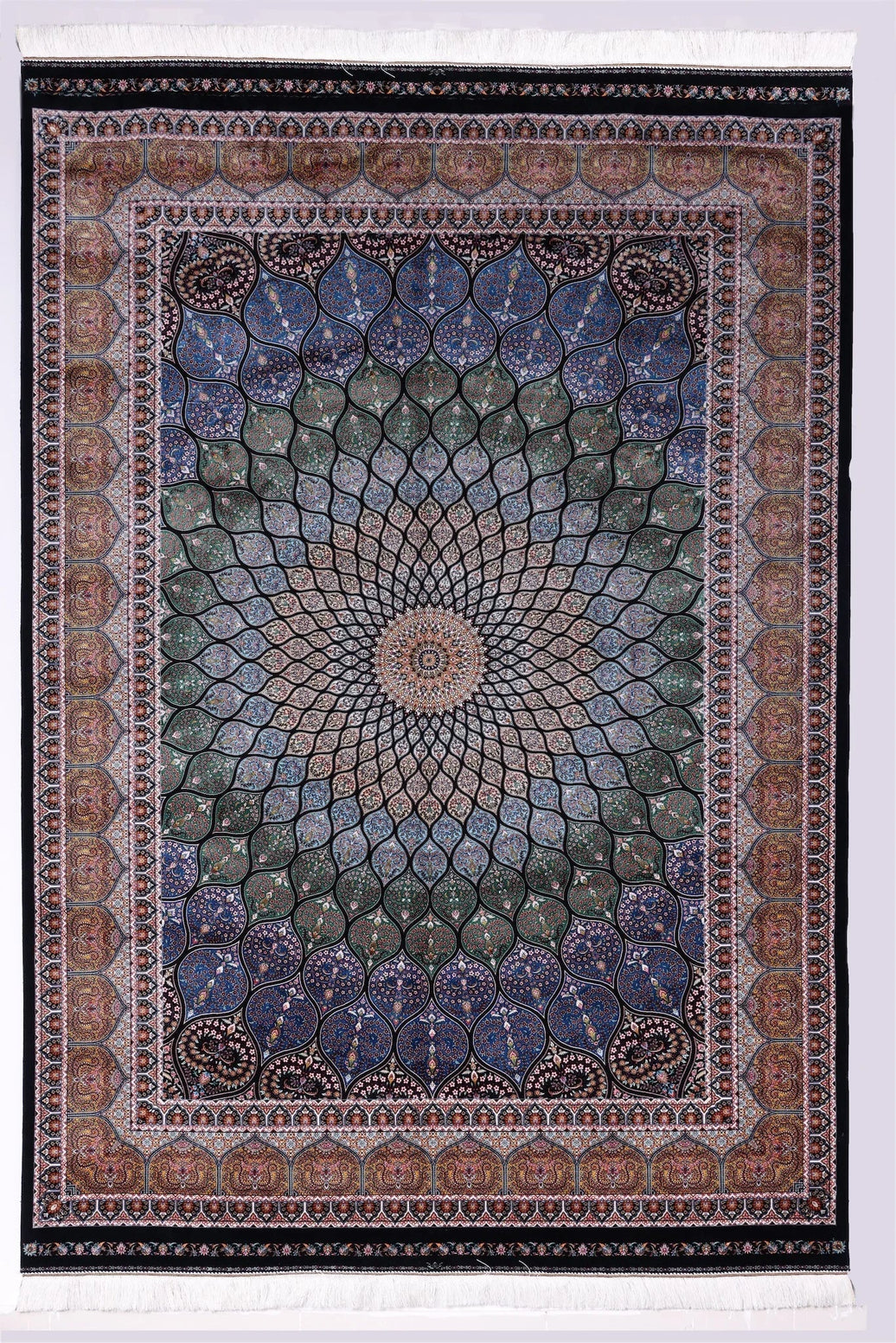
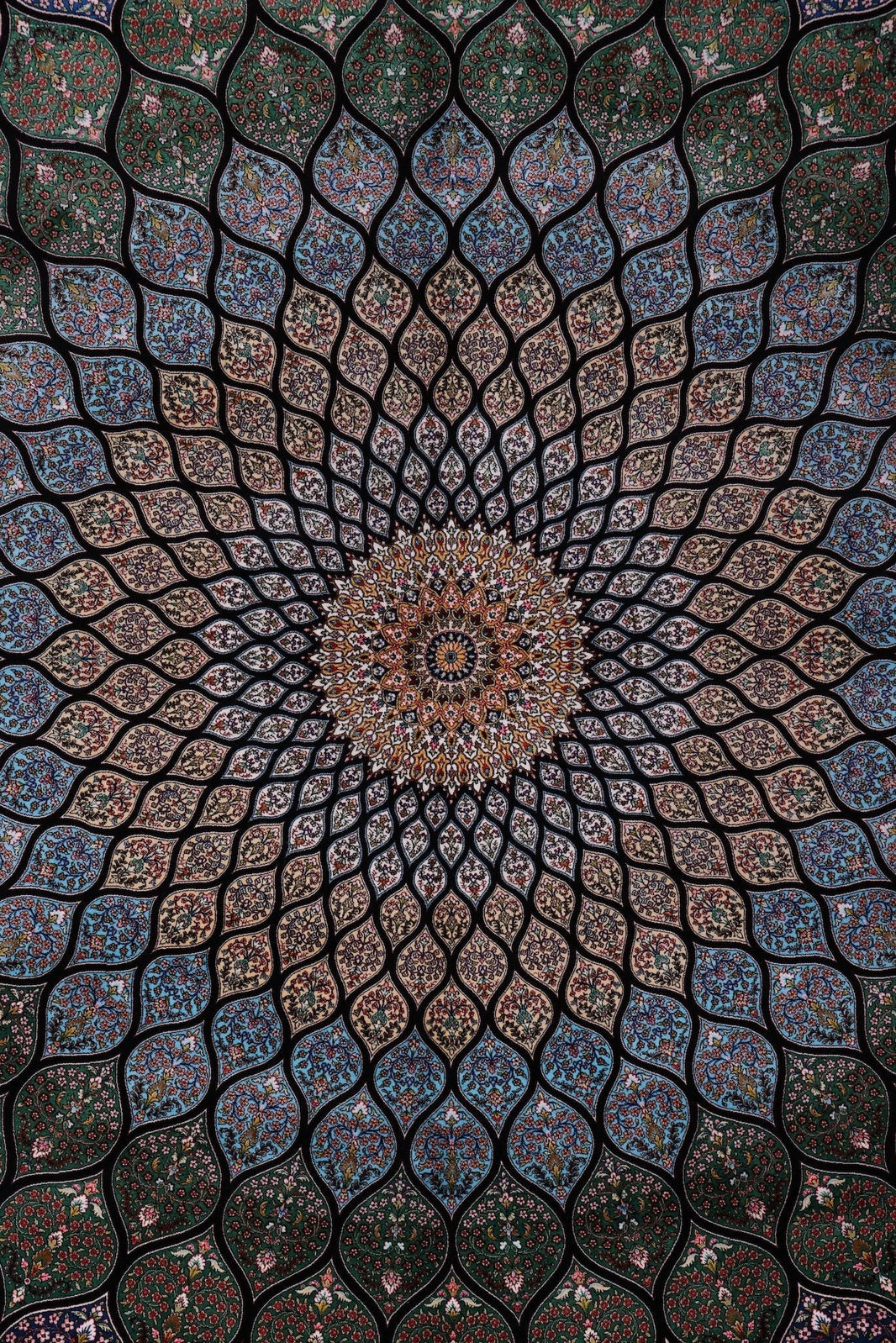
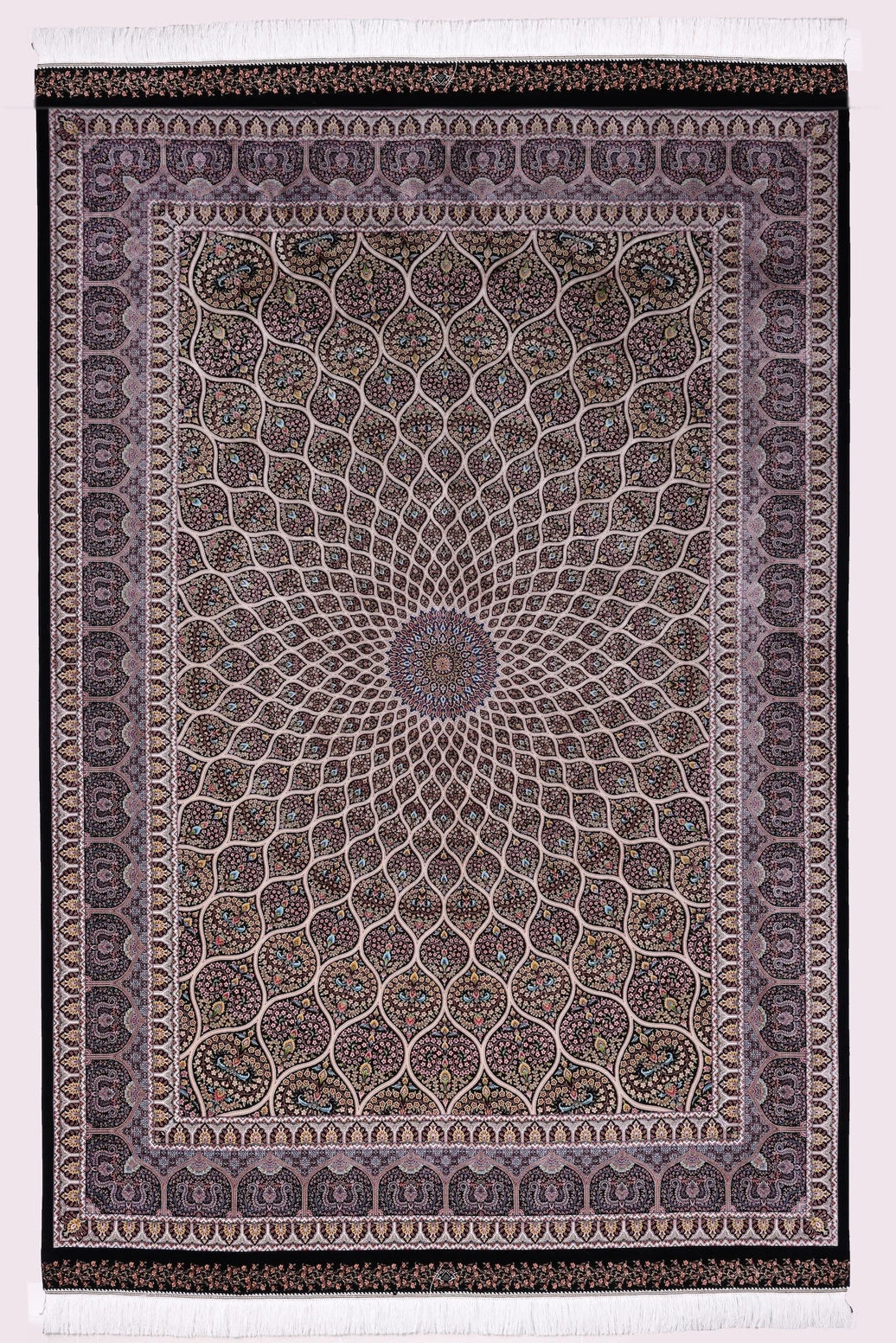
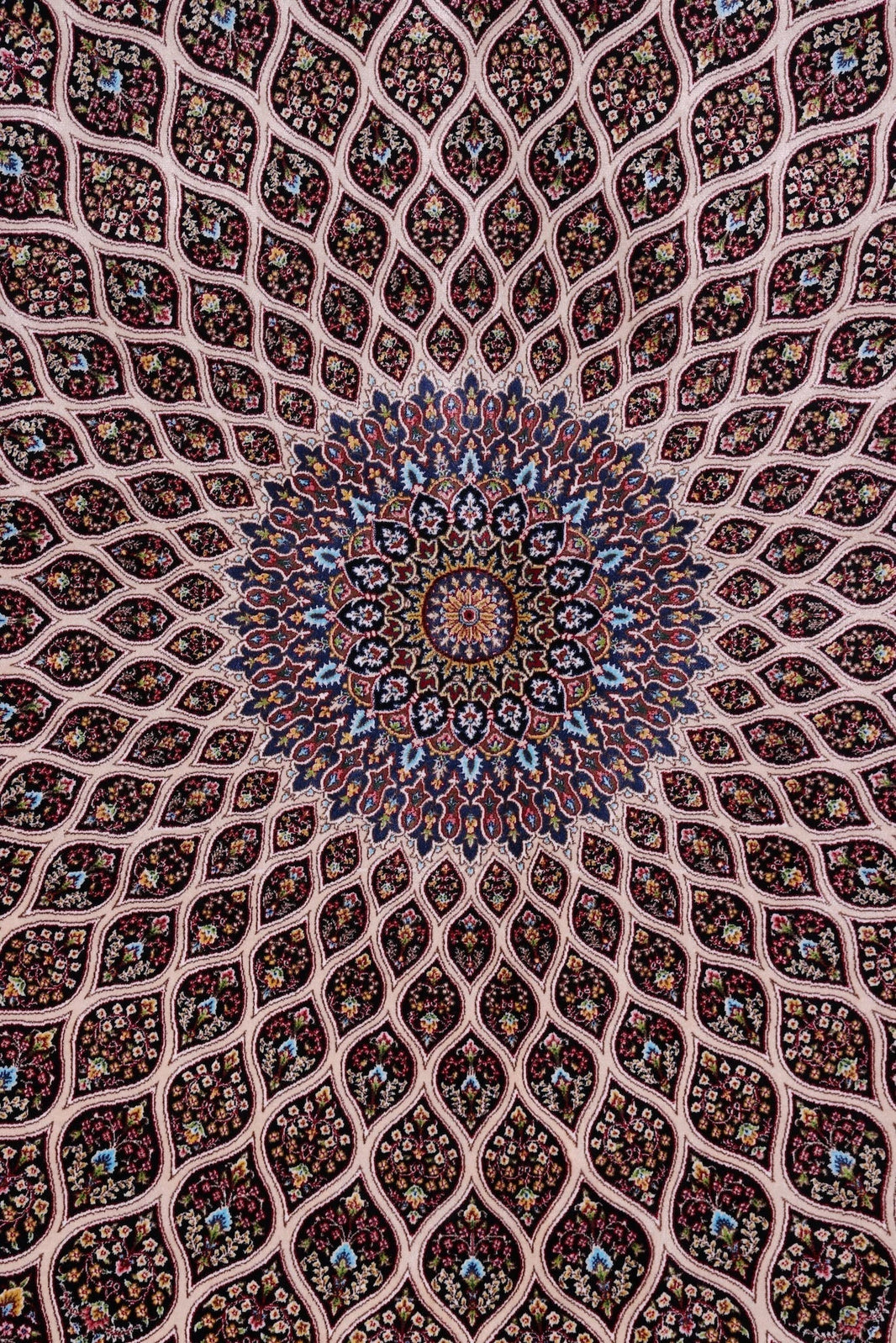
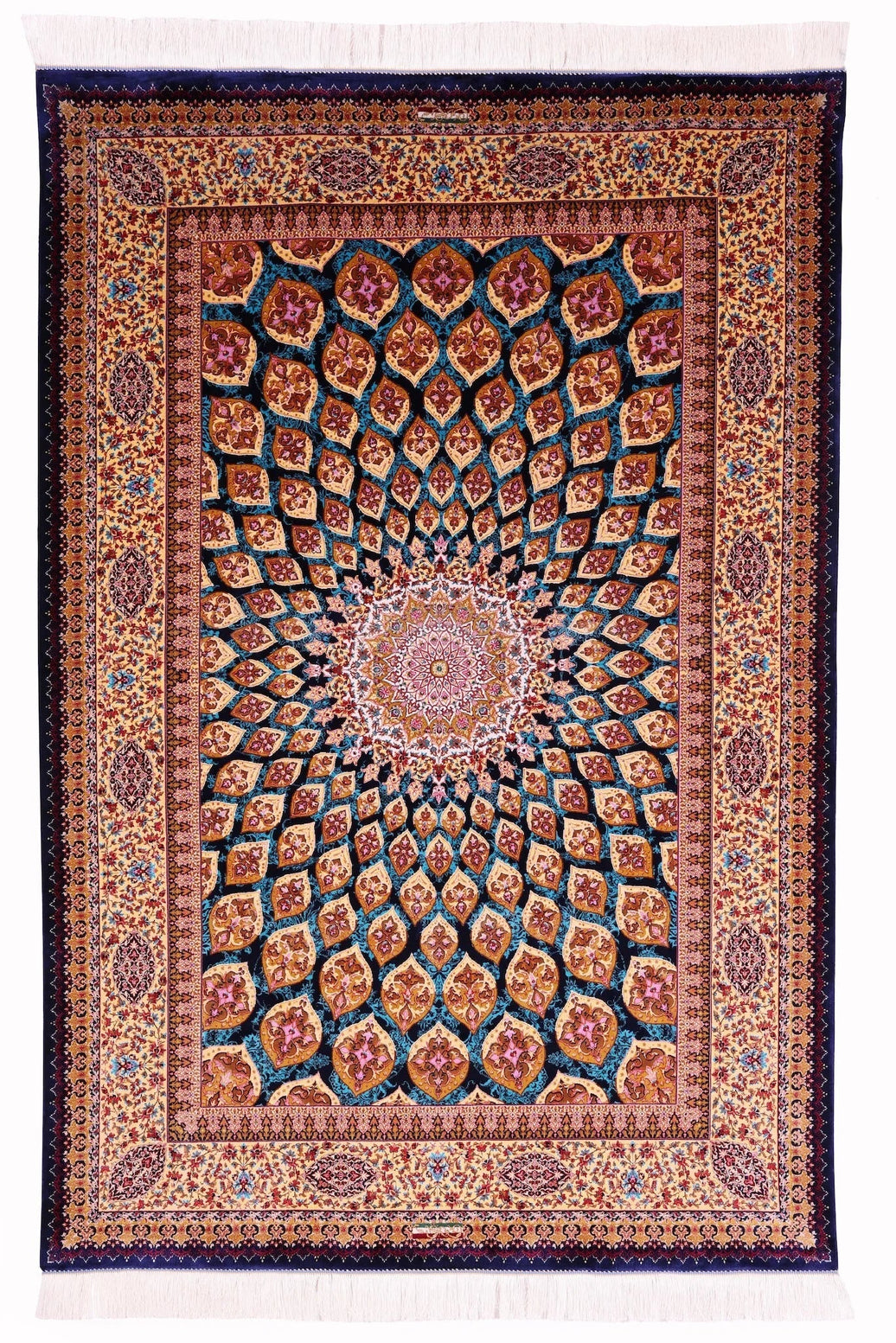
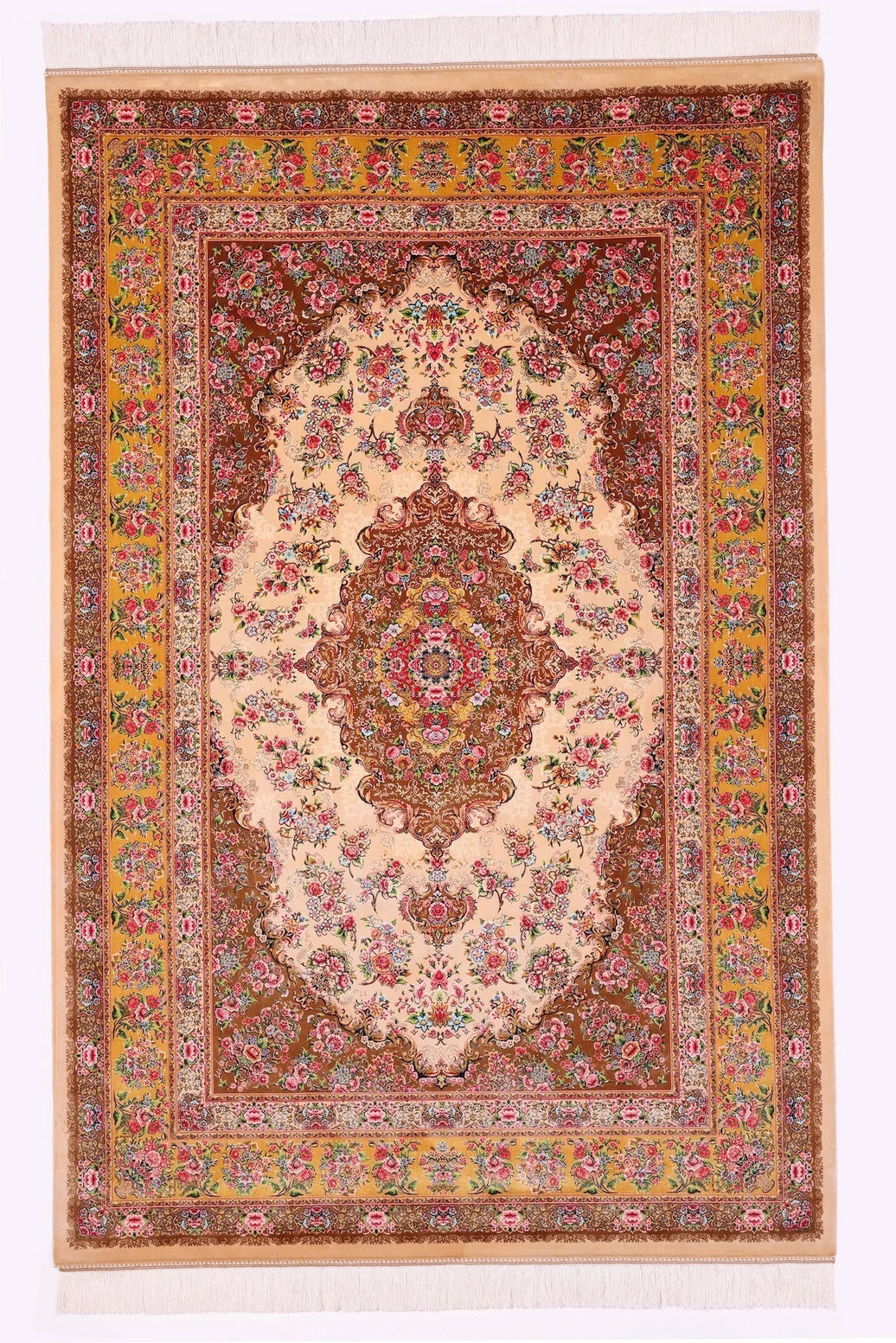
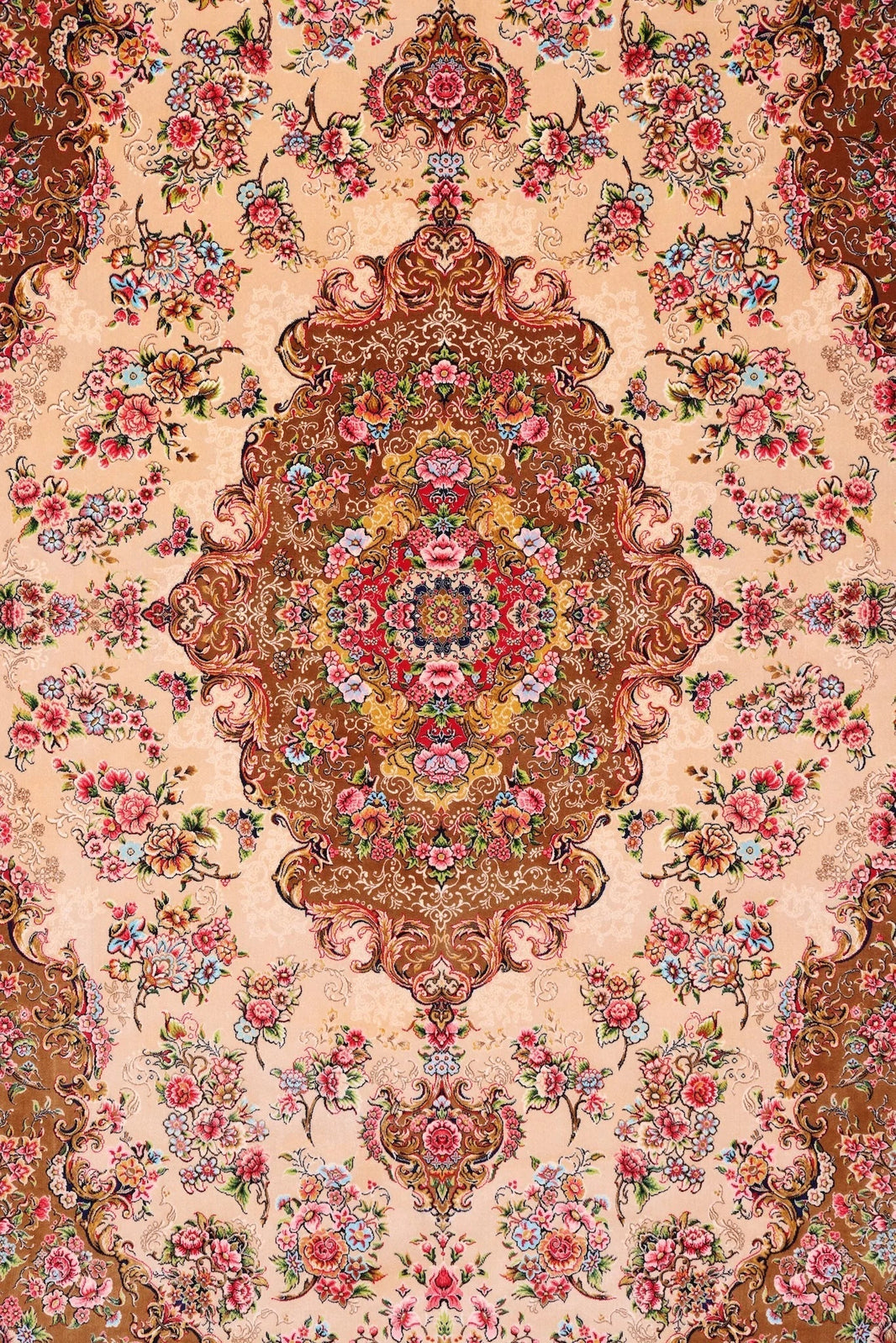
Laid across the timber, centred and grounded beneath a low teak coffee table, the Ahoo in cream anchors the seating area without interrupting the floor's visual rhythm. Its silk-like pile catches light differently from the timber beneath it, adding a second layer of surface warmth. The cream field, detailed with classical Persian medallion motifs in muted ivory and soft sage, reads as calm at this scale. What might appear ornate in isolation becomes, within this composition, something closer to quiet geometry.
The Ahoo's heritage is worth placing. Medallion-centred compositions trace directly to the royal workshops of Safavid-era, where weavers organised vast field patterns around a central axis of symmetry, a design logic so resolved that it still functions within contemporary rooms centuries on. In a warm minimalist interior, that visual resolution is an asset. The eye lands, rests, and does not move restlessly across the surface.
As explored in The Room That Has Everything, and Still Feels Empty, it is rarely a single piece that transforms a room. It is the relationship between surfaces. Here, the rug speaks to the timber, which speaks to the wall finish, which speaks to the linen on the sofa. Each surface is warm, none is dominant, and together they produce an interior that holds you without effort.
The Seating: Low Silhouettes and Breathing Room
The sofa sits low. This is not an aesthetic accident. In a room with warm plaster walls and natural materials at every surface, a high-backed sofa would interrupt the horizontal drift of the space. Instead, the low profile allows the eye to travel across the room, across the rug, across the coffee table, and settle at the window. The room breathes.
The sofa is upholstered in raw linen in a colour one shade darker than the wall, a warm sand that reads as deliberate contrast without visual interruption. Two cushions in terracotta-adjacent clay introduce the first moment of chromatic warmth above the floor plane. They connect downward to the rug's muted tonal range without matching it directly. Matching would be catalogue thinking. This is composition.
A single low-slung armchair in aged leather occupies one corner, its warm tobacco tone adding depth to the room's amber register. Its aged surface contributes something no new object can: the suggestion of time. Warm minimalism, at its most considered, includes objects that carry a material history.
The Light: A Material in Its Own Right
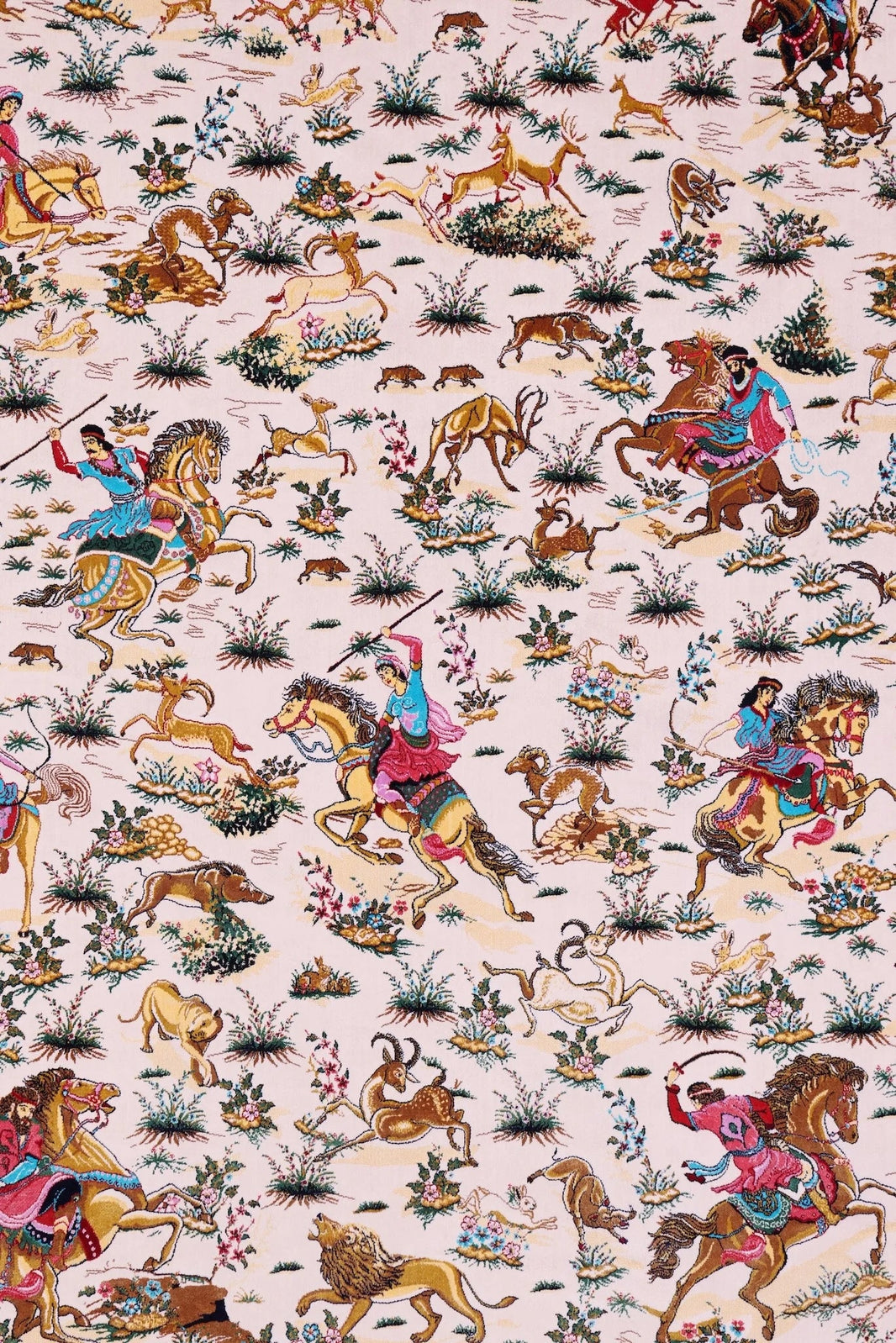
Natural light enters this Melbourne room from the north, which means the sun moves across the floor throughout the day. In the morning, the rug appears cool, the cream field holding a pale, clean quality. By mid-afternoon, raking light crosses the pile at an angle and changes everything. The silk-like surface becomes luminous, the motifs gaining depth and shadow that no photographic rendering fully captures.
This is the quality that separates a rug chosen for visual presence from one chosen for the room. A rug that interacts with natural light is a different object at seven in the morning and four in the afternoon. The Ahoo, at this orientation, shifts from serene to warm to almost golden across the day. The room shifts with it.
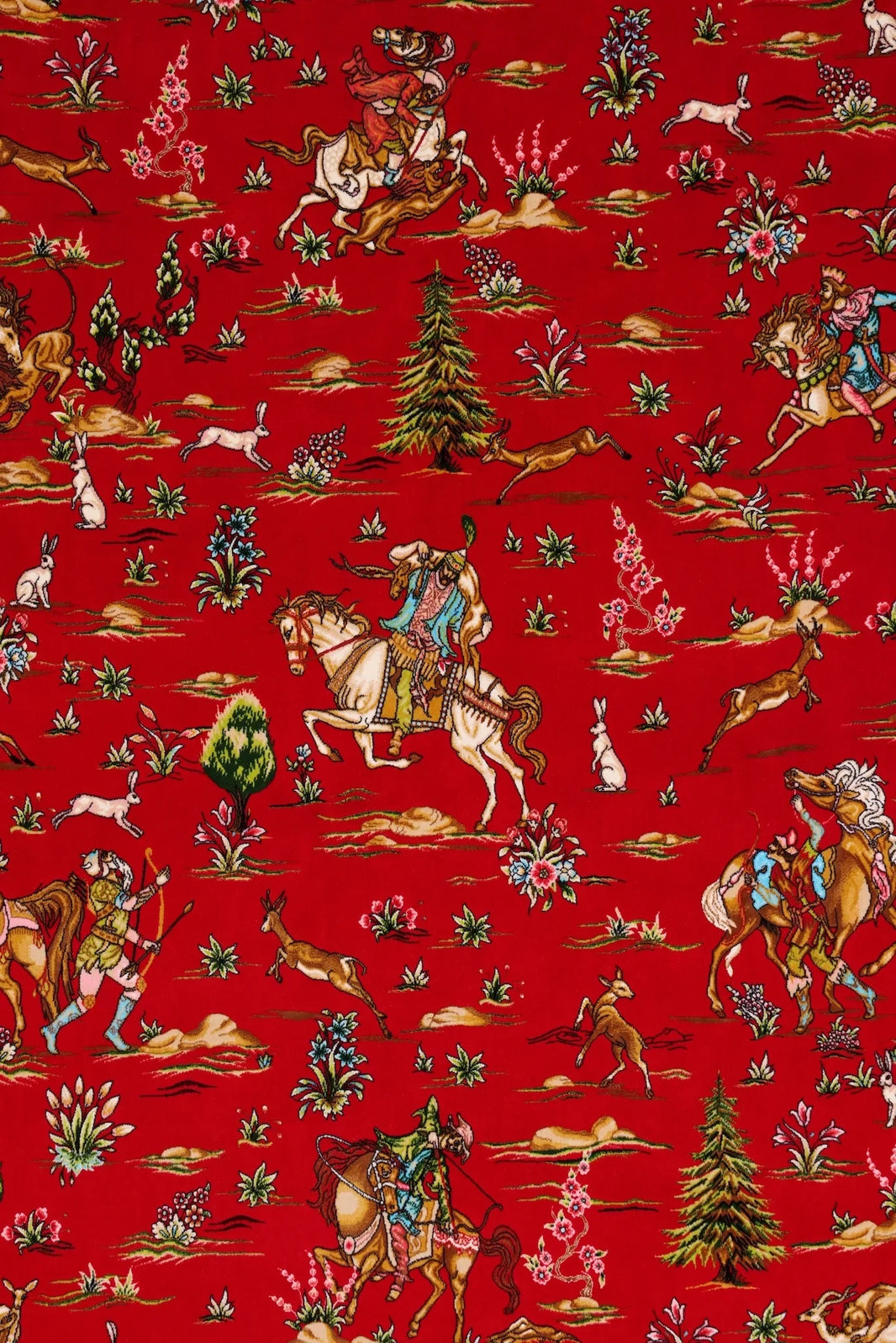
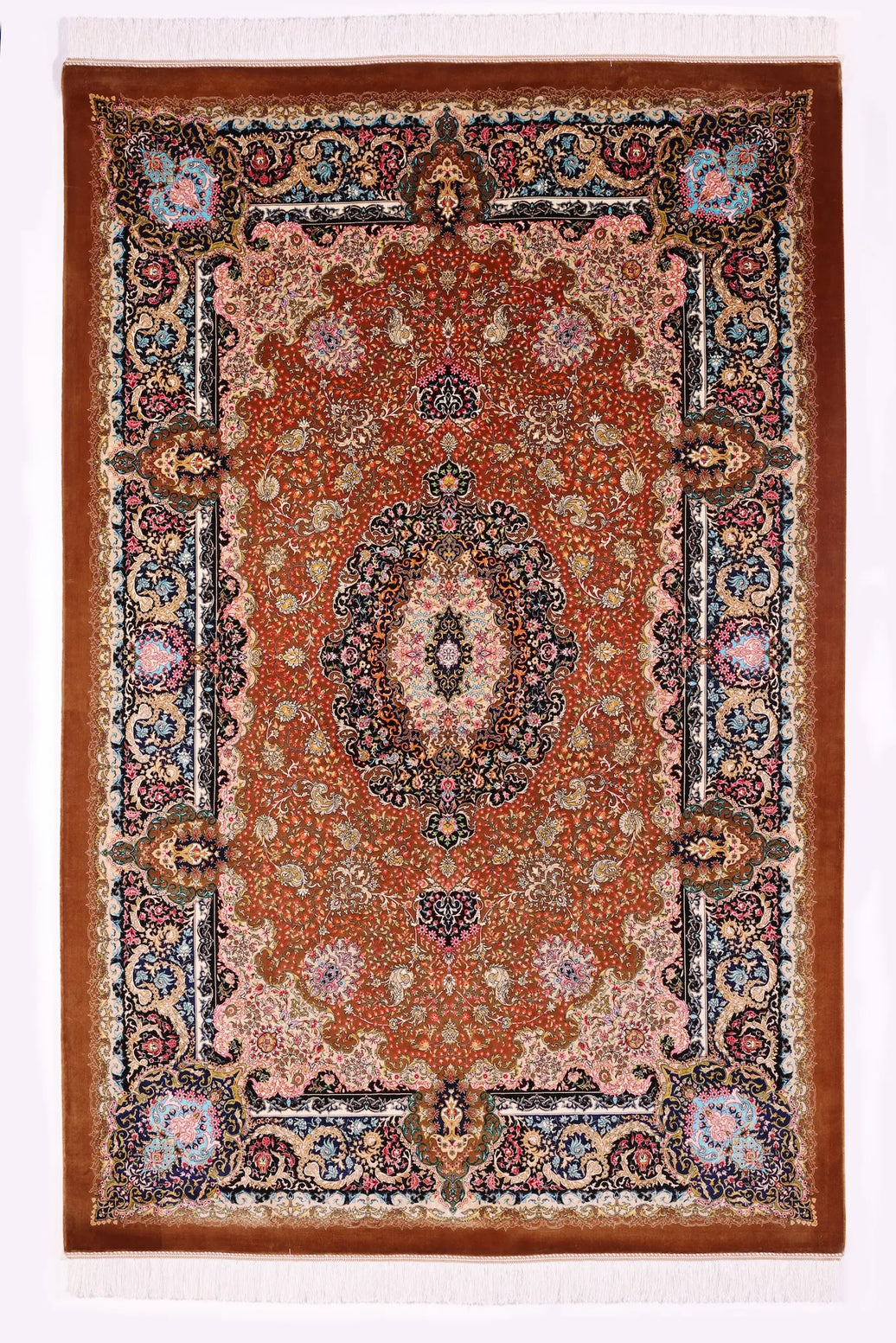
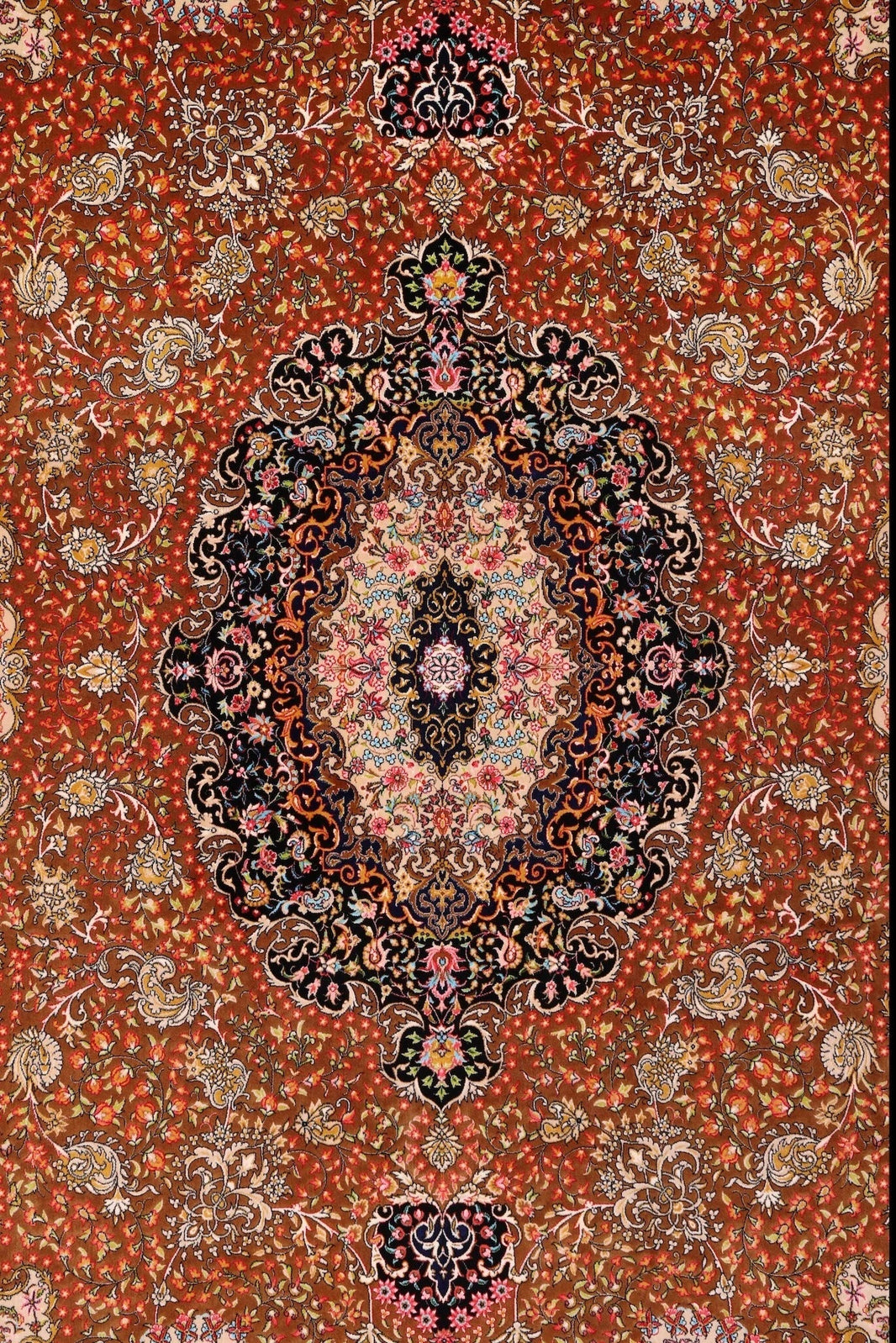
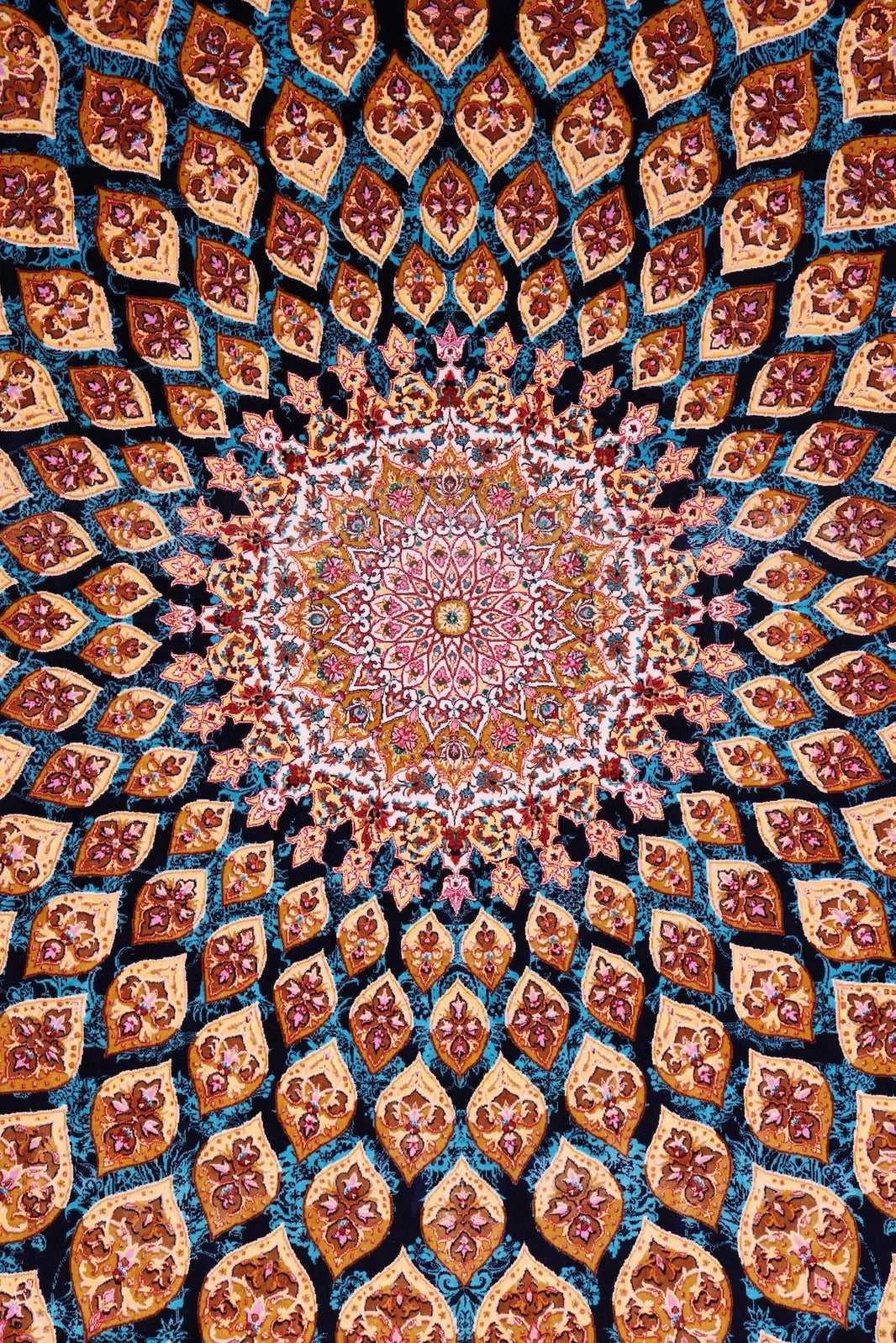
For rooms where a warmer chromatic anchor is preferred, the Ahoo in red introduces the same classical composition in a tone that intensifies in afternoon light, a deep Persian red whose behaviour across the day is documented in The Room That Knows Its Own Colours. In a warm minimalist context, the red Ahoo becomes the chromatic decision that organises everything else.
The Objects: Weight Without Clutter
Three objects sit on the coffee table. A ceramic bowl in a matte, smoke-toned glaze. A single branch of dried botanicals in a narrow-necked vessel. A book, closed. Nothing more. Warm minimalism permits objects only when they carry genuine weight, visual, material, or historical. These three pass.
On the wall, a single work on paper in a pale timber frame. The image is abstract, loose, organic shapes in ochre and charcoal that echo the room's palette without repeating it. There is no gallery wall. There is no shelf of collected objects. The restraint here is the point.
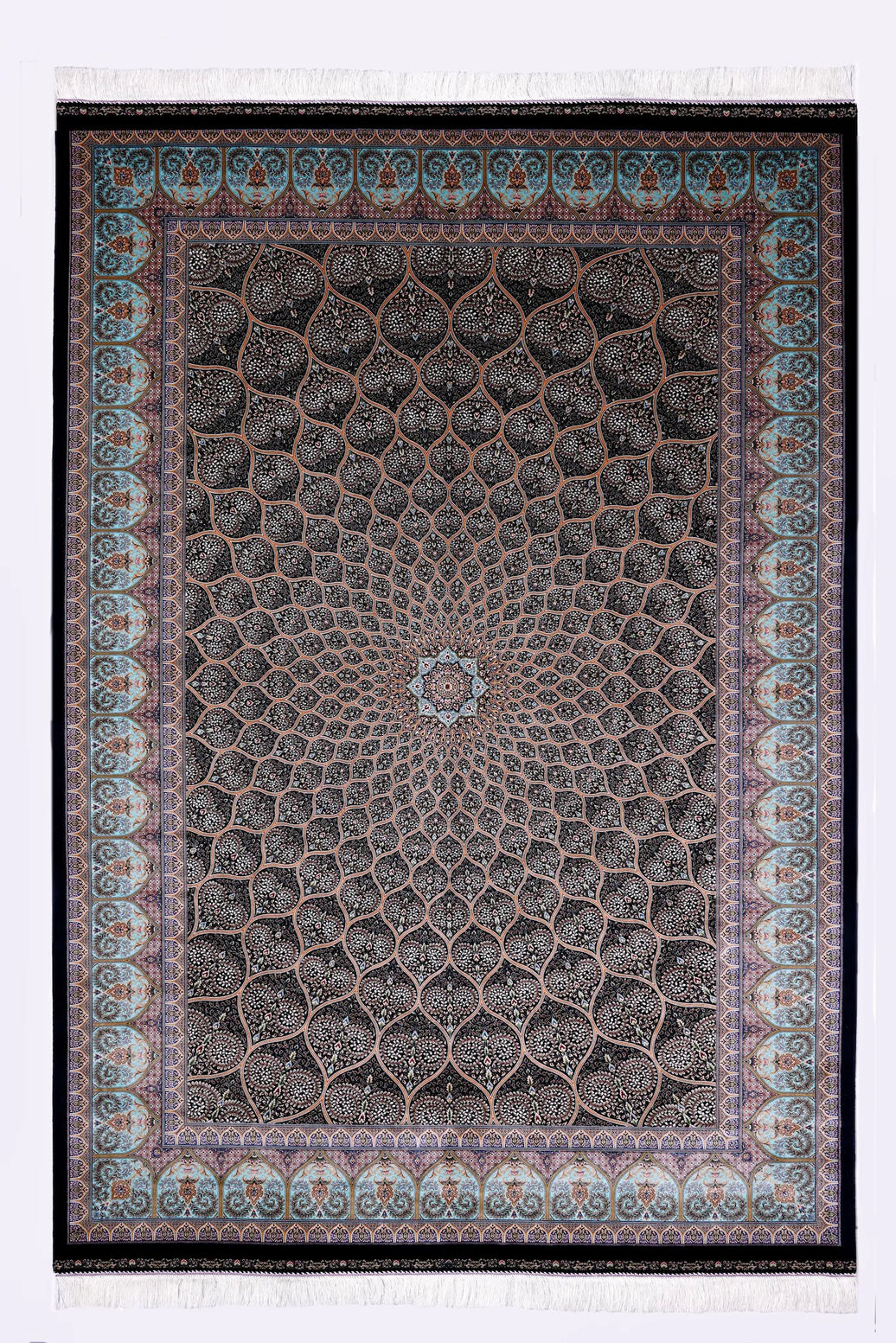
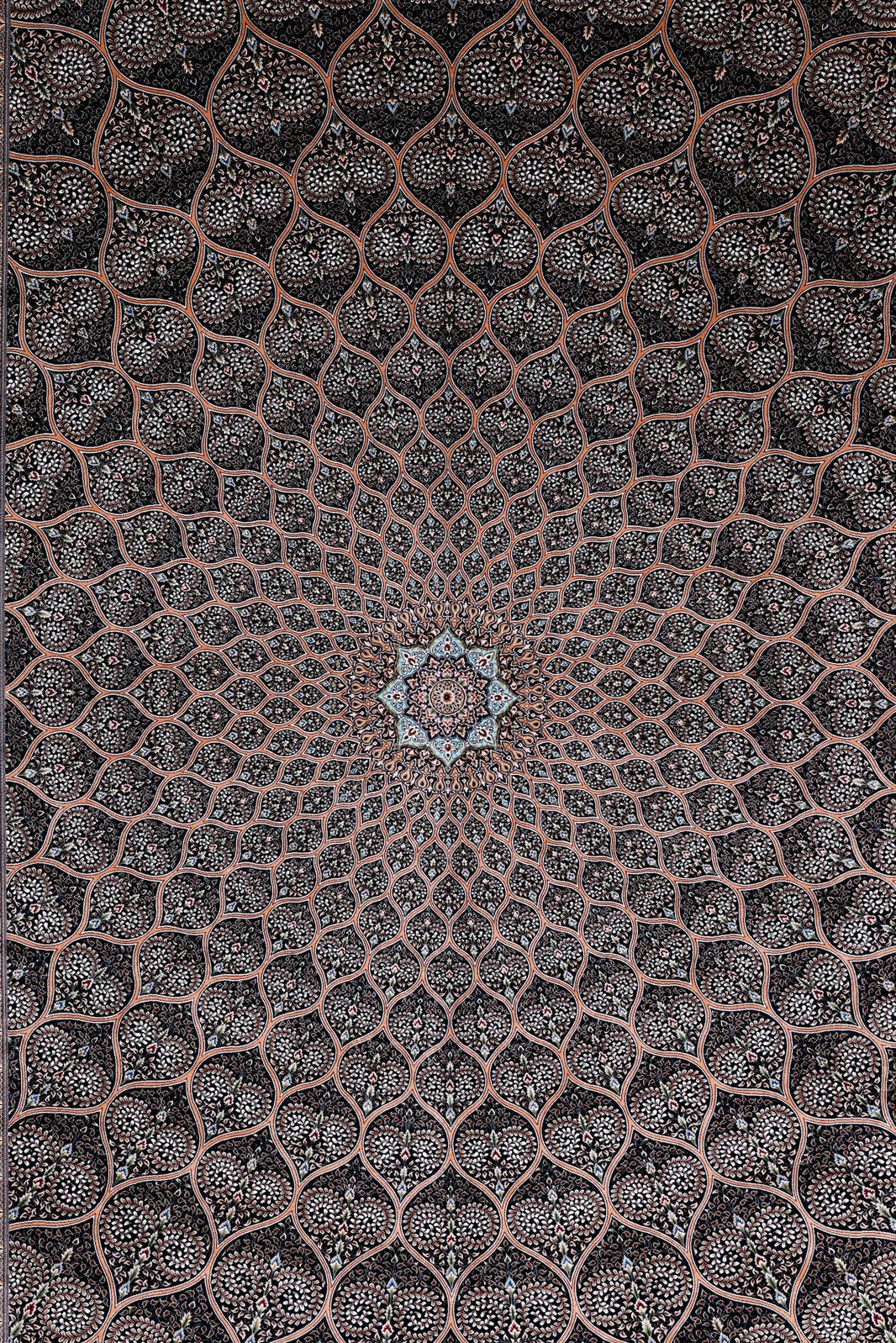
For rooms where a deeper, more jewel-toned textile is needed to anchor a similarly restrained composition, the Arghavan offers an alternative register, its rich violet and plum tones carrying the same Persian classical structure in a palette suited to south-facing Melbourne rooms where warmer light needs a cooler counterpart.
The Room, Considered
What makes this room function is not any single decision. It is the discipline applied to every decision in the same direction. The wall finish, the sofa silhouette, the rug, the objects, the light. Each answers the same brief: warm, considered, earned. The result is a room that does not require explanation. As with the finest examples of living rooms built around a foundational rug, the Persian heritage woven into the Ahoo's field is not decoration imported into a modern space. It is civilisational intelligence applied to a contemporary room, and it holds.
Warm minimalism, built this way, is not a trend. It is a standard.
Visualize this rug in your room →
Questions, answered
what is warm minimalism in interior design?
Warm minimalism is restraint with texture. Every surface, wall, timber, rug, object, contributes something tactile and intentional. Nothing is sparse or cold. Each piece earns its place through material warmth, heritage, or visual weight. It's precision, not absence.
how do you create a warm minimalism living room?
Start with surfaces: raw plaster walls, oiled timber flooring, natural linens. Add a Persian rug that anchors the seating area without competing. Keep furniture low-profile. Choose objects that carry genuine weight, material, visual, or historical. Every decision answers the same brief: warm, considered, earned.
what rug works best for warm minimalism?
A Persian rug with classical composition and muted tones. The Ahoo in cream anchors a warm minimalist space through its resolved medallion structure and silk-like pile that catches light throughout the day. Its heritage carries civilisational intelligence into contemporary rooms without feeling decorative or imported.
does a warm minimalism living room need colour?
Colour comes from restraint, not saturation. Terracotta cushions, aged leather, ochre artwork, each introduces warmth deliberately. The rug's muted palette connects these moments without matching them directly. Matching is catalogue thinking. Composition is what holds the room together.