

The Room That Has Everything, and Still Feels Empty
Zagrosa · Interior Living
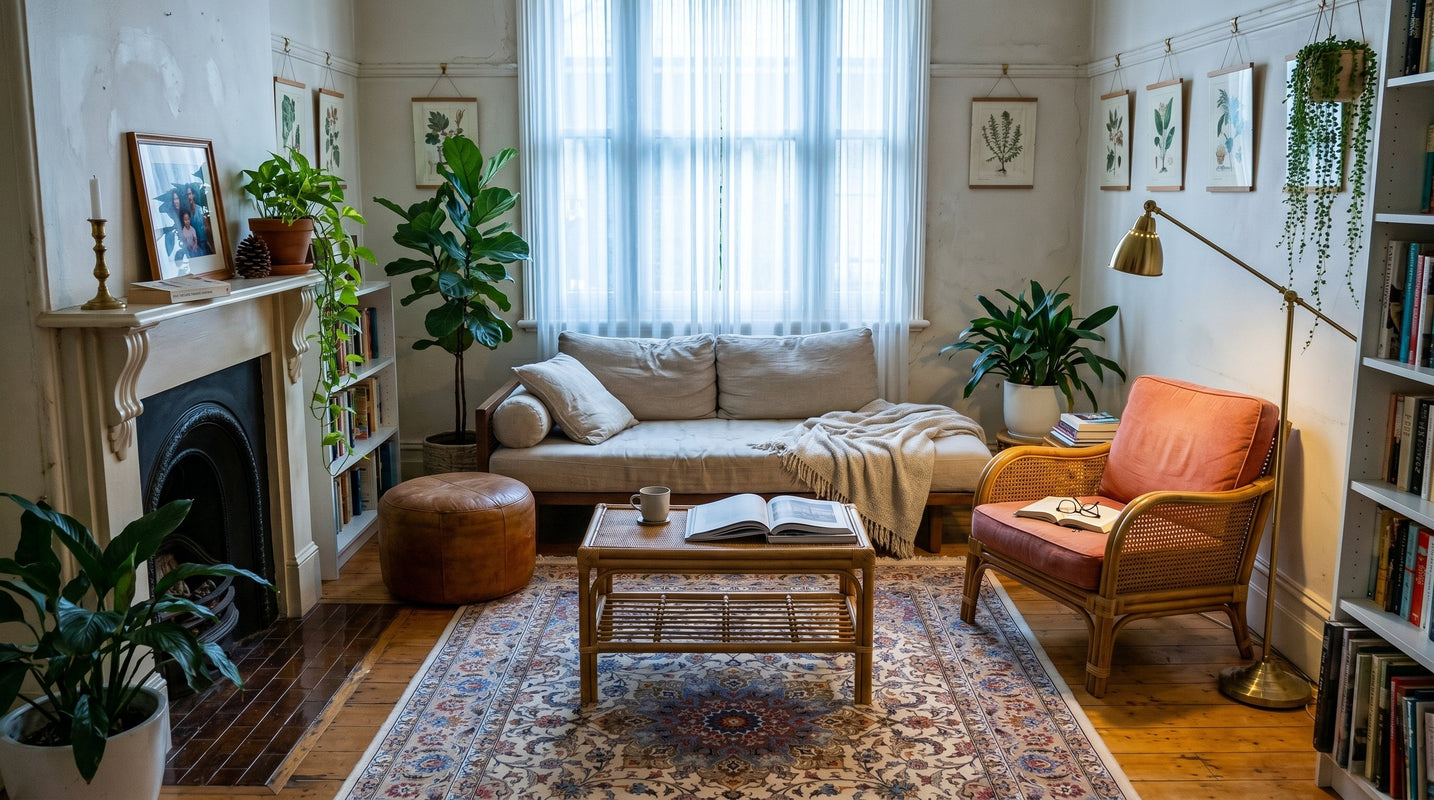
Some rooms are fully furnished and still feel unfinished. The fault is rarely the individual pieces, it is the absence of textile layering. When a Persian rug enters the composition alongside drapes, throws, and cushions, the room finally holds.
The rug does not compete with the throw draped across the arm of the sofa, it is the reason the throw finally makes sense.
Run your hand across a linen cushion, then across the silk-like pile of a Persian rug beneath it. The contrast is immediate, almost architectural. One surface gives; the other holds. That difference, registered through touch before it is ever processed by the eye, is the whole principle of textile layering made physical.
Why a Beautiful Room Can Still Feel Unresolved
The furniture is right. The paint is considered. Each piece, taken alone, is exactly what it should be. And yet the room resists. It refuses to settle. Visitors sense it without being able to name it, and so does the person who lives there.
The fault is almost never the objects themselves. It is the absence of a textile hierarchy. Without one grounding layer carrying enough visual and tonal weight to organise everything above it, a room becomes a collection rather than a composition. Beautiful things, assembled without a logic that pulls them into relationship.
Layering textiles in a living room is not a decorating trick. It is the structural move that transforms accumulation into atmosphere.
The Rug as Foundation, Not Feature
Every textile composition requires a base layer with enough presence to anchor what follows. In a living room, that layer is the rug. Not because it is the largest element, though it often is, but because it is the one surface that touches everything else. Furniture rests on it. Light reflects off it. The room's tonal logic begins from it.
This is where Persian design earns its authority. Geometric and floral patterns developed across centuries of Persian weaving tradition were never designed to dominate a room. They were designed to mediate between surfaces, to absorb the eye and release it, to hold colour without insisting on it. A good Persian rug does not compete with what surrounds it. It resolves the tension between plains and textures that would otherwise remain unreconciled.
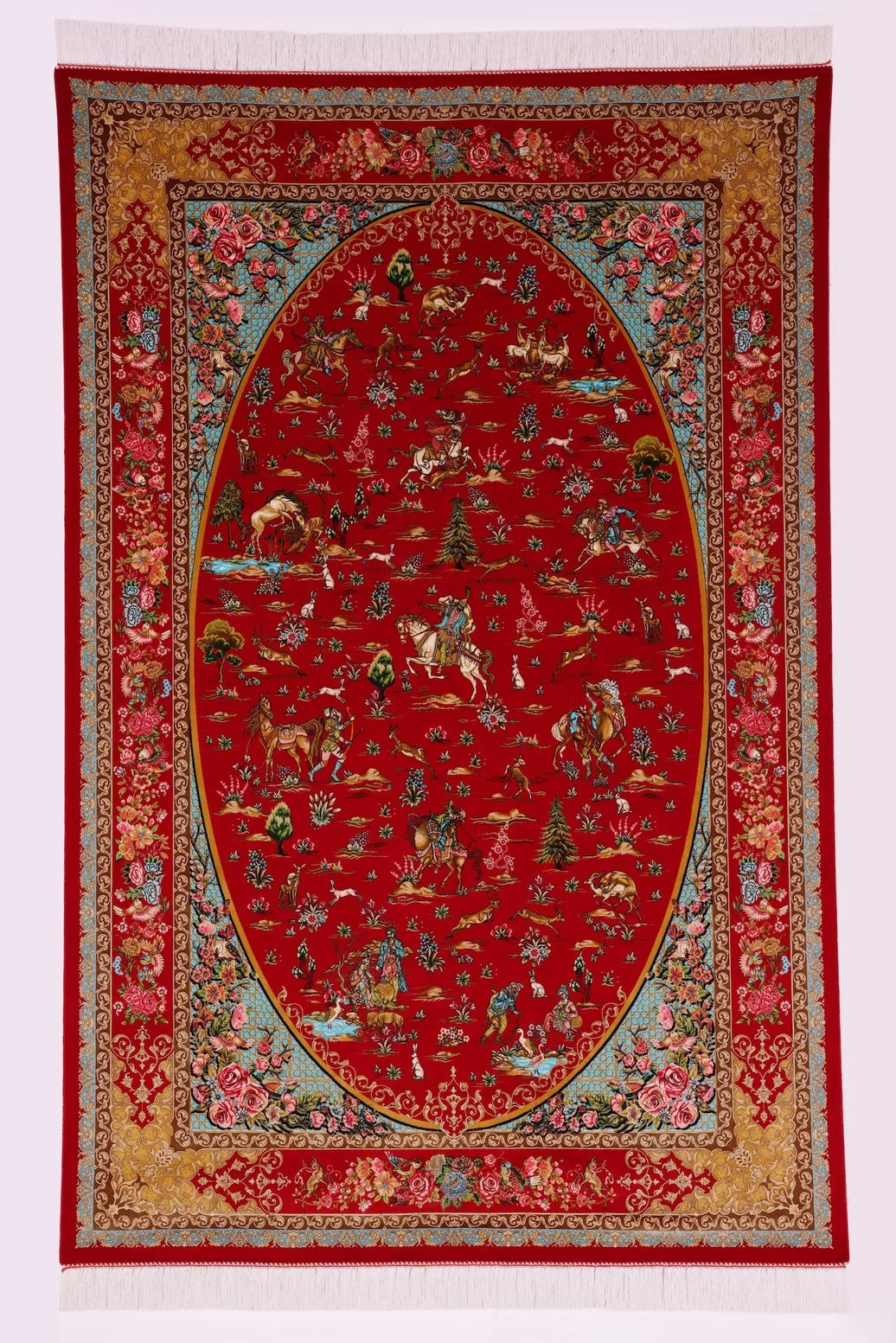
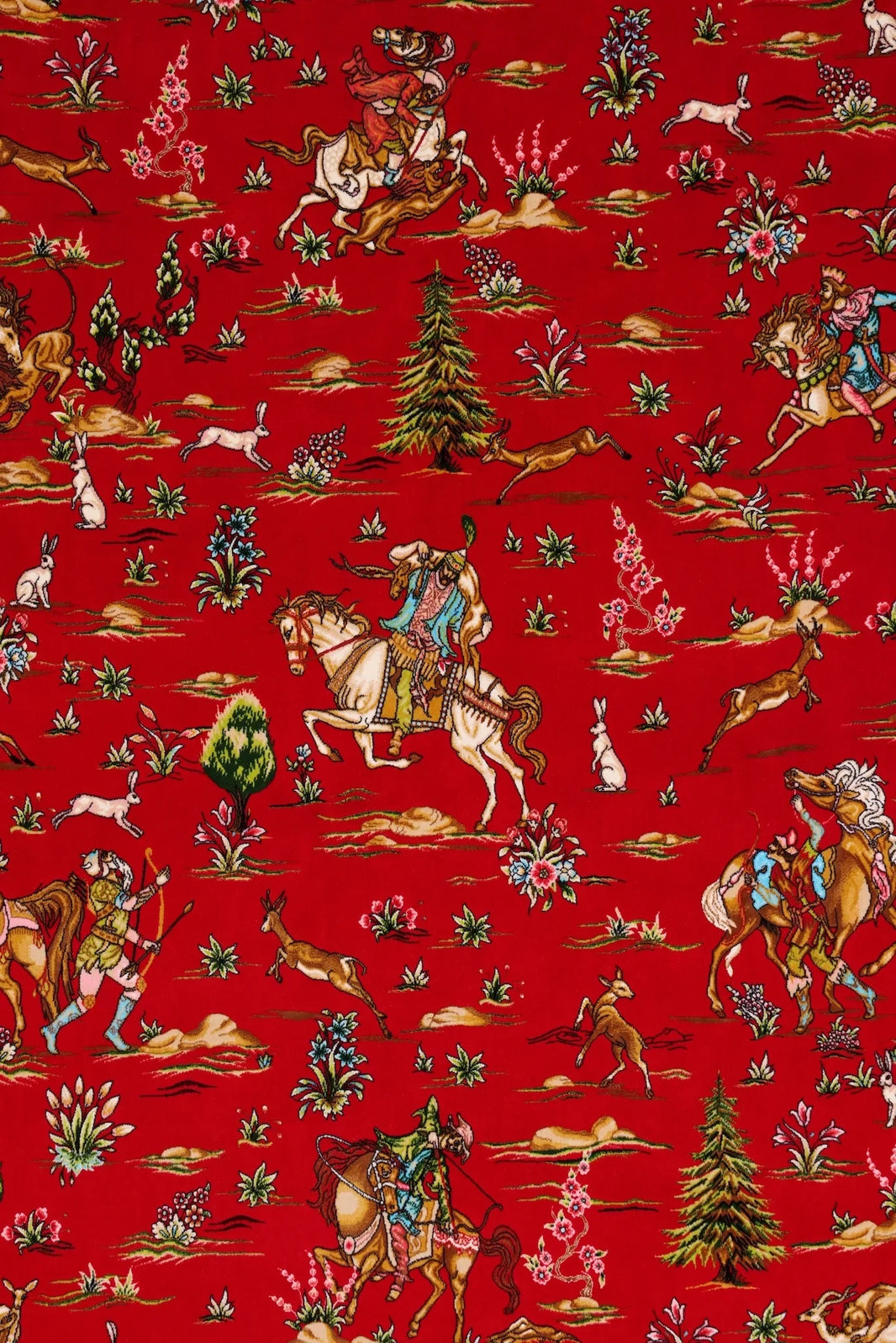
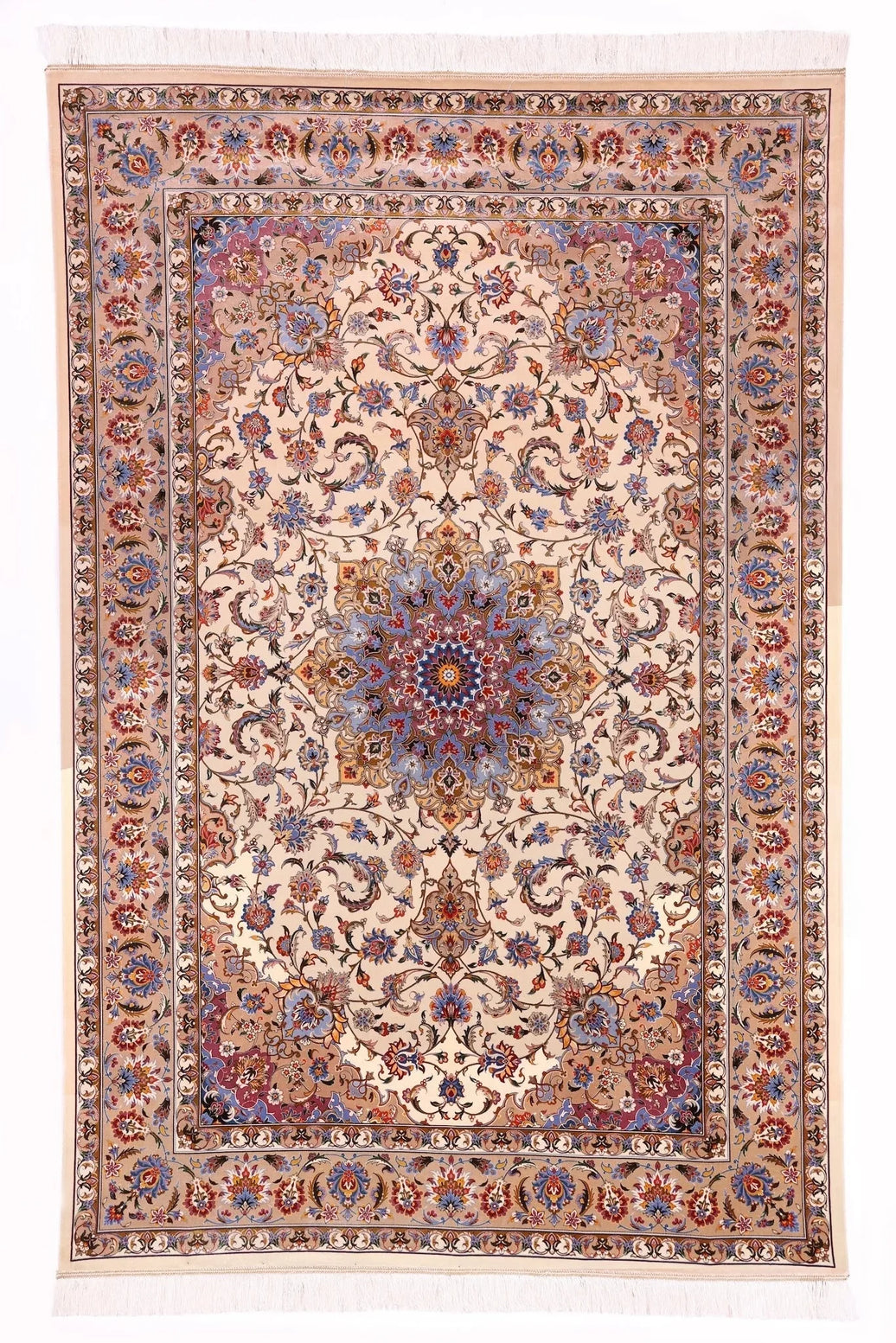
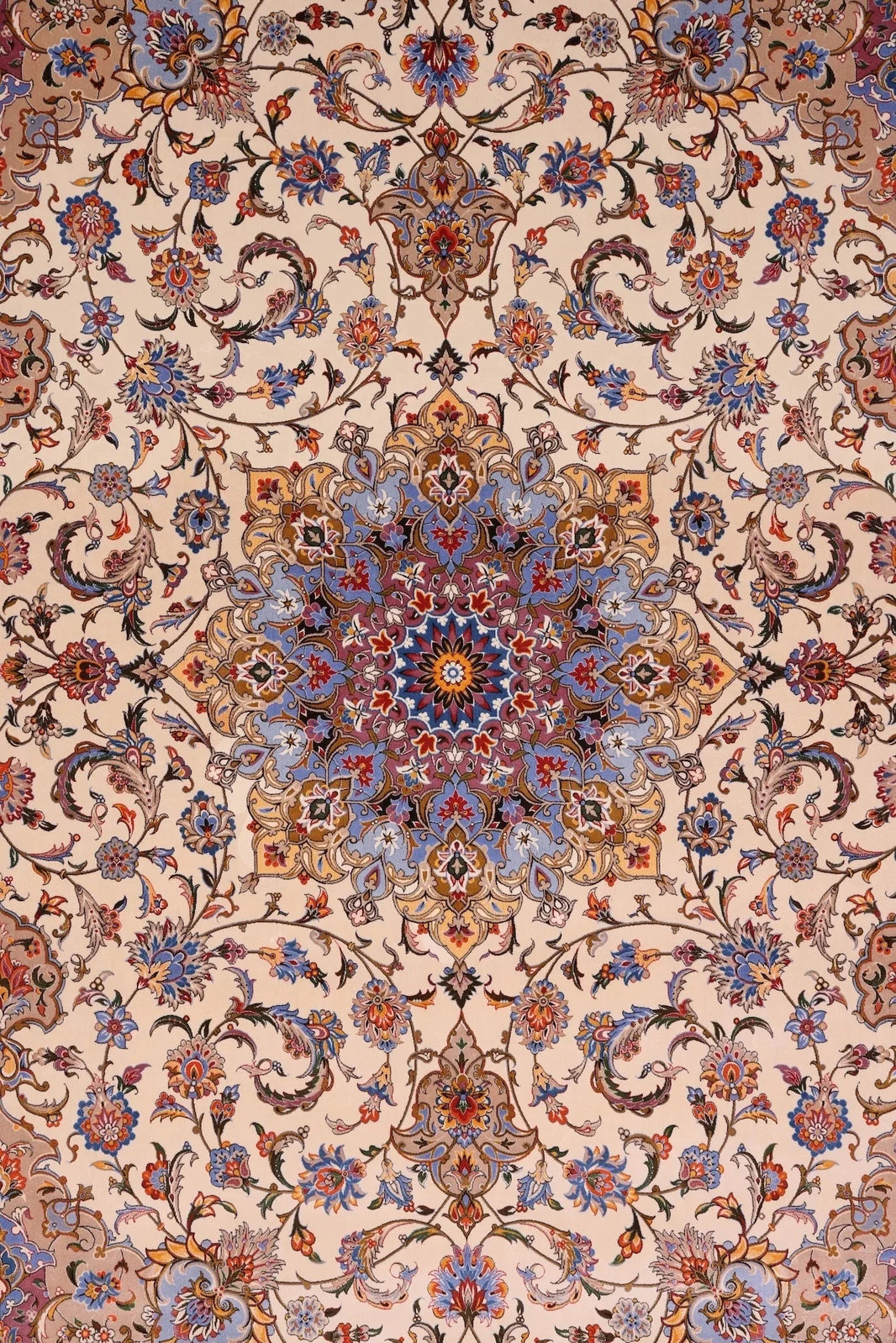
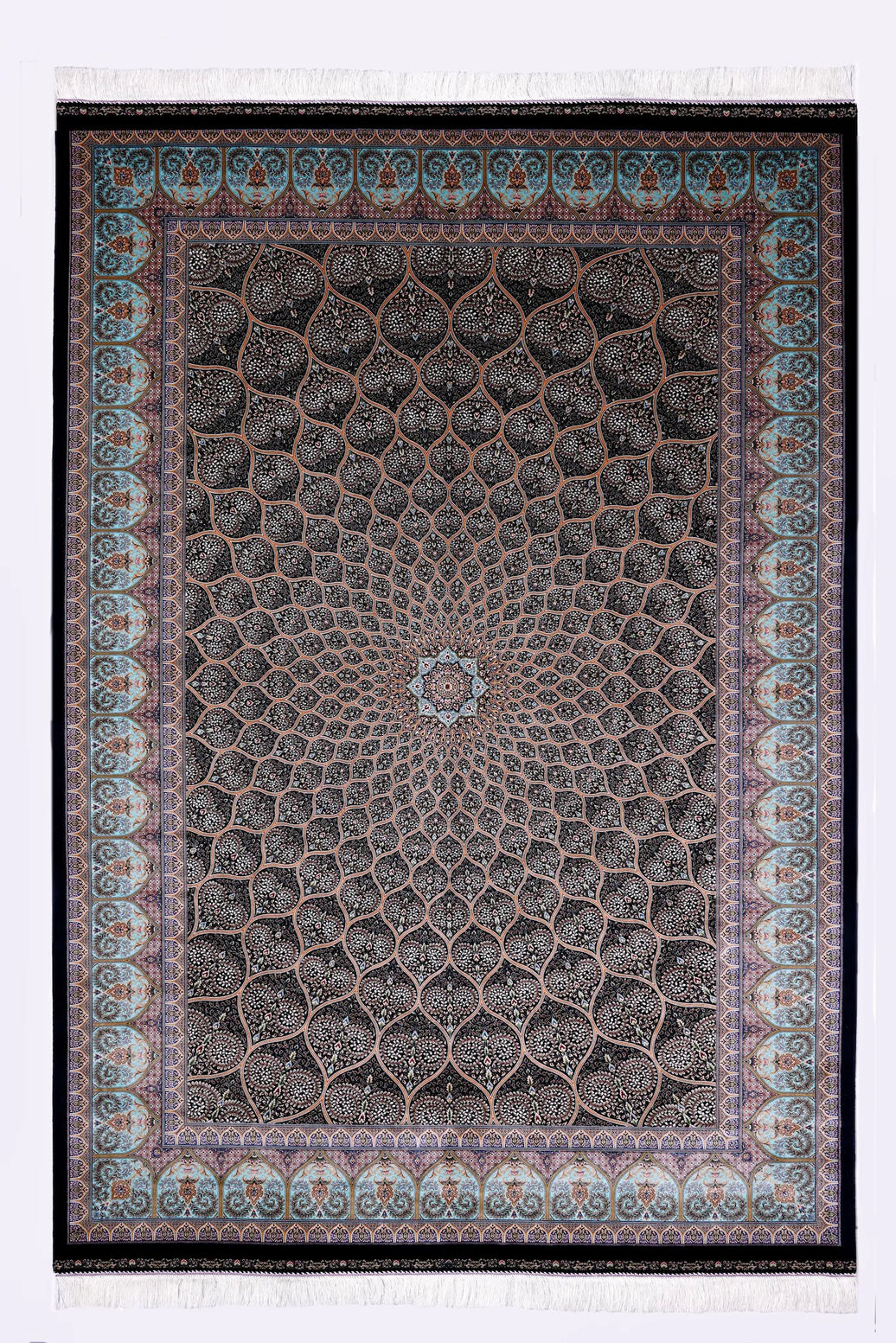
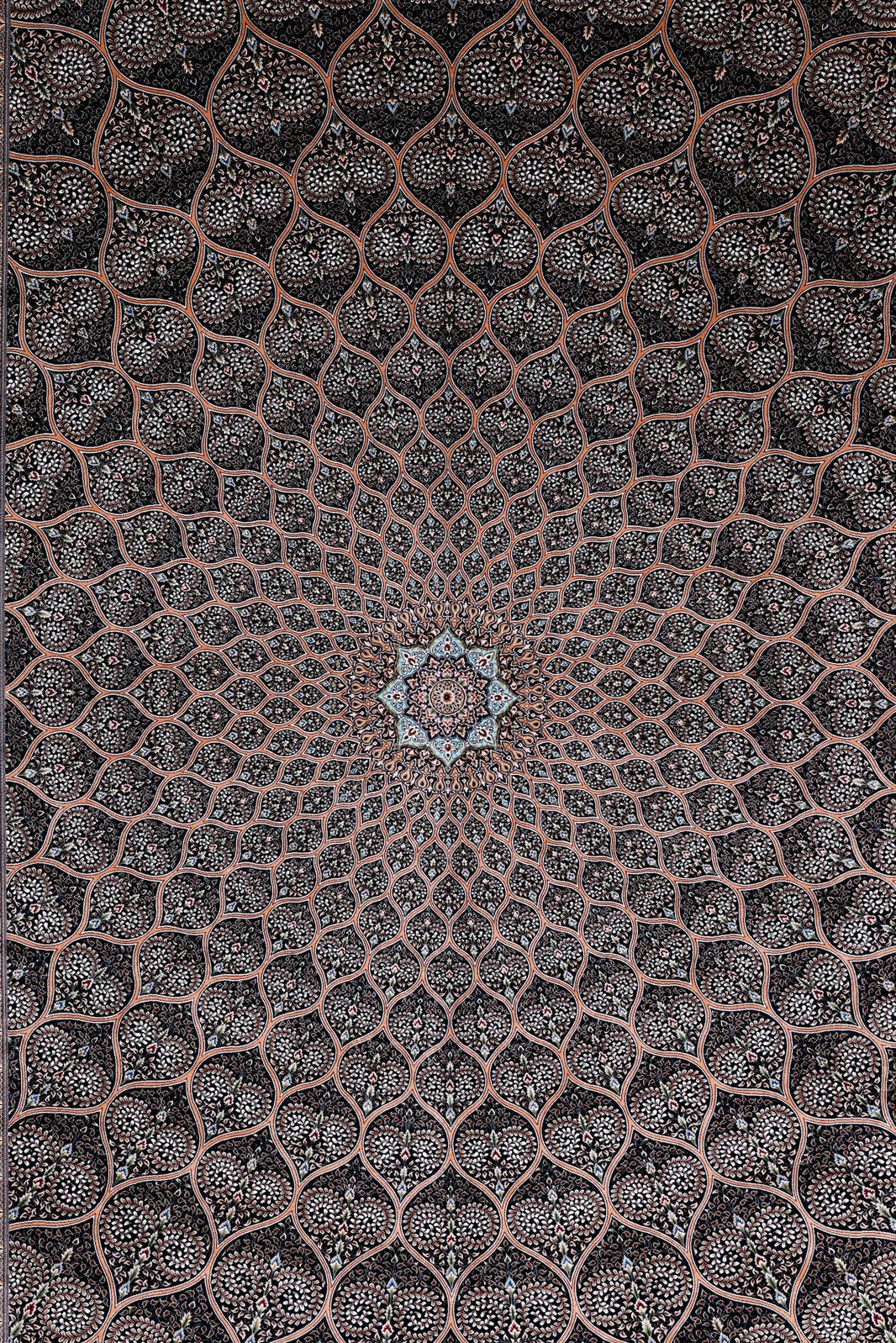
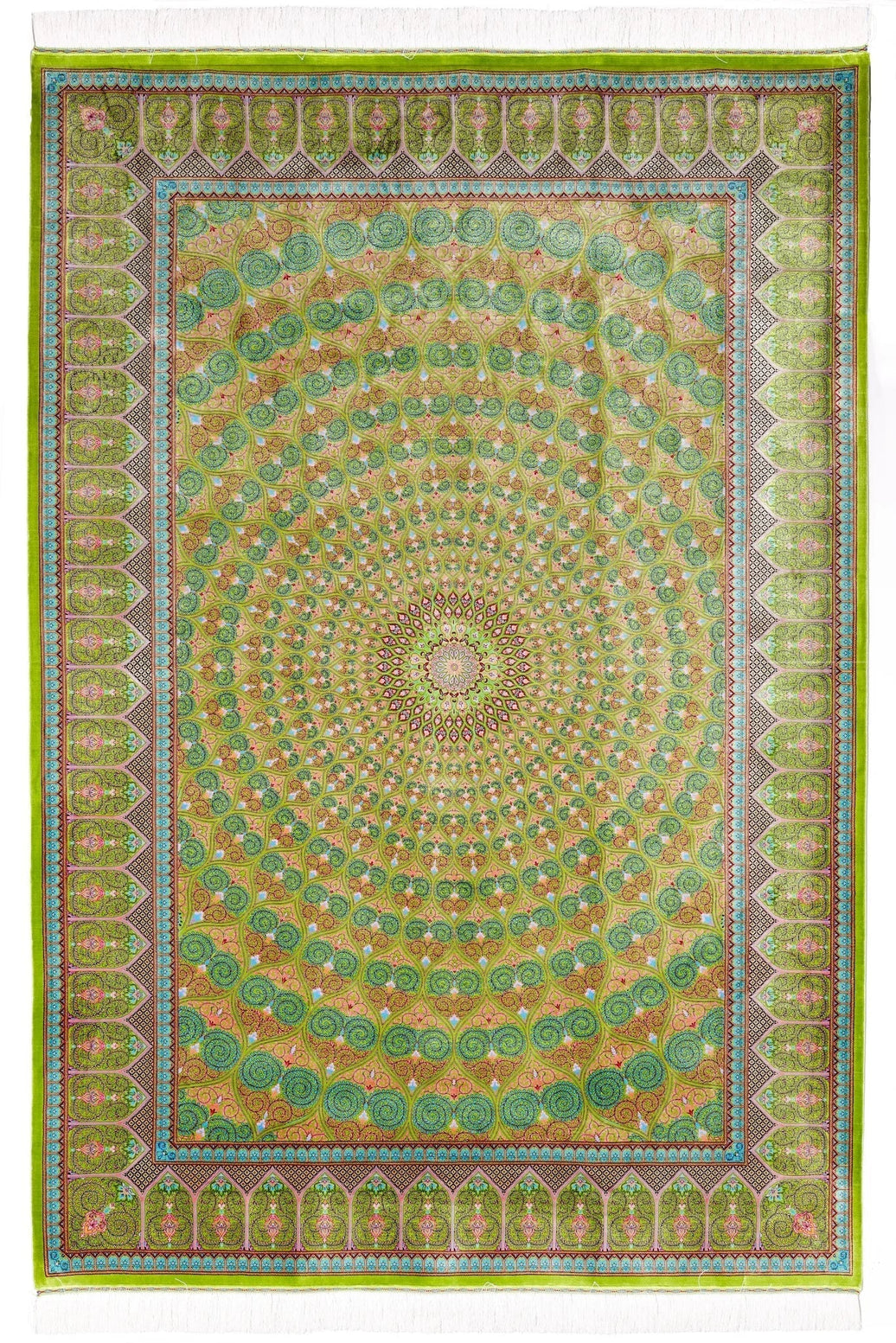
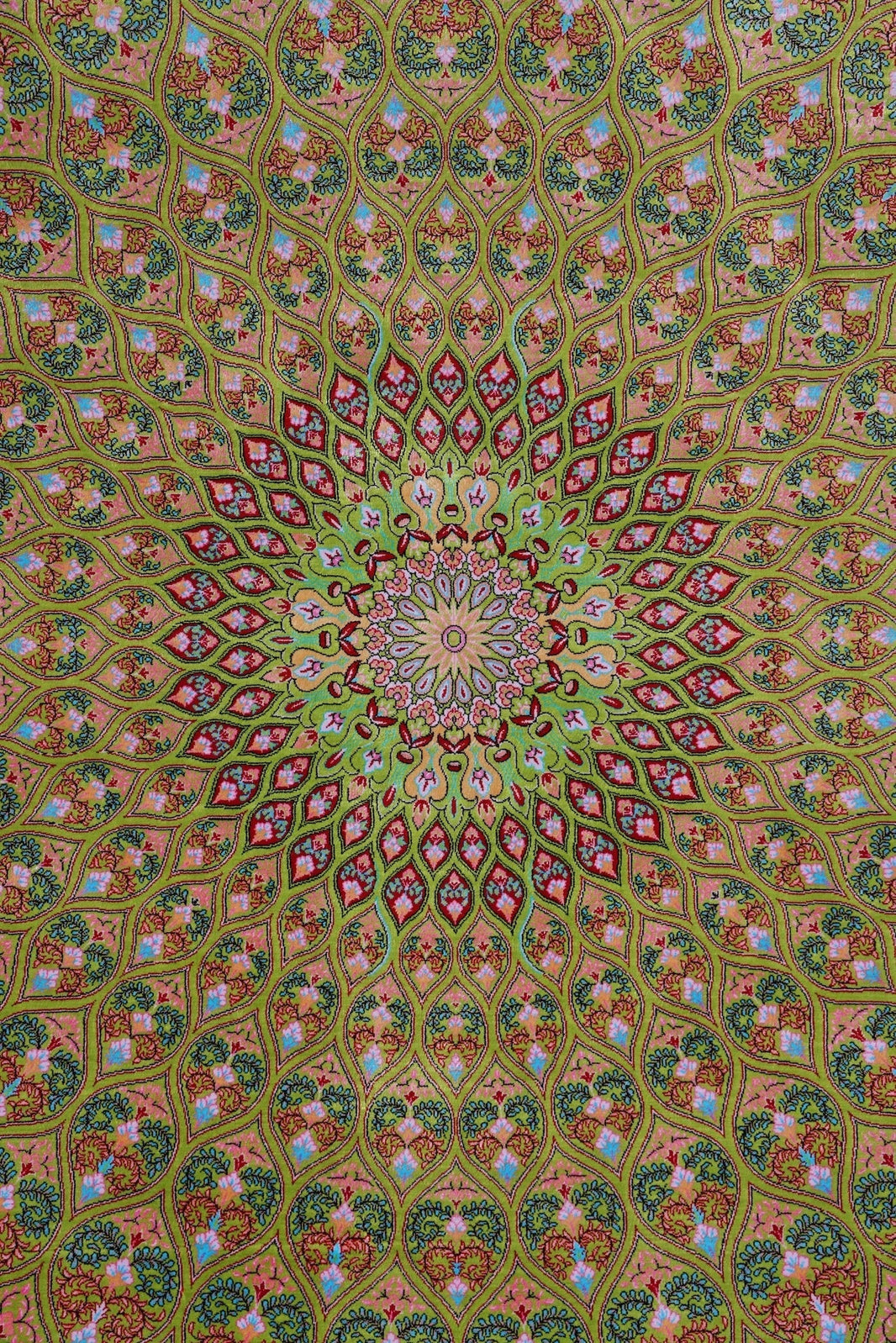
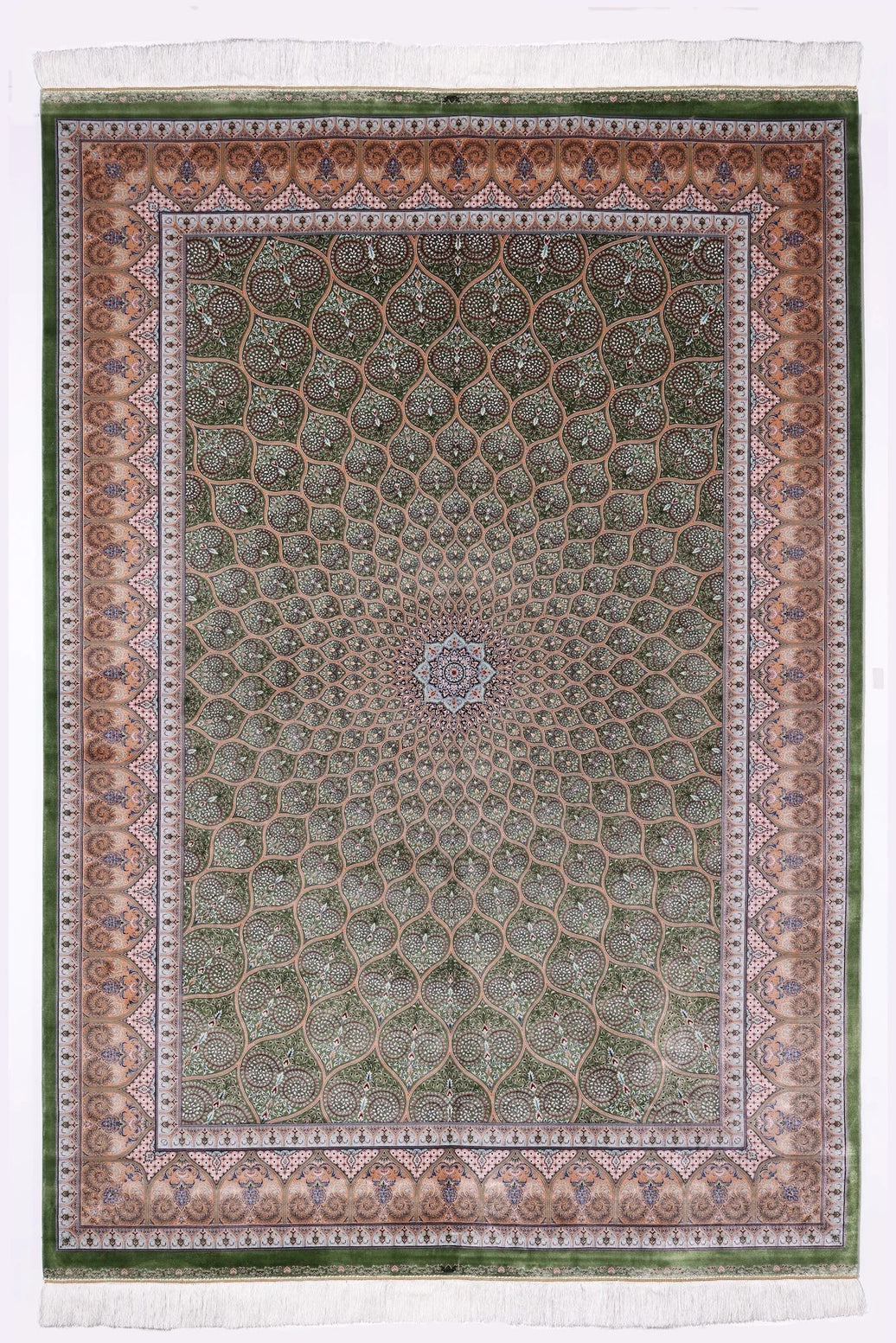
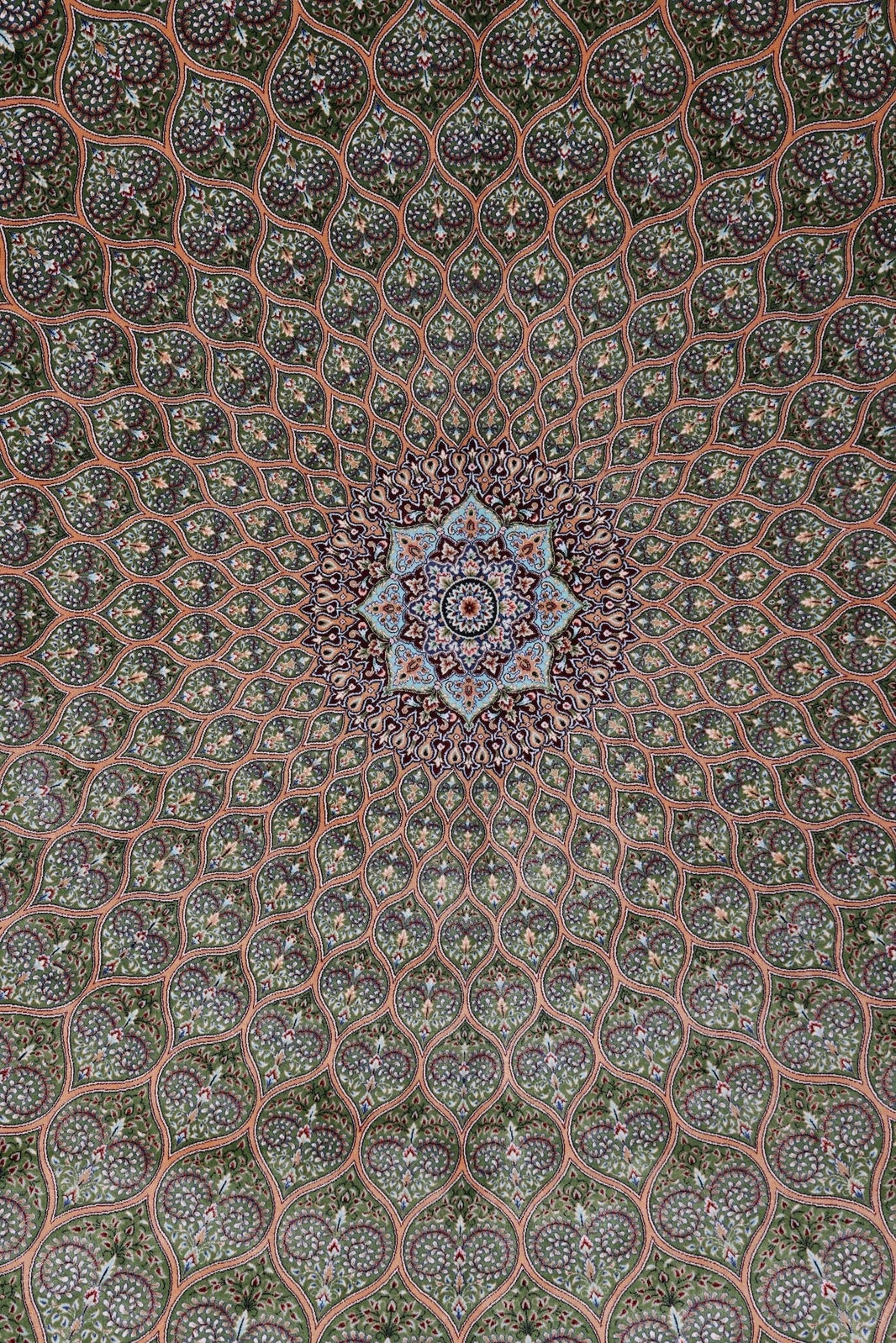
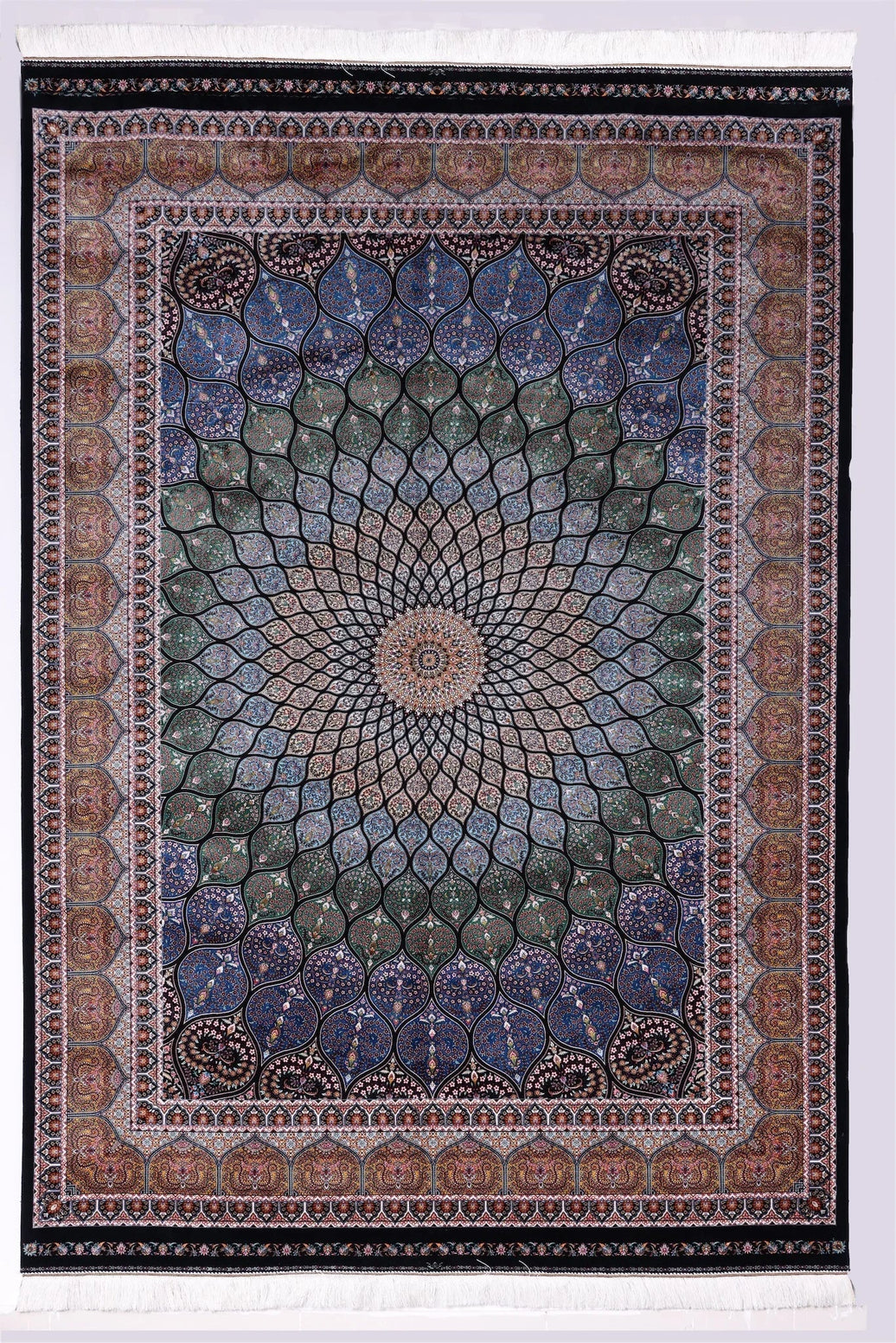
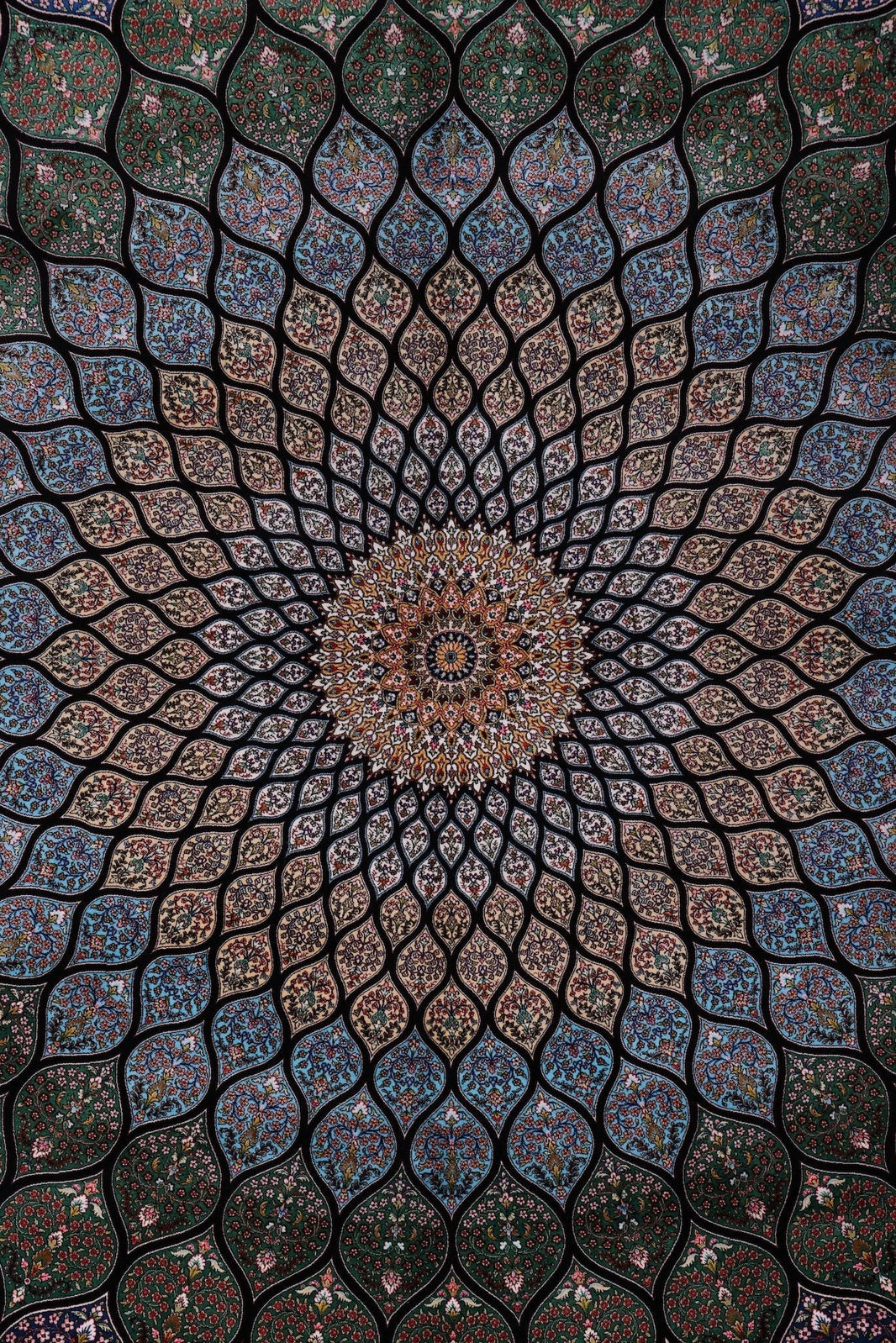
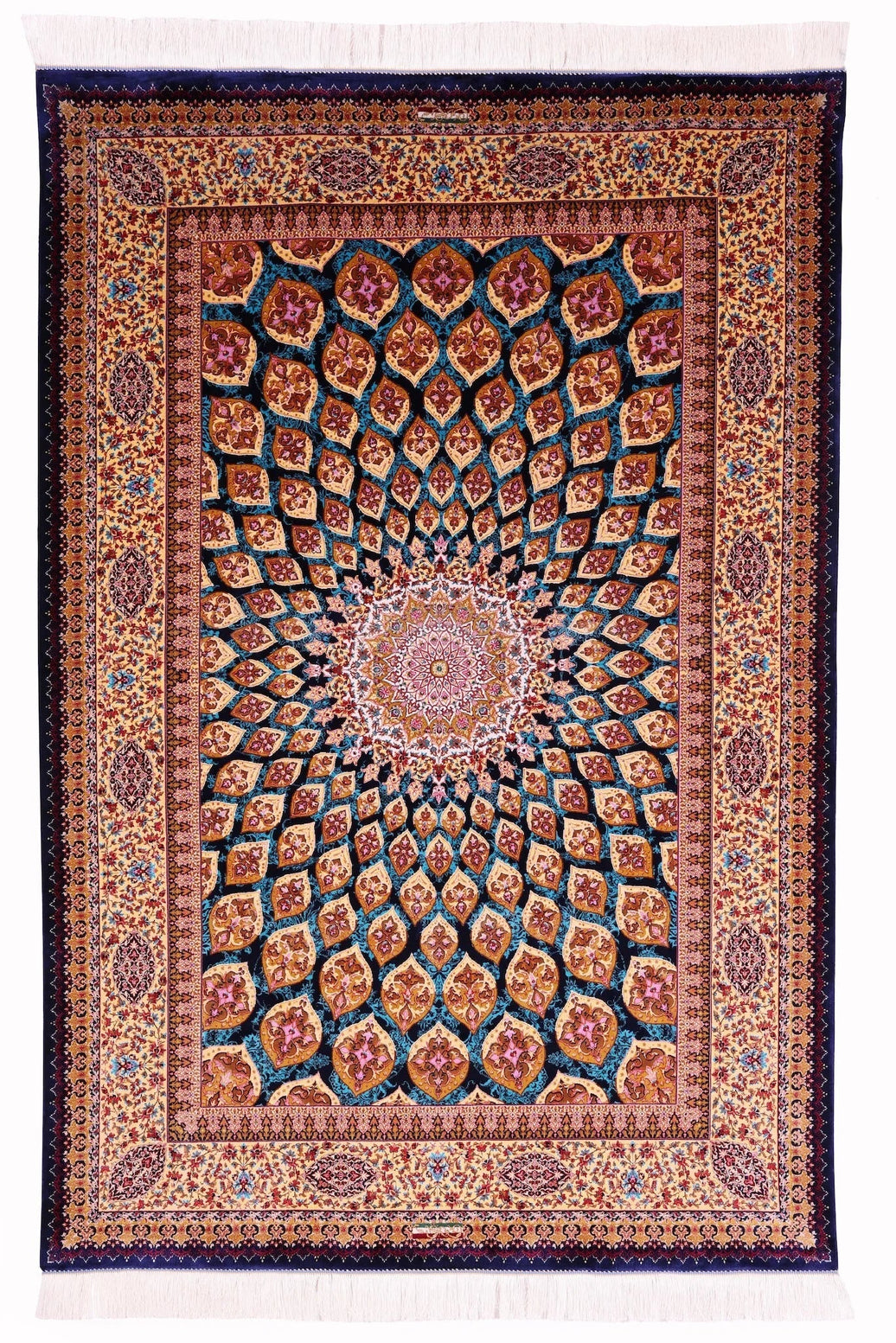
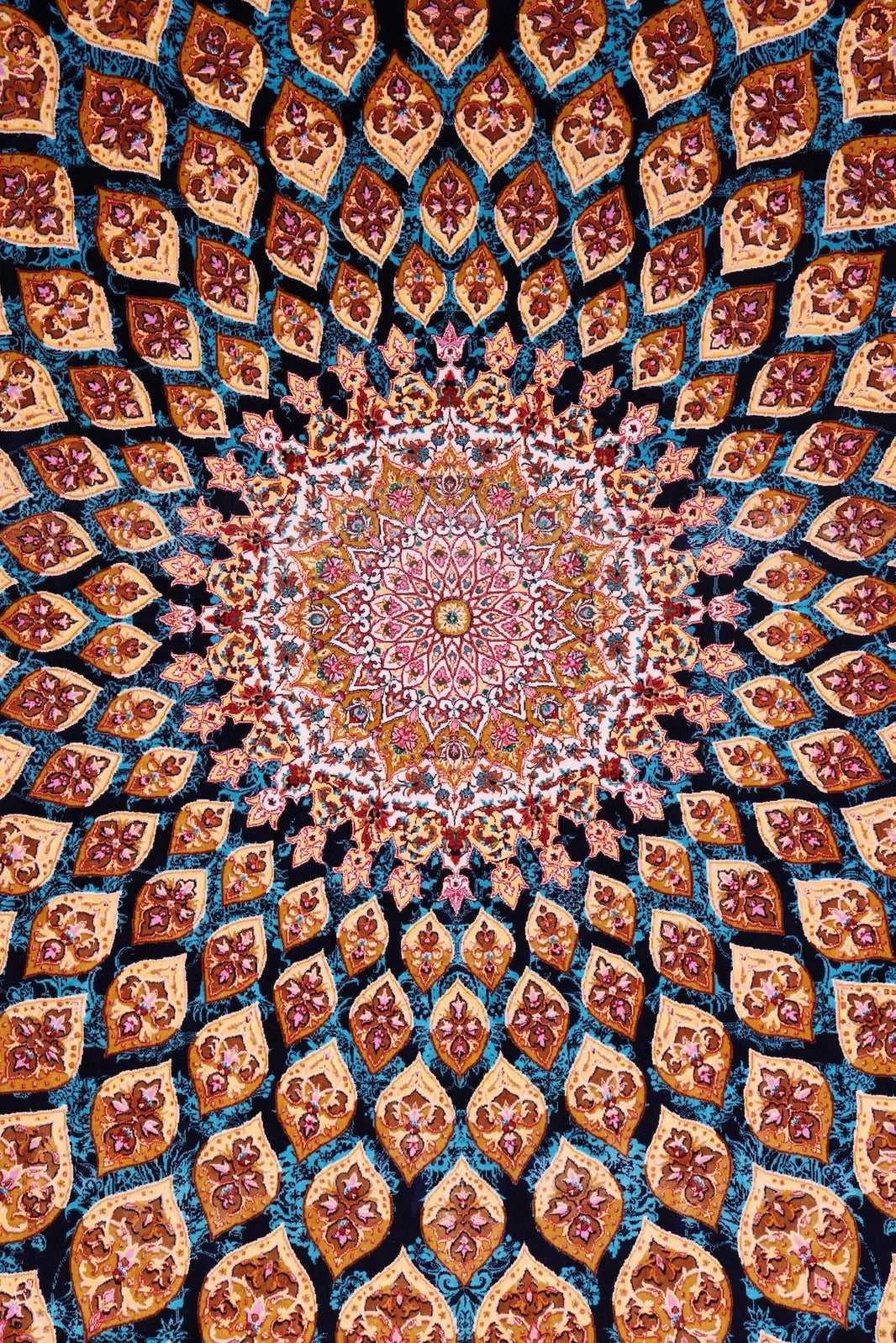
The Arghavan rug works this way in a living room. Its deep ground reads as a tonal anchor, the kind of foundation from which every other decision in the room can safely depart. The border holds it. The interior pattern carries enough visual movement to register as considered without demanding constant attention. It earns its place as the grounding layer, then steps back to let the room build above it.
Drapes, Throws, and Cushions: The Hierarchy Above
Once the rug is established, the layering logic becomes clear. Drapes define vertical scale, drawing the eye upward and giving the room its sense of height and containment. Their weight matters as much as their colour. A fabric that falls heavily, pooling slightly at the floor, communicates a different register of warmth than a linen that skims. Choose accordingly, not by matching the rug, but by responding to it tonally.
Throws and cushions carry the contrast. This is where scale difference between surfaces becomes the defining move. A silk-like pile, fine and luminous, reads entirely differently beside a chunky knit or a nubby linen. The juxtaposition is what creates tactile depth, the quality that makes a room feel considered rather than coordinated. A room where every surface has the same weight and texture registers as flat, however expensive the individual pieces.
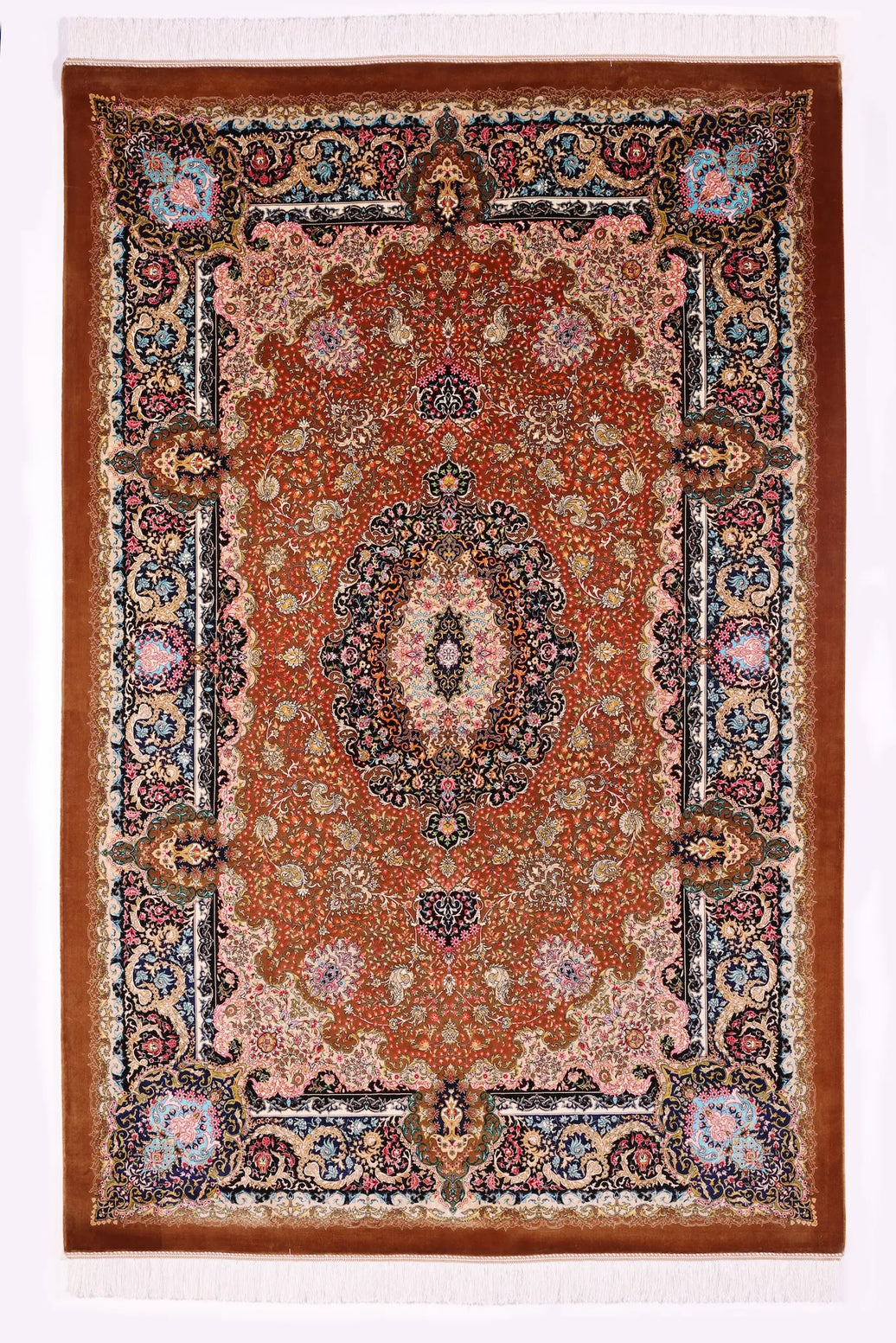
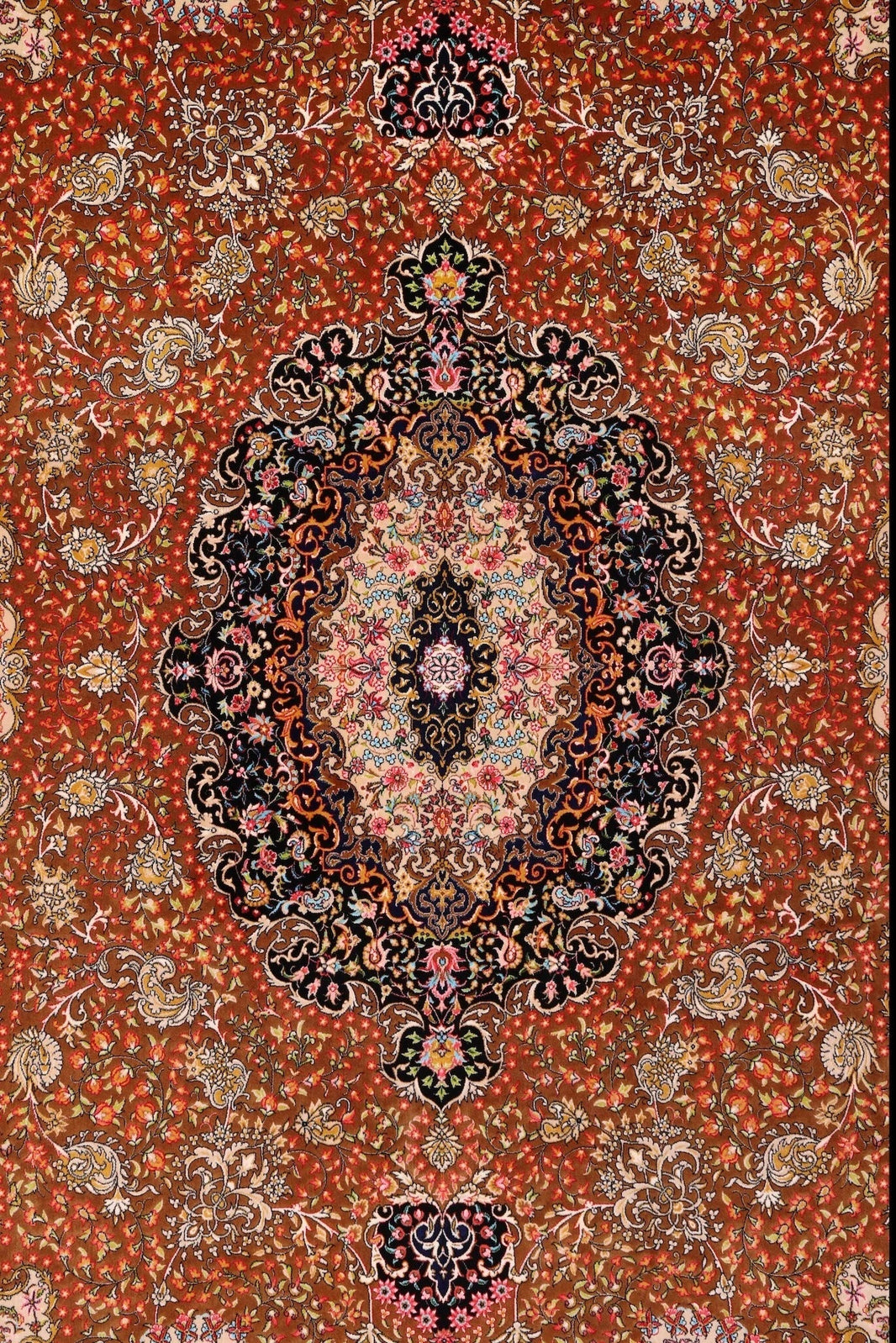
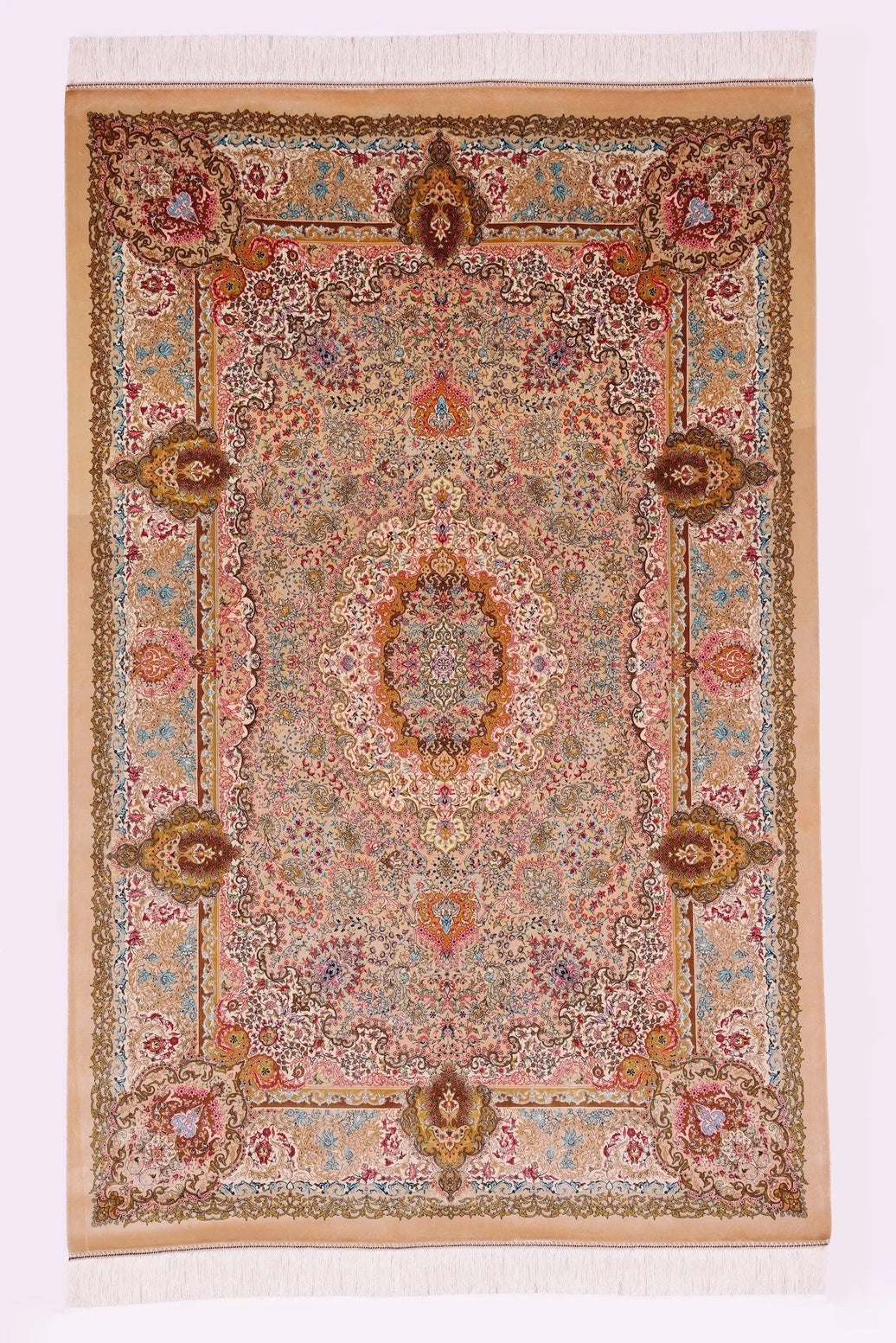
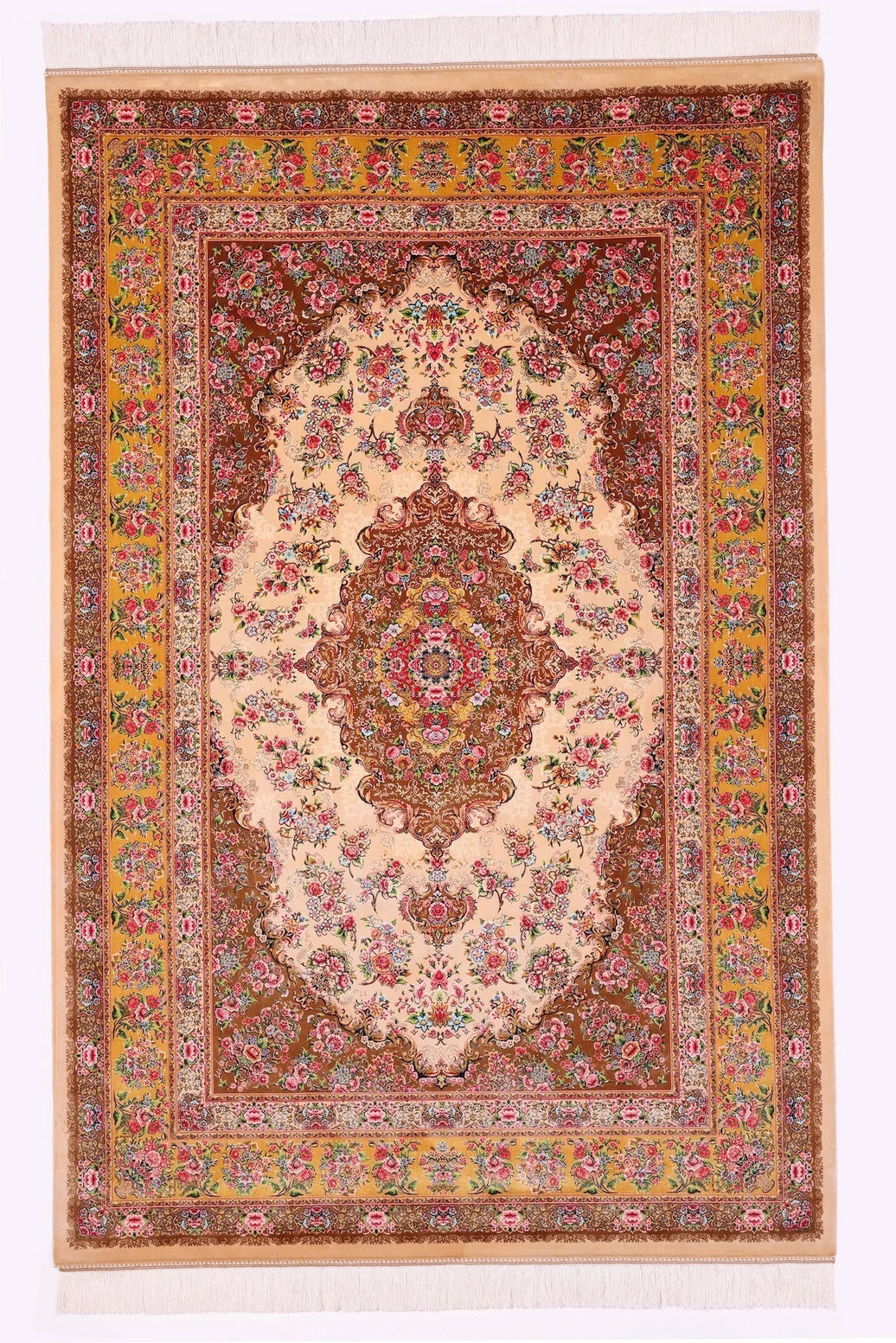
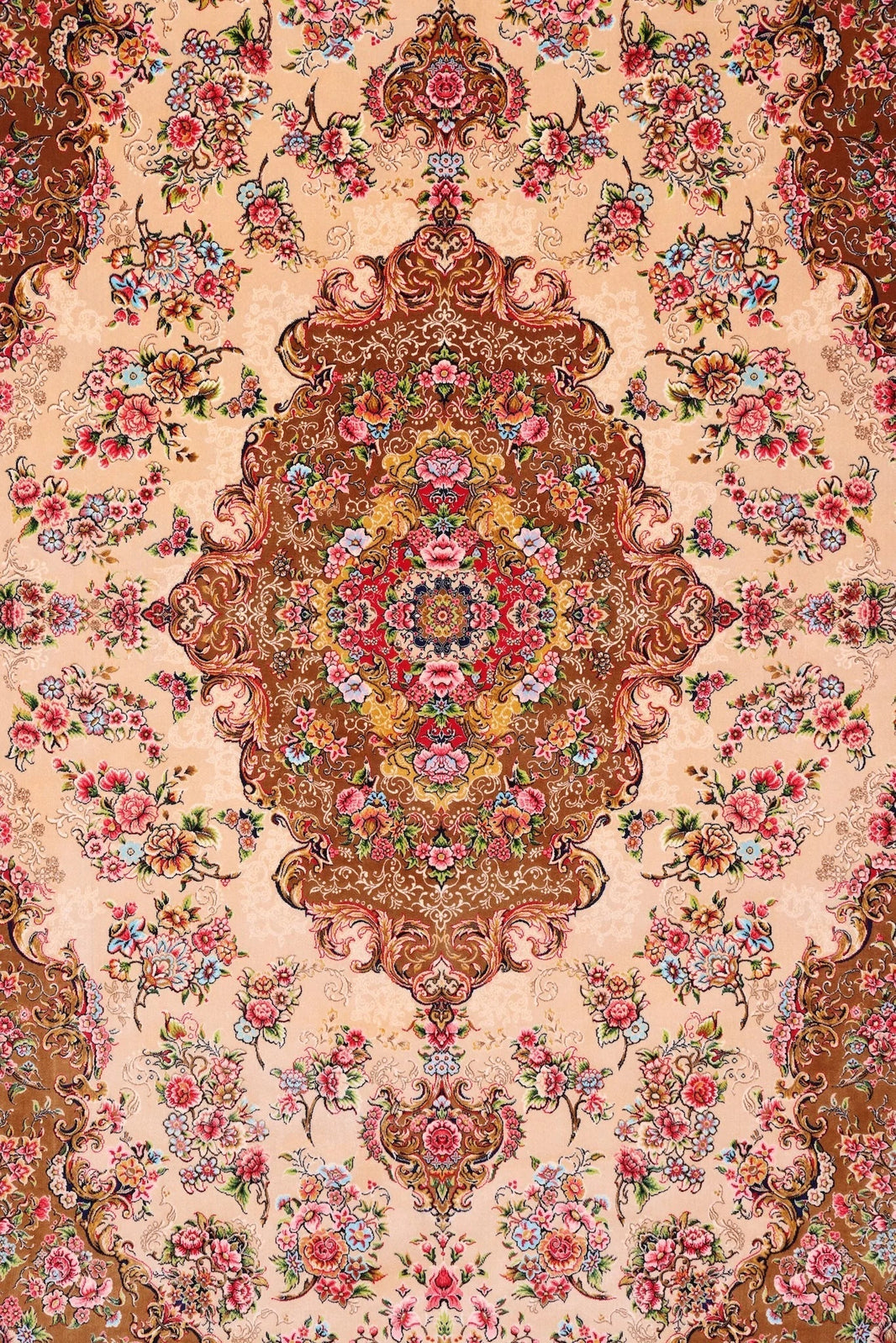
The Aylar in Cinnamon demonstrates this principle in a warmer register. Laid under a sofa anchored with a cream linen throw and one or two cushions in a terracotta or deep ochre, it creates exactly the layered warmth that a fully furnished room so often lacks. The cinnamon ground connects downward to the timber floor and upward to the warm-toned textiles above it, becoming the link in a chain of considered decisions.
The Move That Makes Layering Look Intentional
There is one technique that separates textile layering that looks assembled from textile layering that looks intentional. Pull a colour from the rug's border or medallion, and echo it in one or two cushions. Not replicated exactly, but present. The same family, a tone or two lighter or deeper.
This is the move that closes the composition. The eye travels from the cushion to the rug and finds the relationship. The room suddenly holds. What felt like a collection of beautiful things reveals itself as a considered edit, which is precisely what it now is.
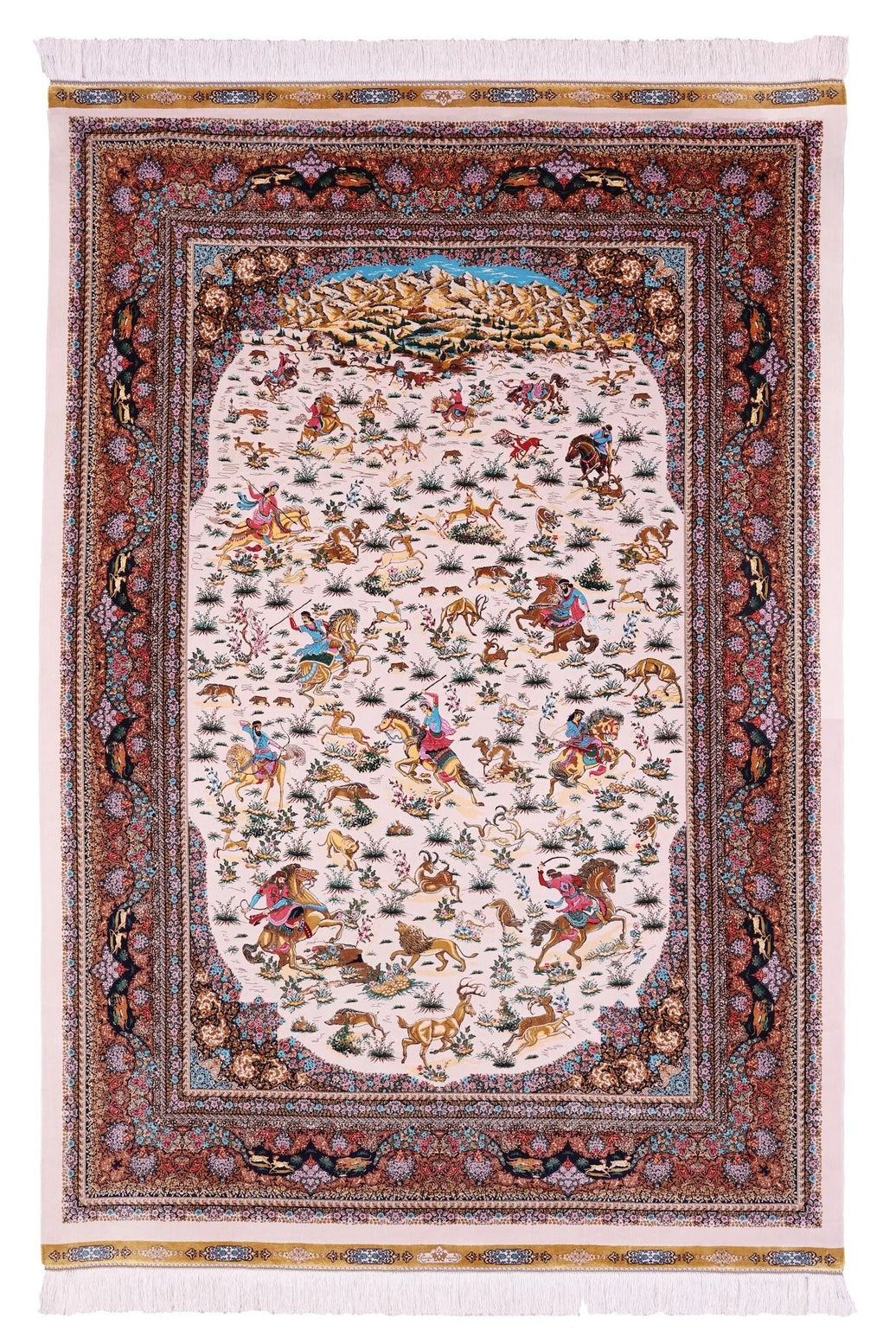
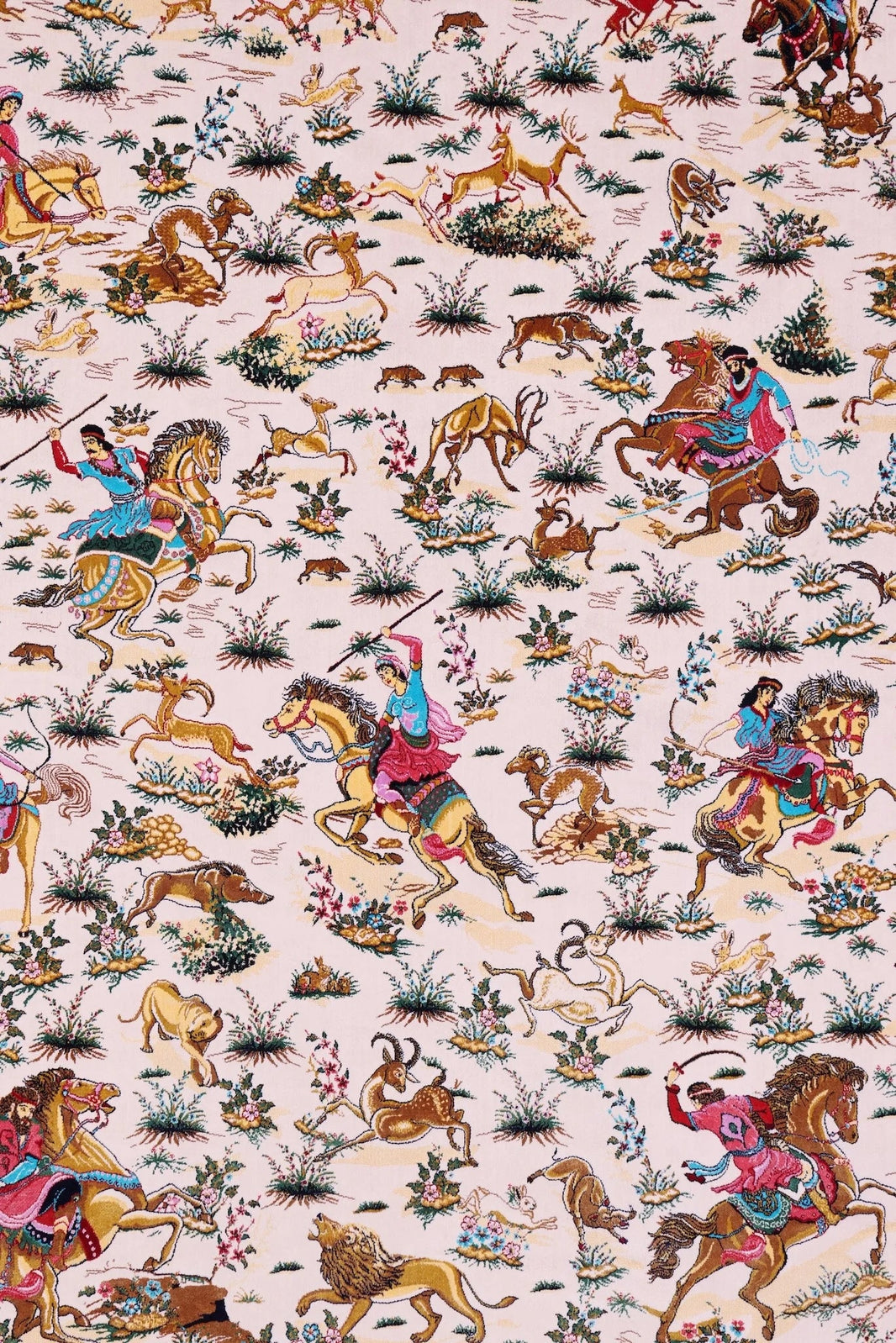
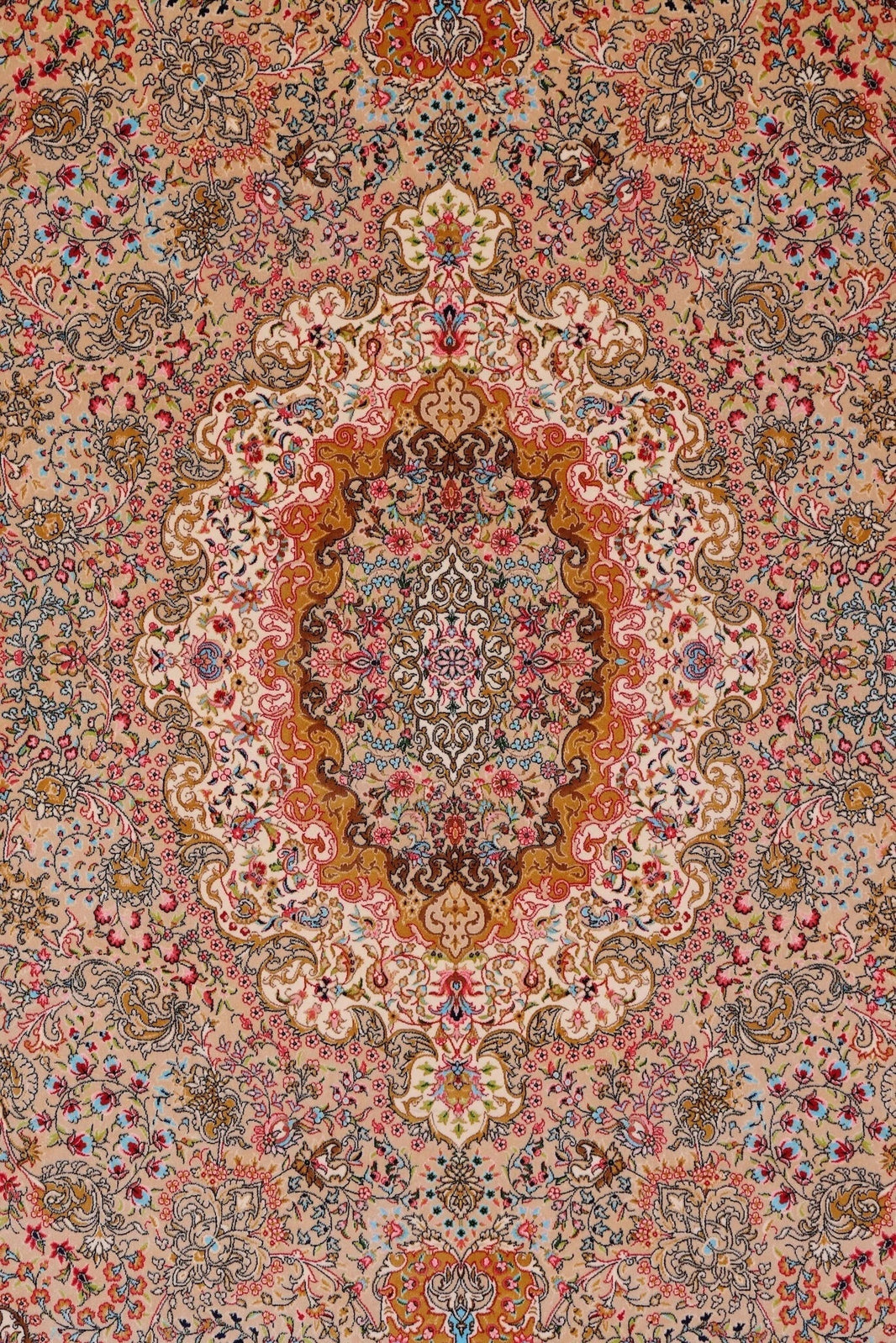
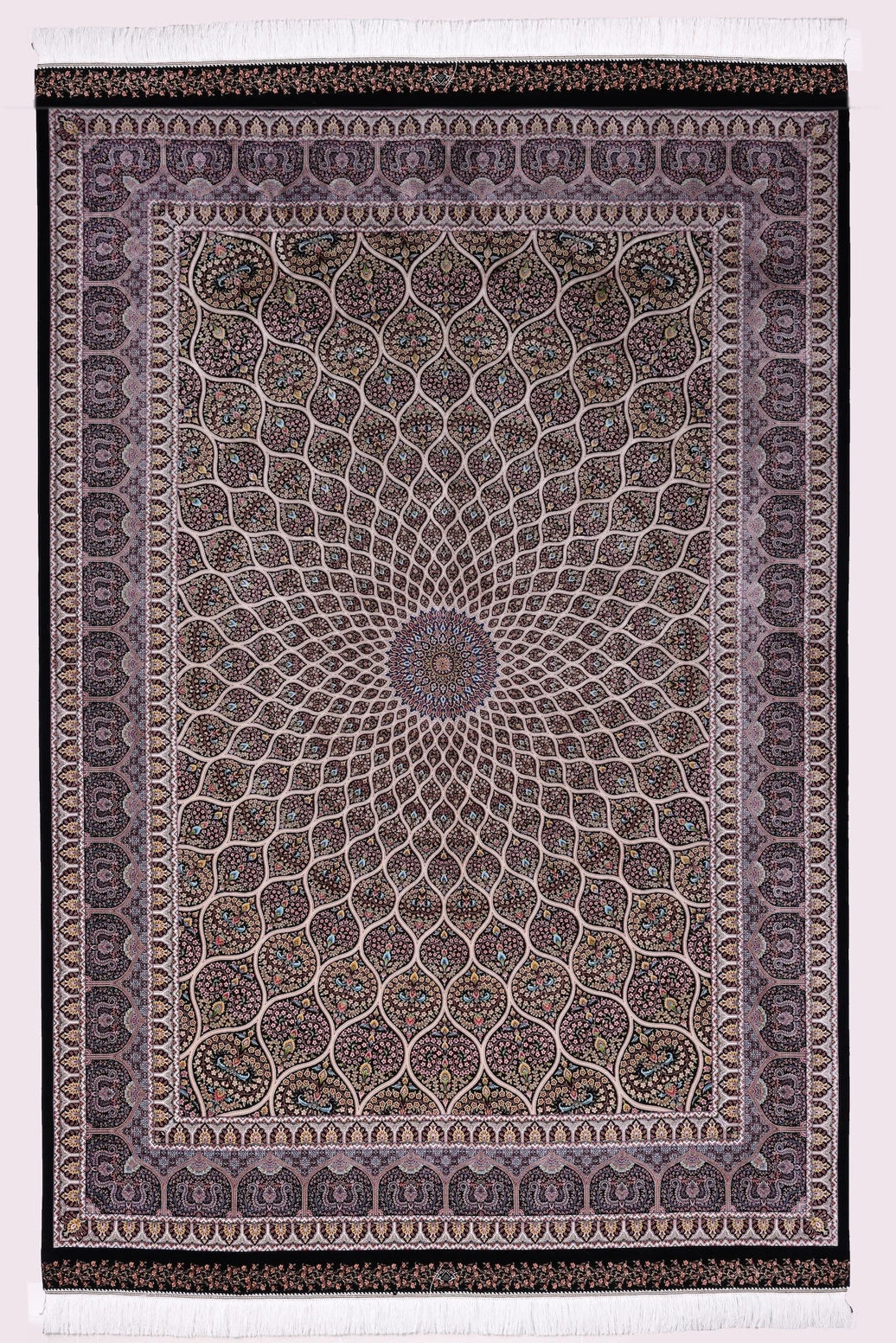
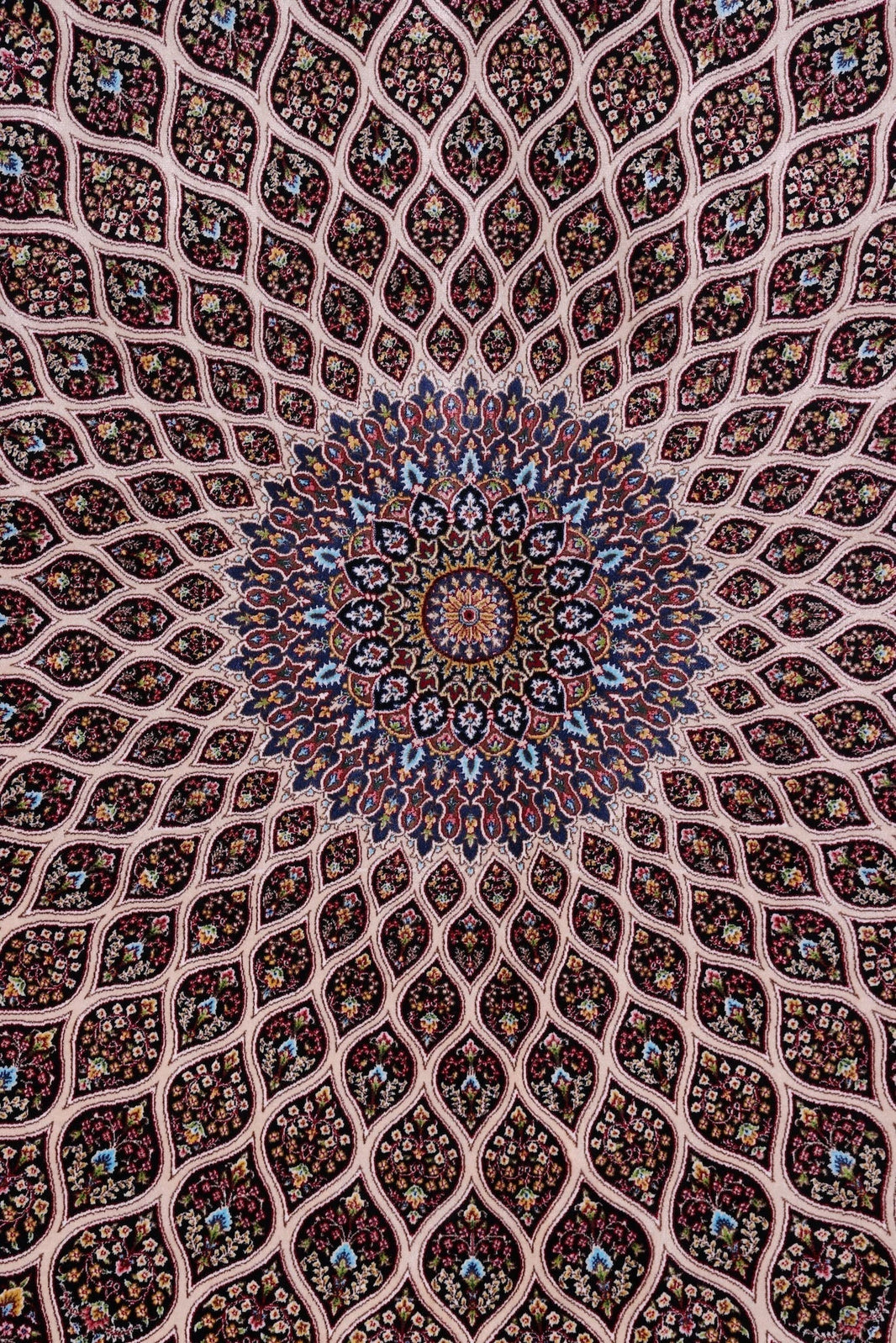
The Baam in Beige is built for this kind of work. Its quieter ground and layered border detail offer multiple tonal points of reference, ivory, sand, warm stone, each one available to be echoed in cushion or throw. The rug becomes the source from which the rest of the room takes its cues. For those building a more neutral composition, understanding how a grounding colour anchors the room's full palette is the essential next step before introducing layers above it.
Bringing the Composition Together
The principle, held simply, works as follows.
- Lay the rug first. Let it set the tonal key for everything that follows.
- Bring drapes in a weight and colour that responds to the rug without mirroring it. Contrast in tone or texture, never both at once.
- Add a throw in a fabric that differs in surface quality from the rug. A chunky knit beside a fine-pile rug; a heavy linen beside something smoother. The contrast is the point.
- Choose two cushions that echo a colour drawn from the rug's border or pattern. One in a deeper version of that tone; one lighter. The room closes.
The room that felt complete but unresolved has, with these four decisions made in sequence, found its logic. Nothing was replaced. Nothing was removed. The textile hierarchy was simply established, and everything else fell into place around it.
A furnished room becomes a composed one the moment a single textile earns the authority to anchor the rest. The rug is that textile.
Visualize this rug in your room →
Questions, answered
how do you layer textiles in a living room?
Start with the rug as your tonal anchor. Layer drapes above it in a weight that responds to the rug without matching it. Add a throw in contrasting texture, chunky knit beside fine pile, heavy linen beside smooth. Finally, choose two cushions that echo a colour from the rug's border, one deeper and one lighter. The hierarchy closes the composition.
why does my room feel empty even though it's fully furnished?
Without a textile hierarchy, a room becomes a collection rather than a composition. The absence of a grounding layer, one surface carrying enough visual weight to organise everything above it, leaves beautiful things assembled without logic. A Persian rug establishes that foundation, transforming accumulation into atmosphere.
what makes a persian rug the best foundation for layering textiles?
Persian design patterns were developed across centuries to mediate between surfaces, absorb the eye, and hold colour without insisting on it. A Persian rug touches everything else in the room, furniture rests on it, light reflects off it. It does not compete with surrounding textiles; it resolves tension between plains and textures, earning its place as the grounding layer.
should throw pillows match the rug?
No. Pull a colour from the rug's border or medallion and echo it in one or two cushions, same family, a tone or two lighter or deeper. This creates the relationship that closes the composition. The contrast in tonal depth, not exact matching, makes layering look intentional rather than coordinated.