
Persian Rugs, Answered
Zagrosa · Interior Living
Persian rug heritage is having a moment in Australian homes, and the questions buyers are asking have shifted from 'what size?' to 'what does this mean?'. Here, the most searched questions about Persian rug craft, motifs, and tradition, answered directly, with no hedging.
Every border, every medallion, every field of interlocking vines is a sentence in a language Persian weavers have been perfecting for three thousand years.
Australian interior designers are reaching past Scandinavian minimalism and landing on something older, more layered, and considerably more specific. Persian rugs are appearing not as accent pieces but as the founding argument of a room, chosen for what they carry as much as what they cover.
What makes a Persian rug design different from any other rug?
Persian rug design is a visual language with a grammar, one that developed across centuries in specific cities and regions, not in a single tradition but in dozens of parallel ones, each with its own rules.
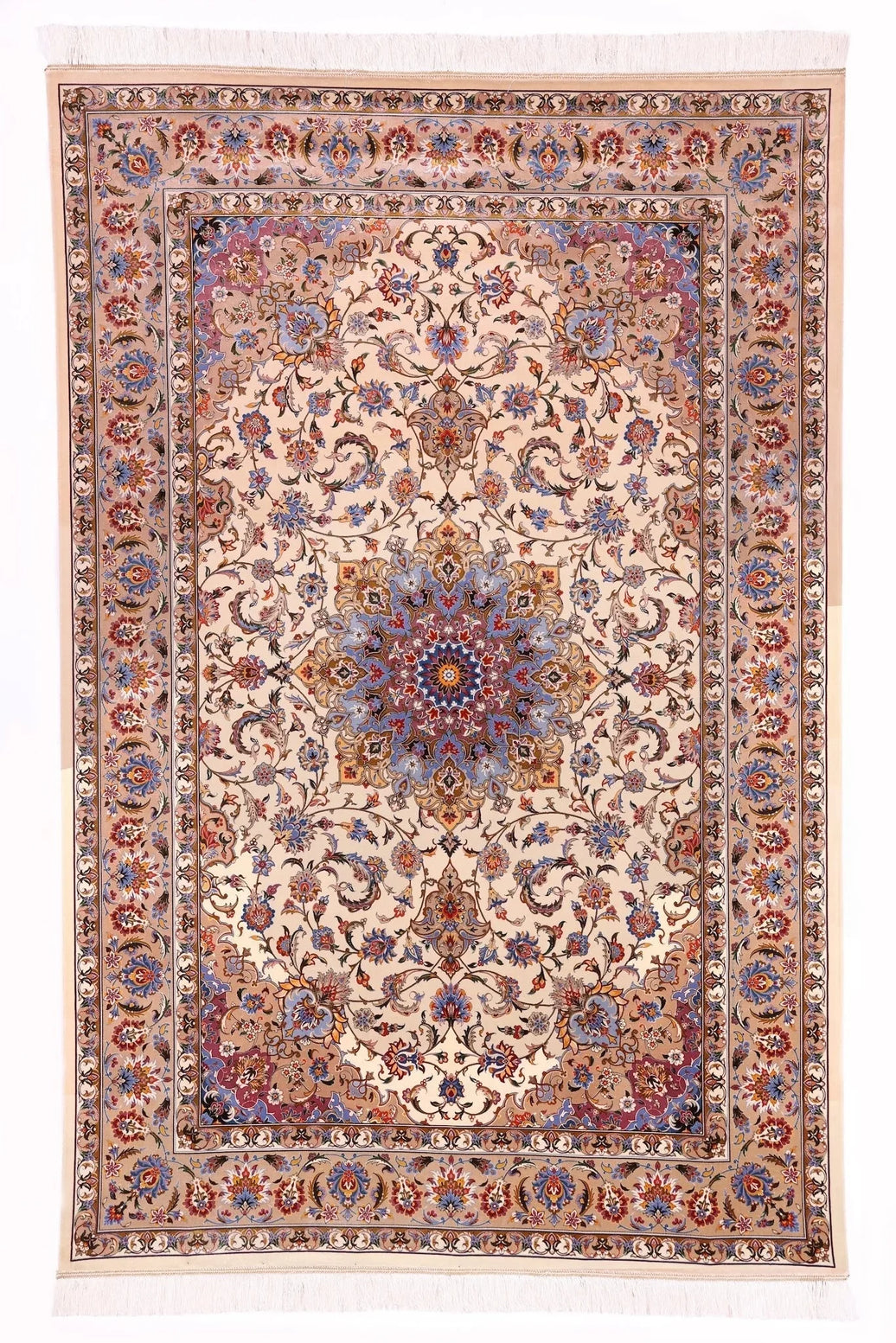
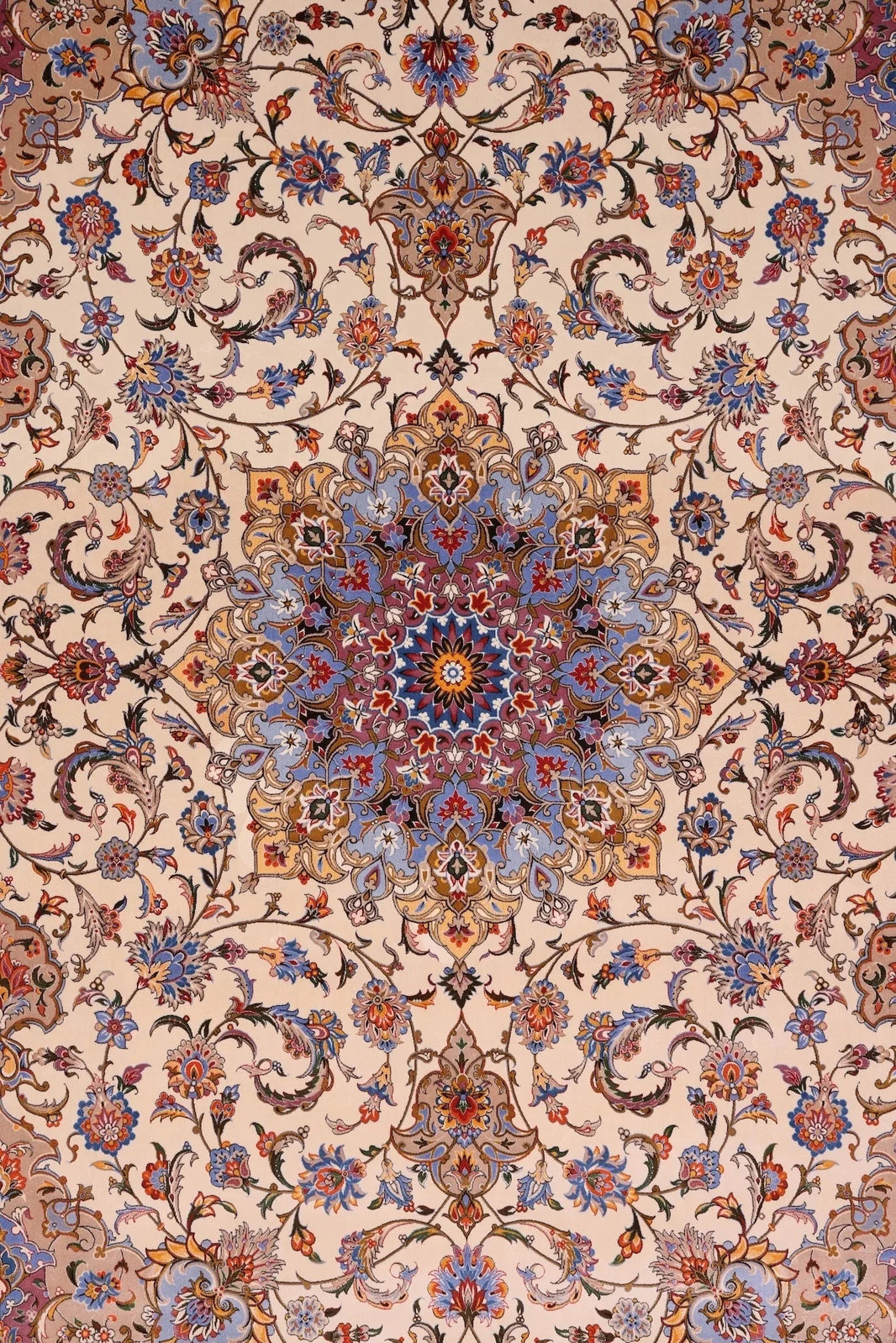
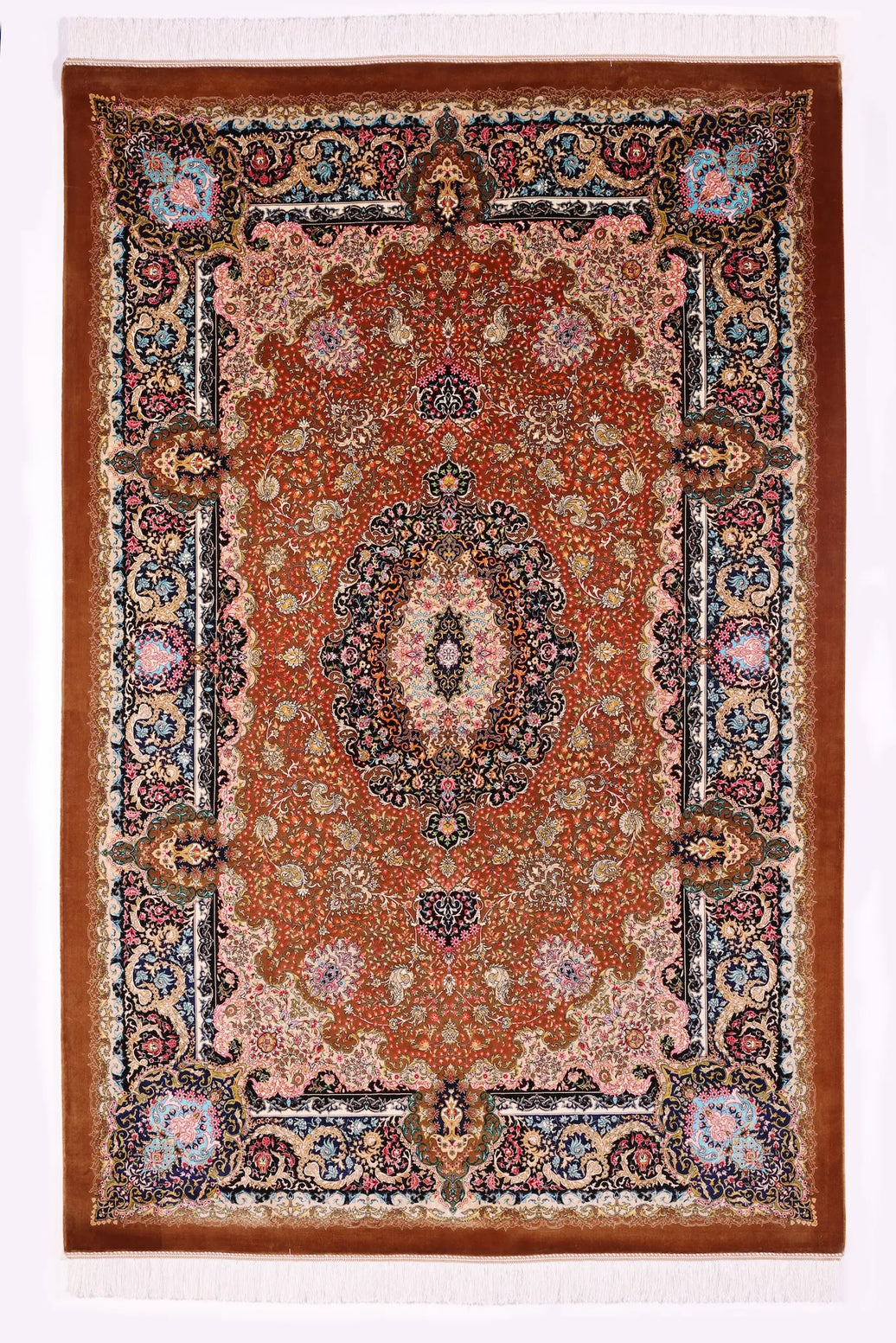
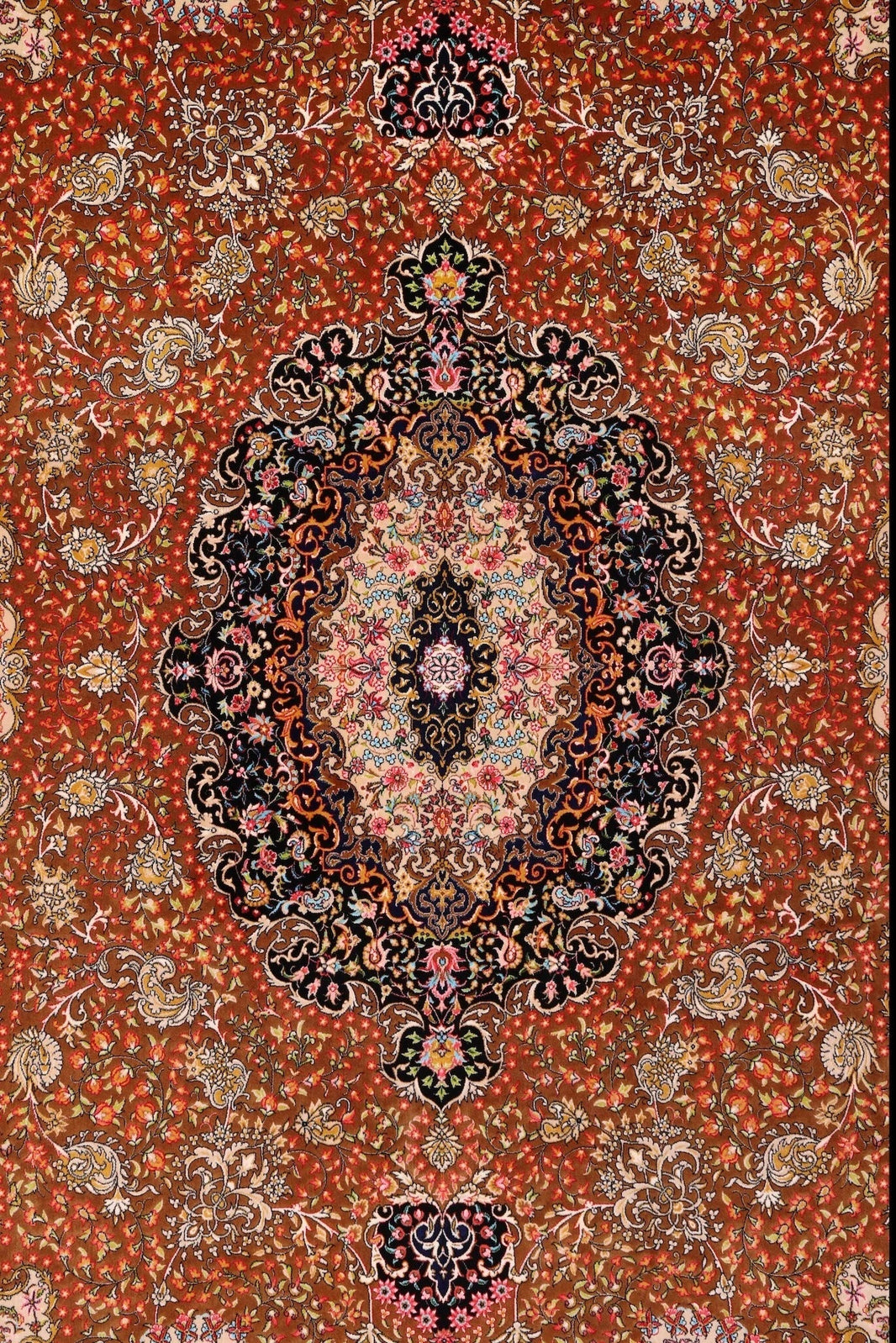
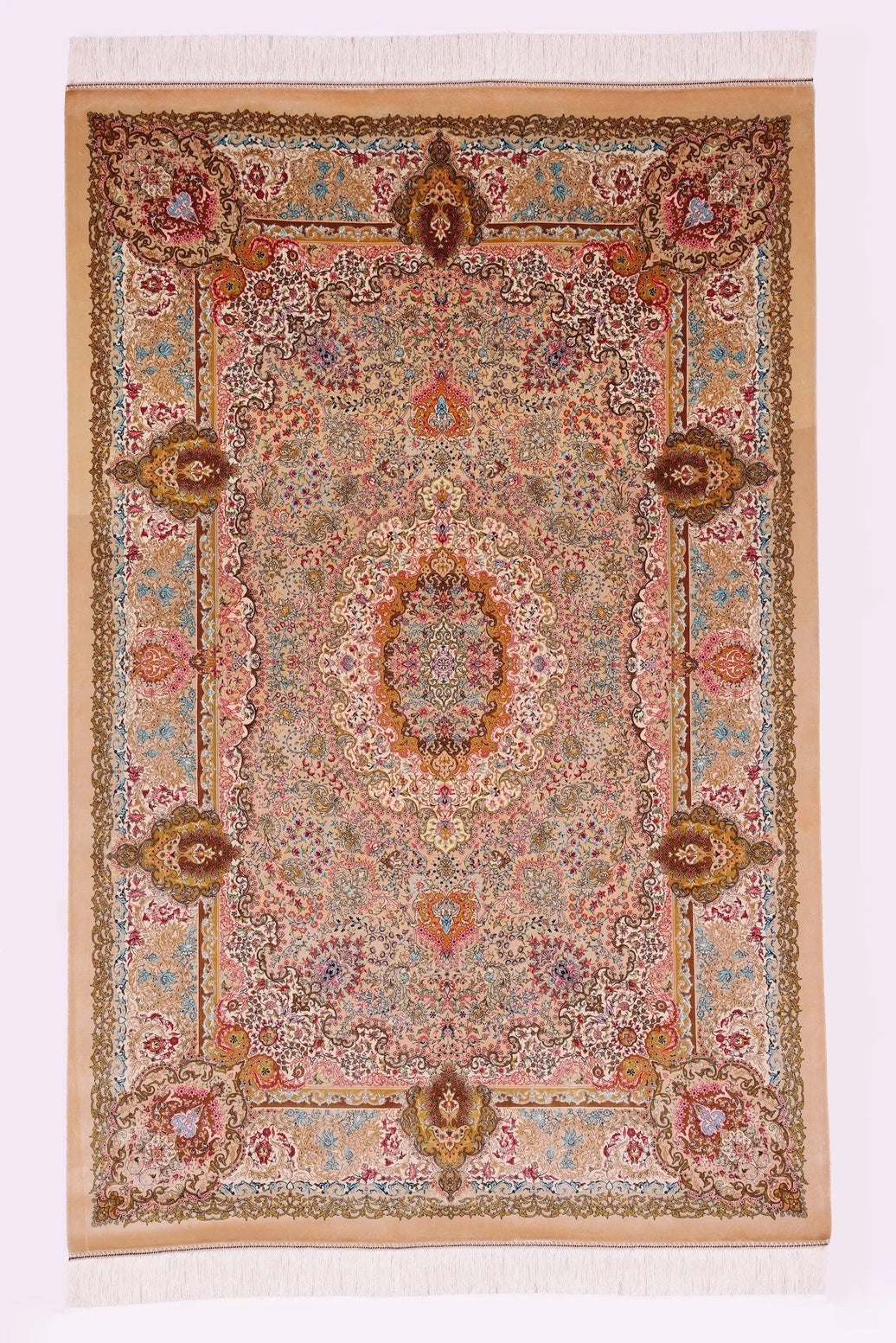
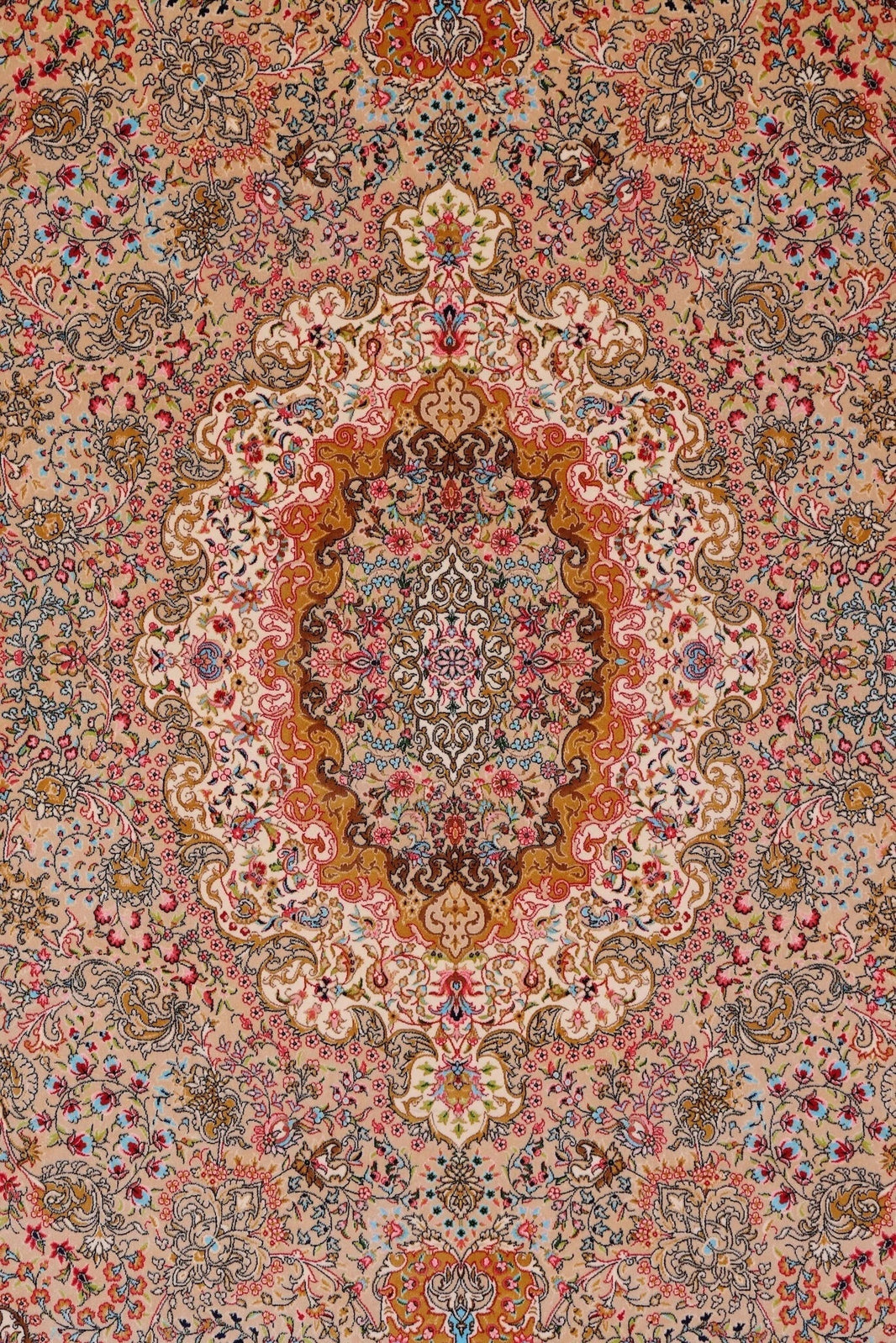
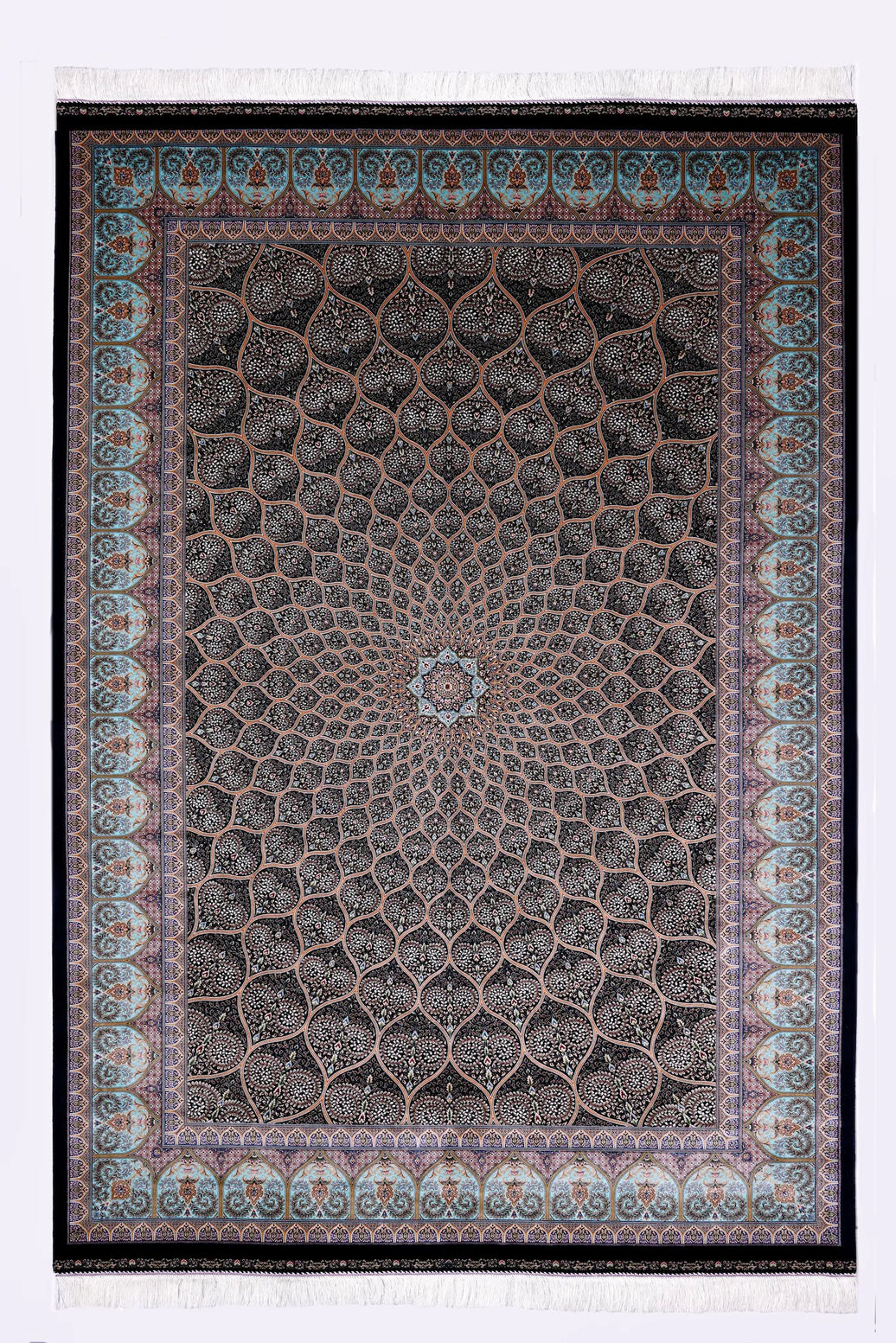
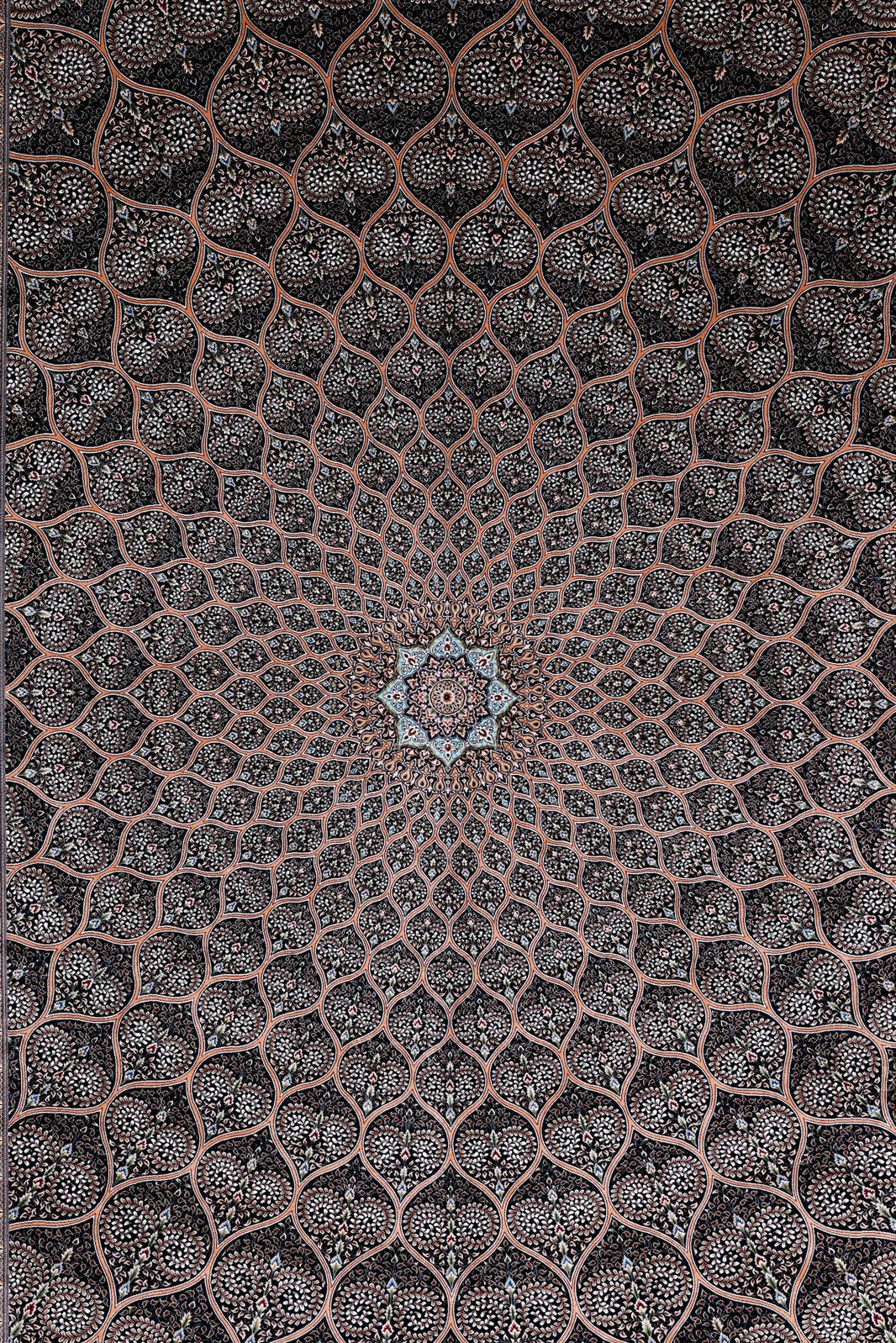
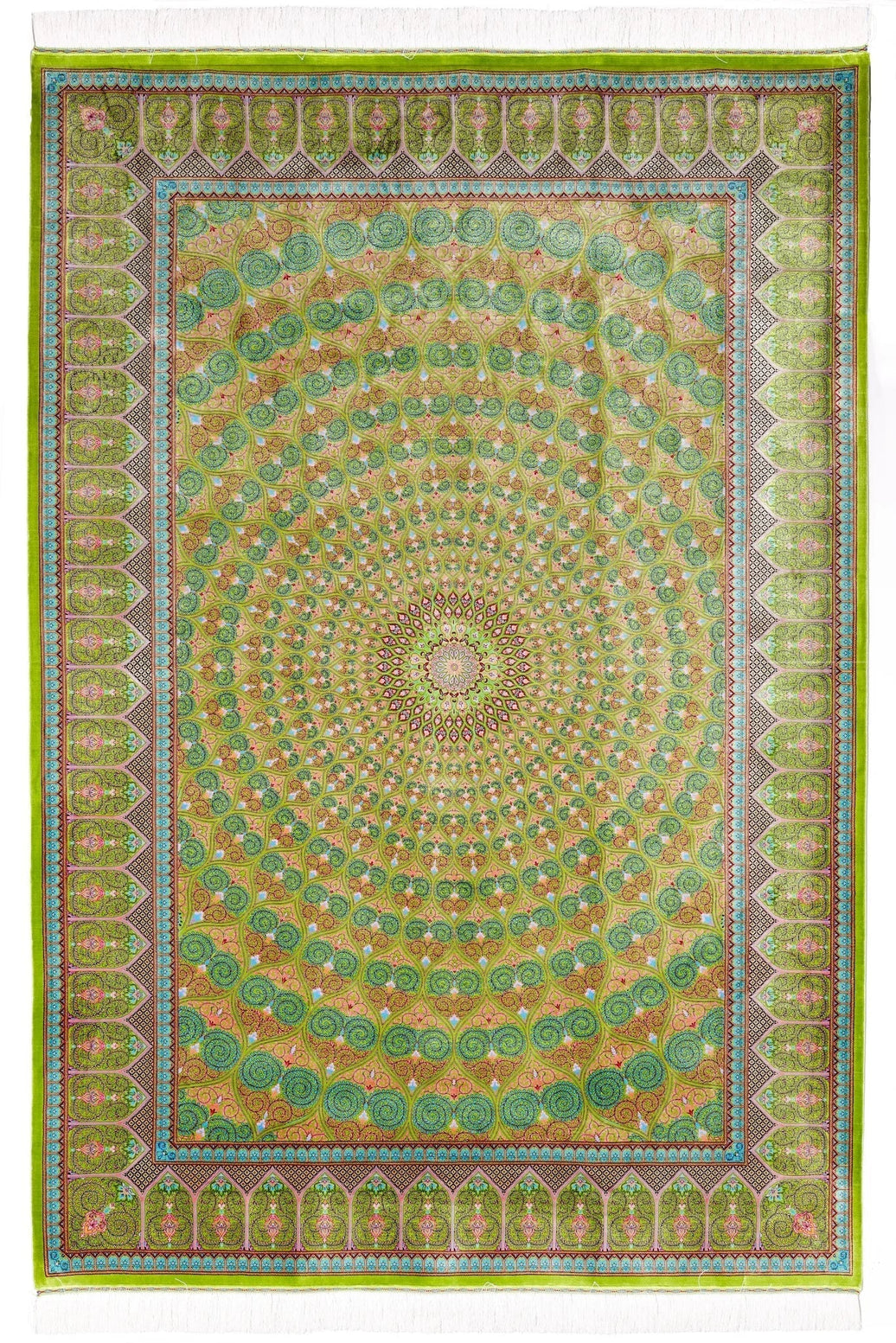
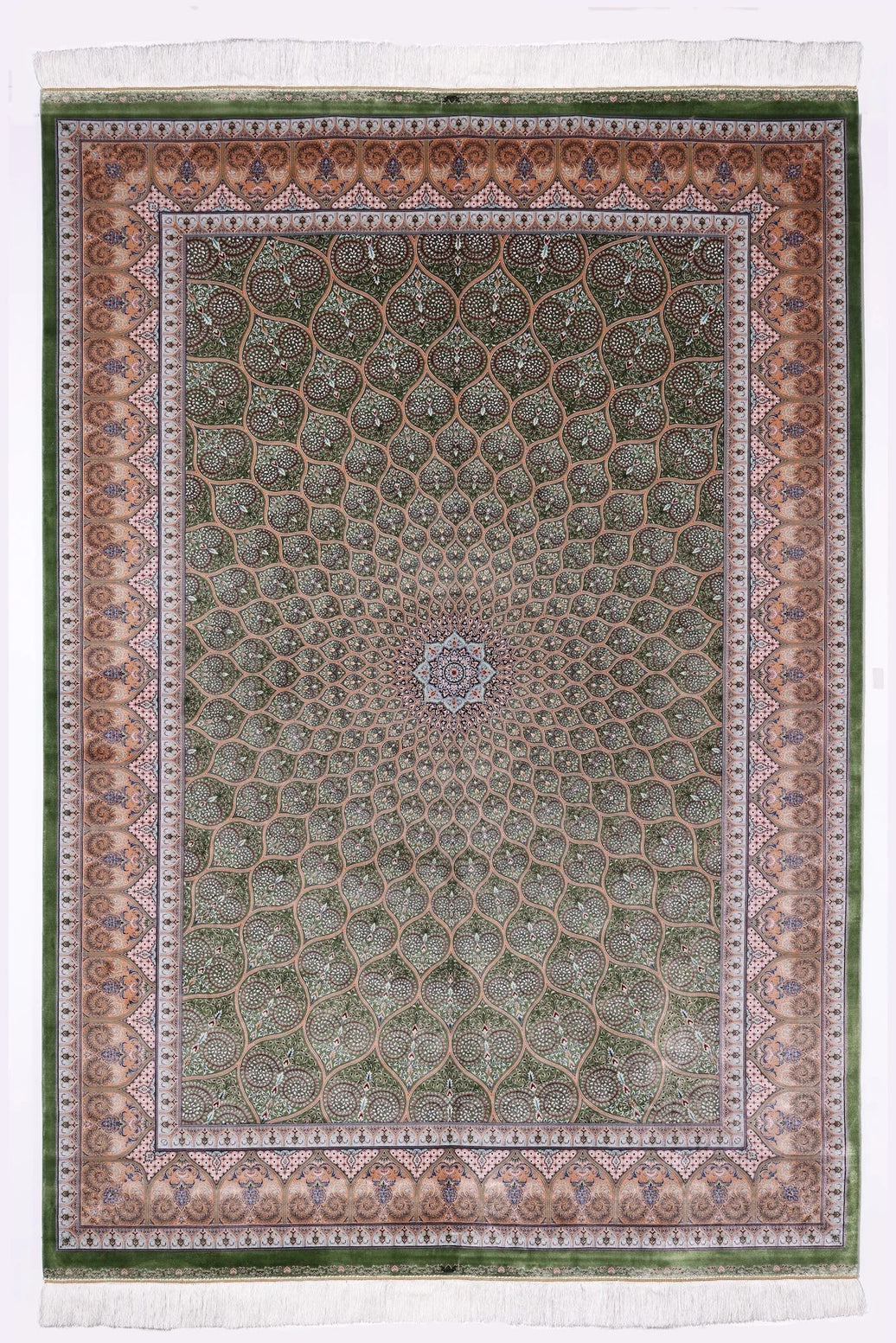
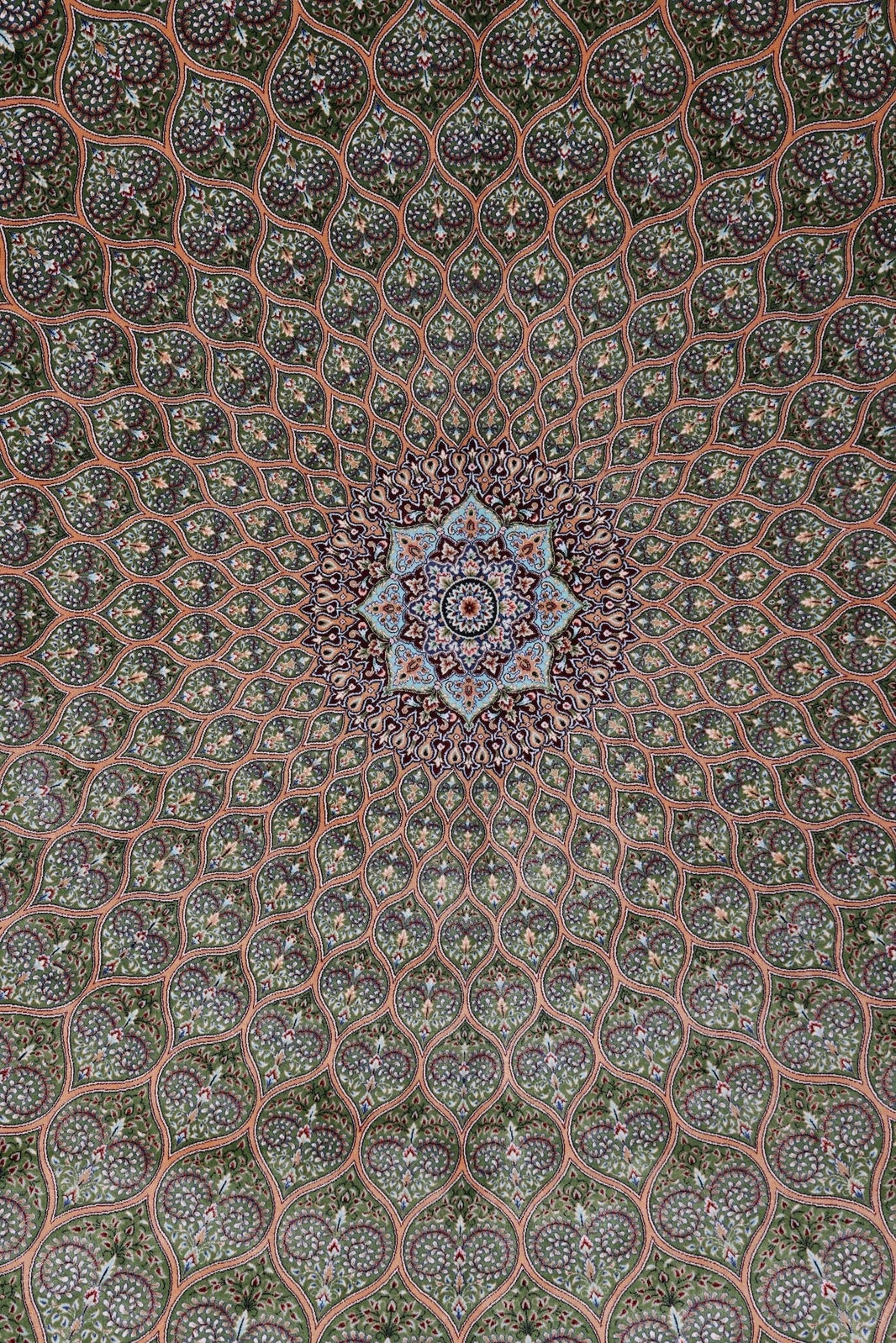
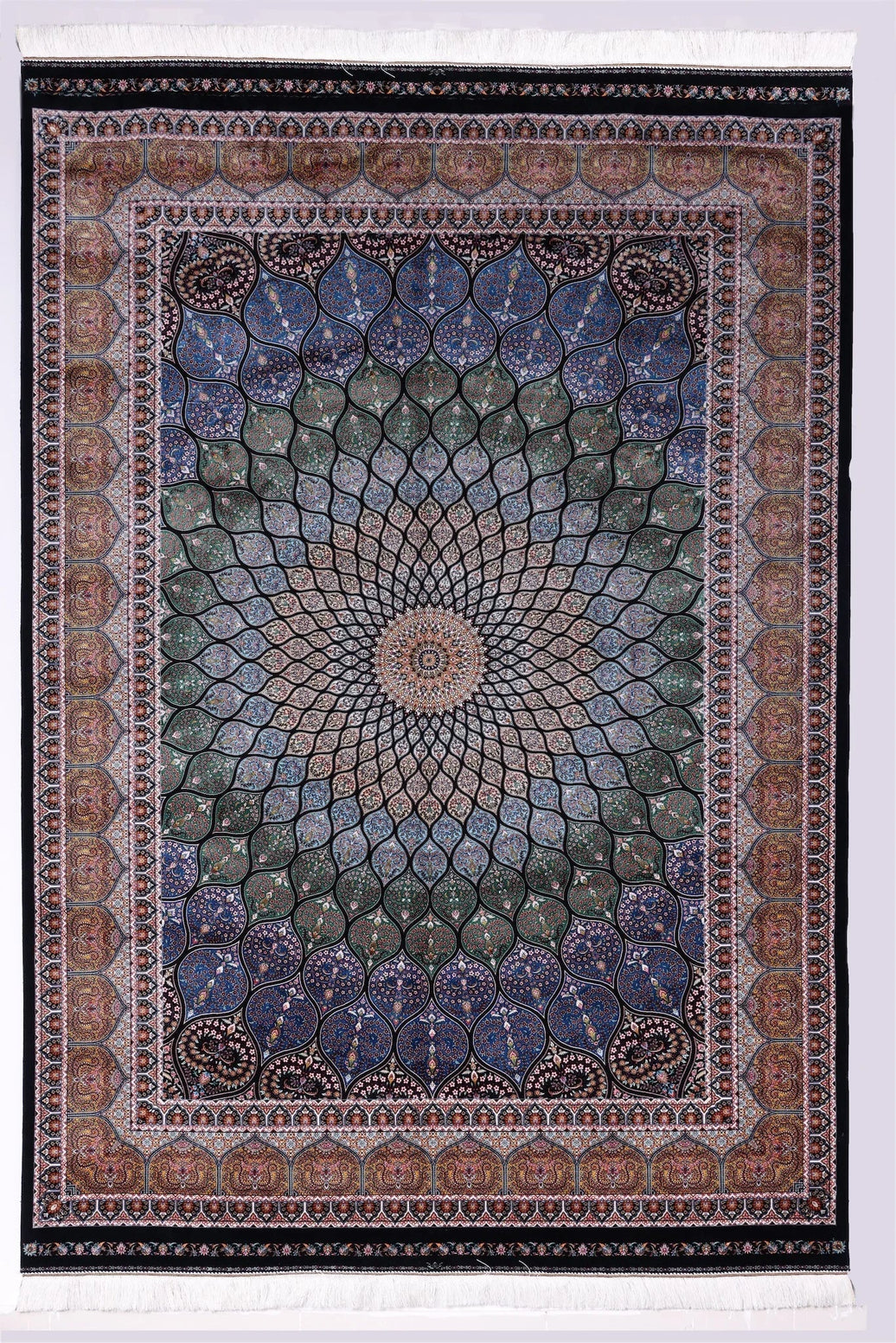
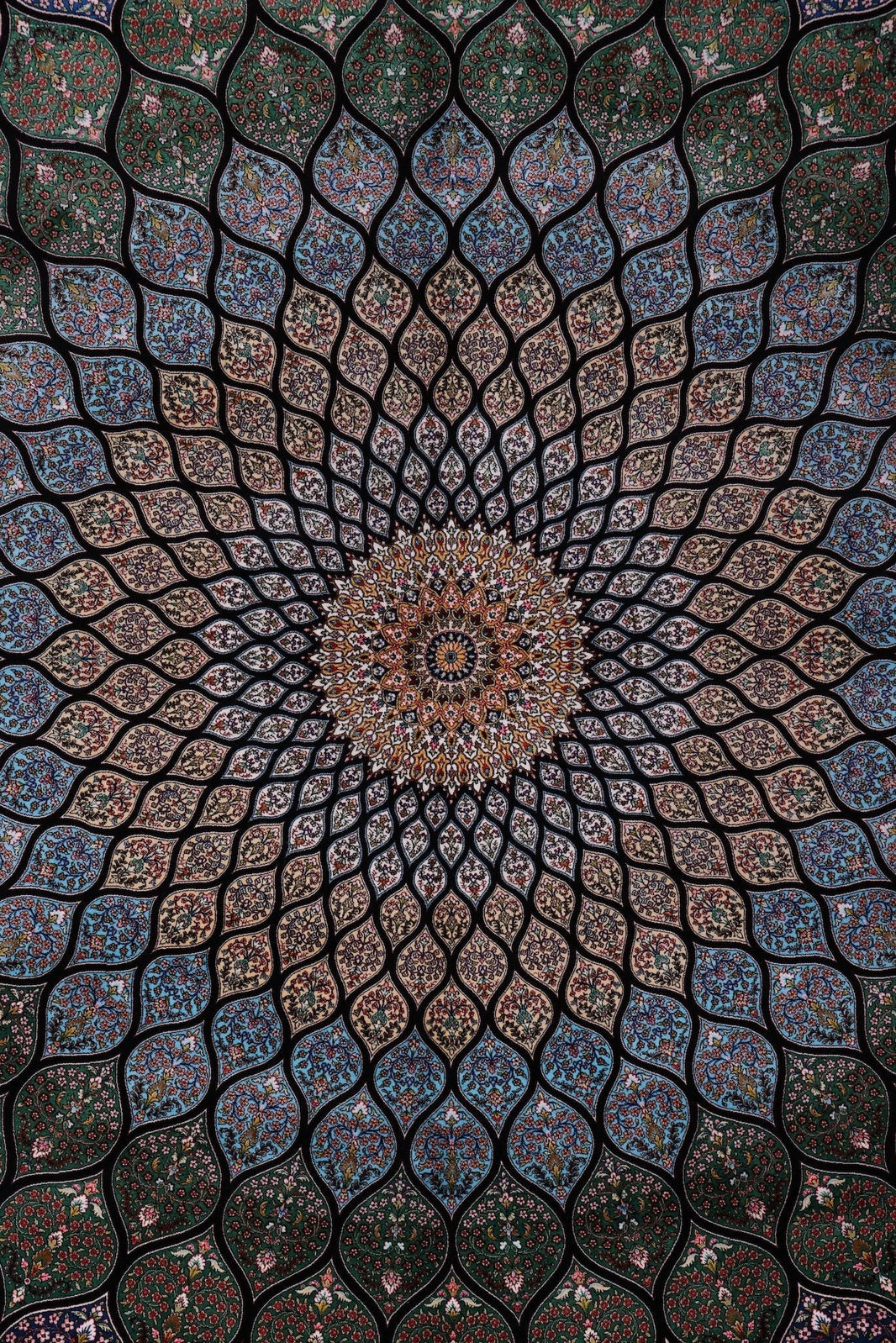
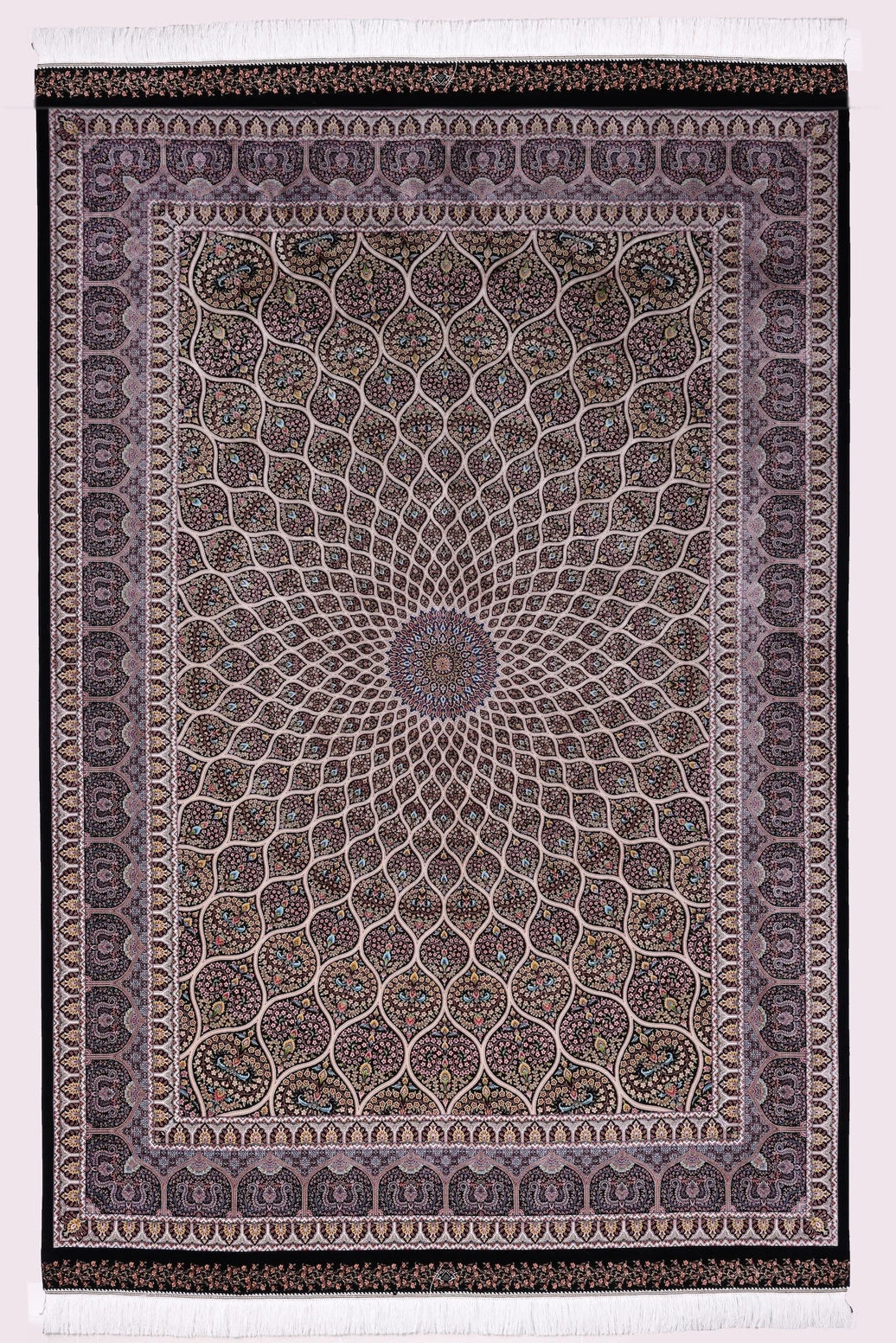
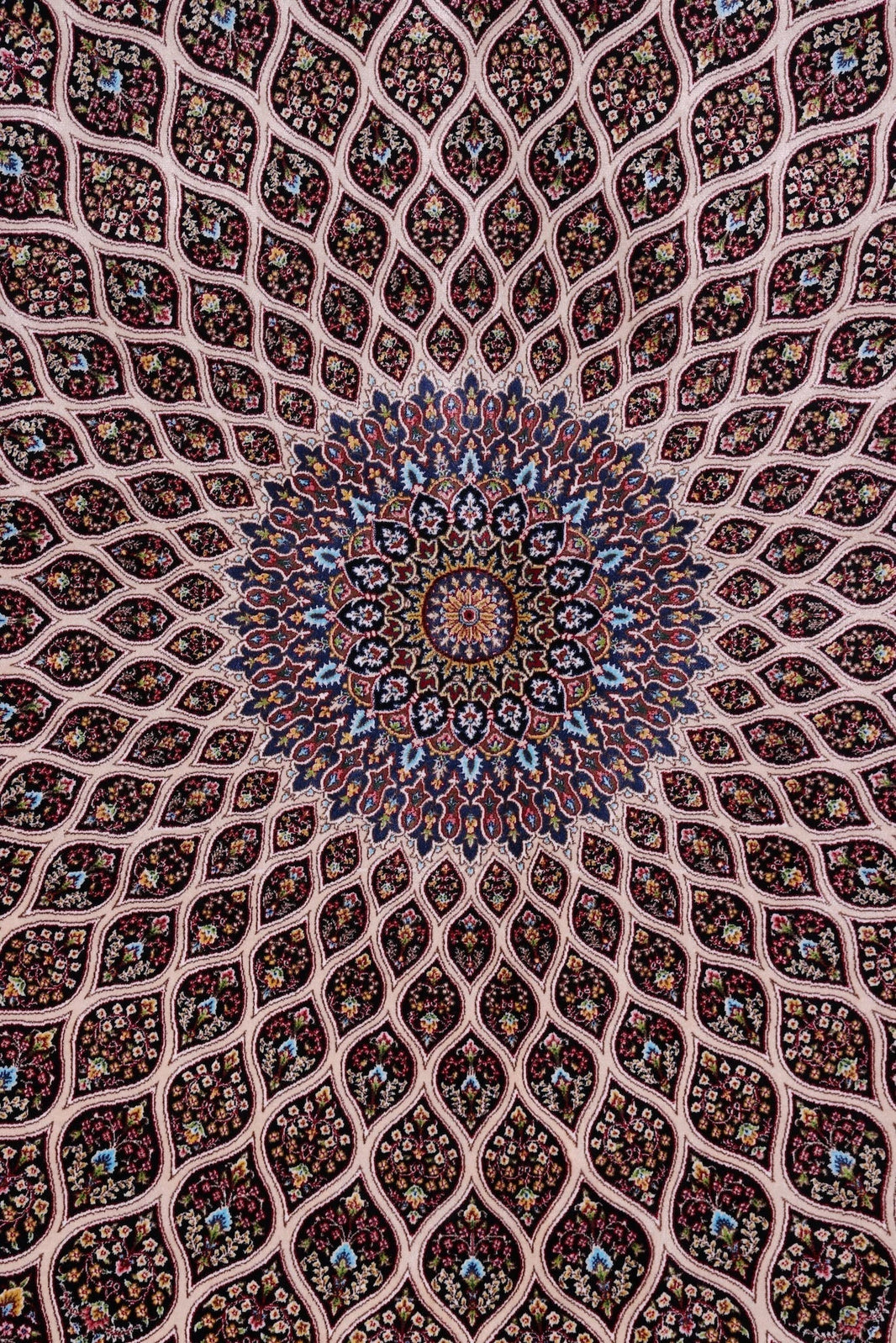
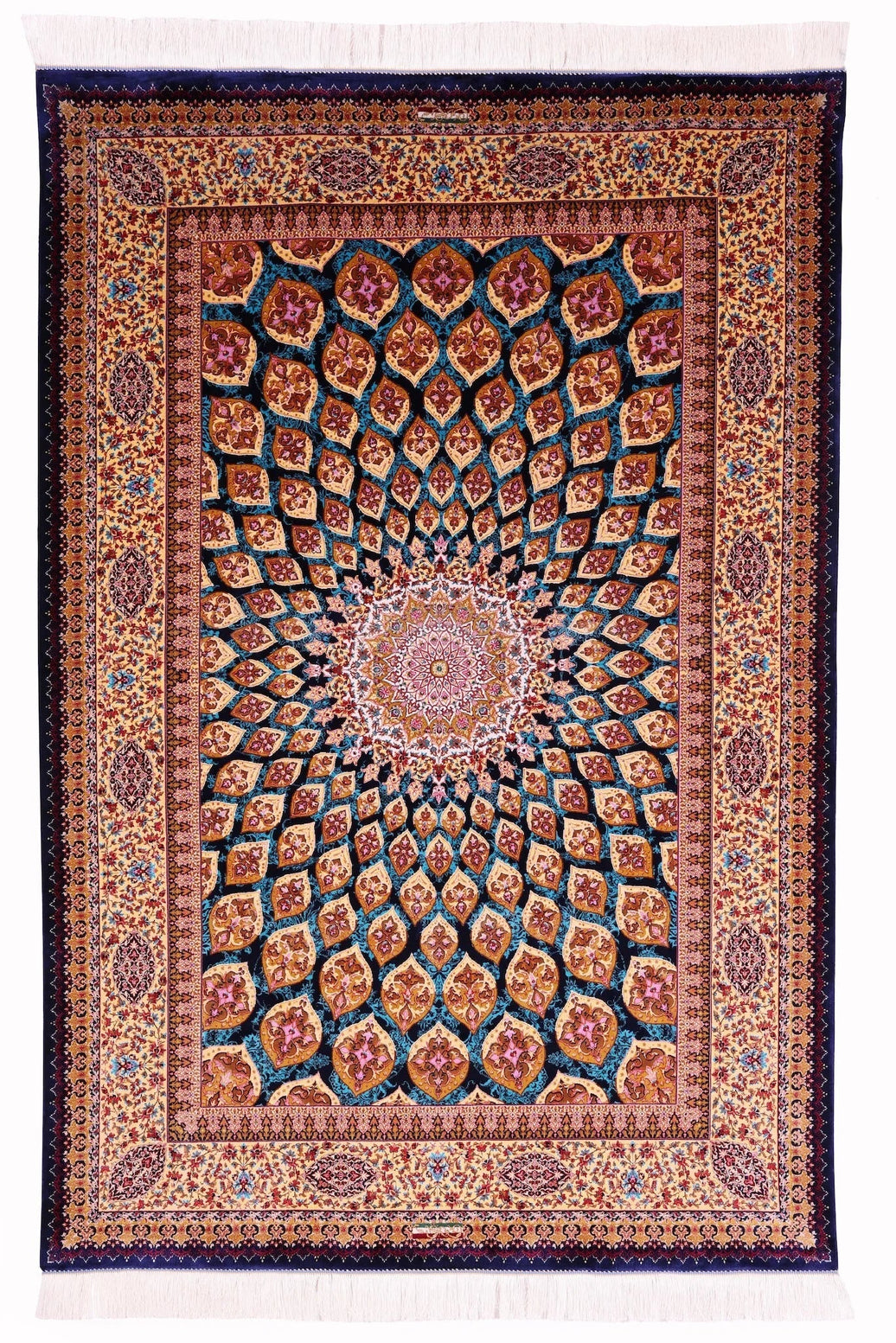
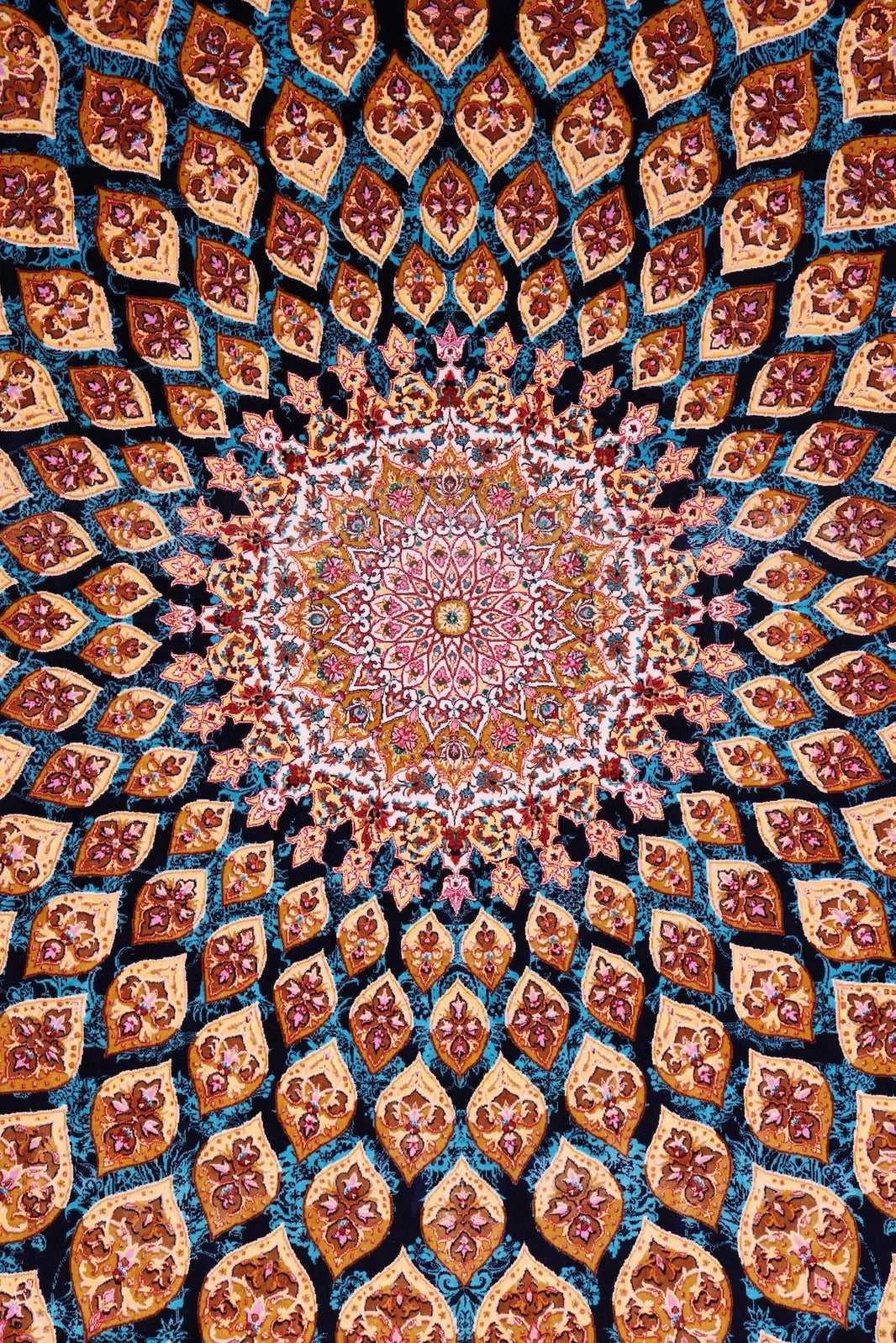
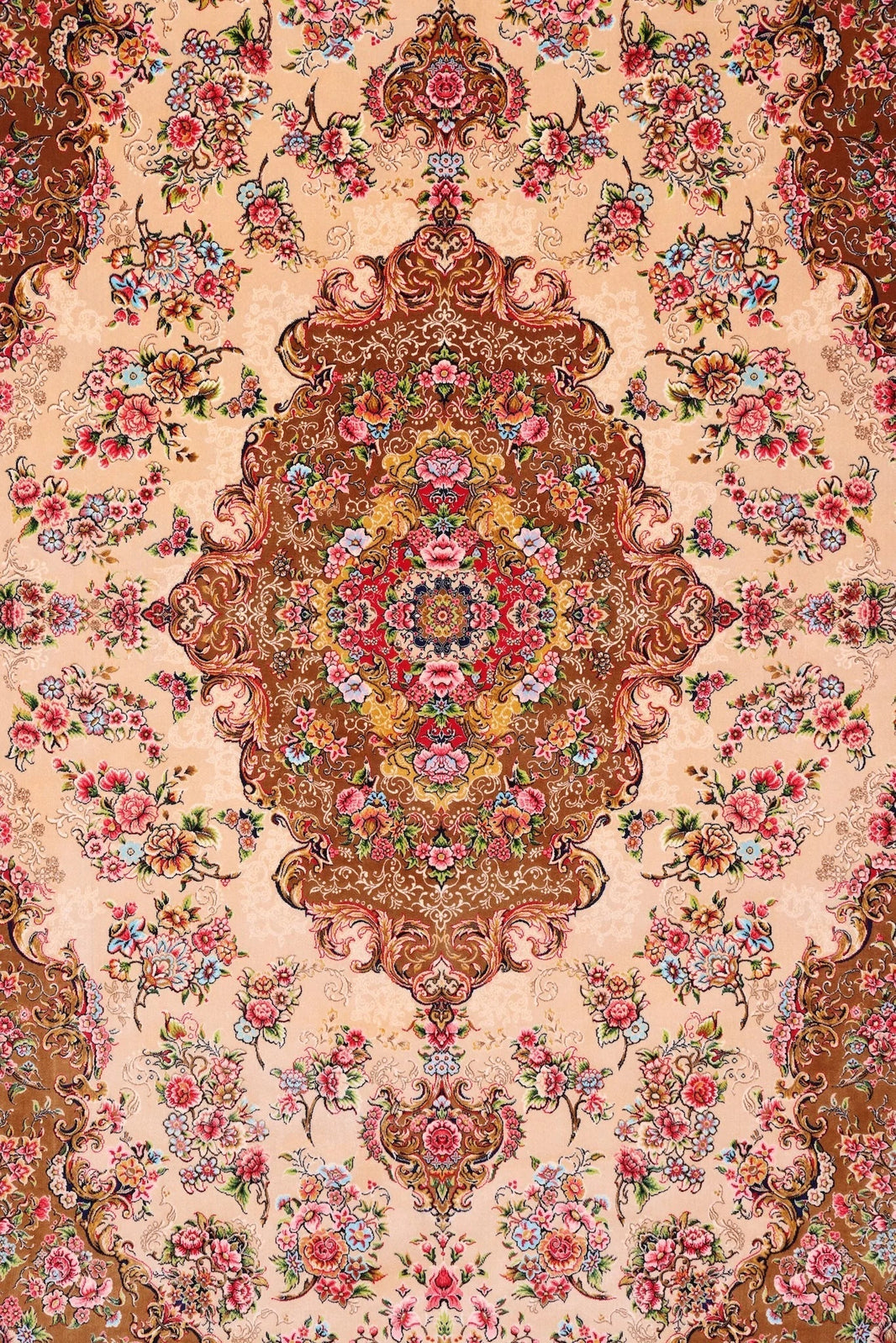
A rug from Tabriz reads differently from one rooted in Isfahan. Tabriz compositions are built around the medallion: a central geometric or floral form that radiates outward, drawing the eye inward like a compass point. Isfahan work favours botanical precision, arabesques that curl with deliberate symmetry, every vine placed as though it were a sentence. Tribal weavers from the Qashqai or Kurdish regions abandoned curvilinear form entirely, working in bold geometric abstraction that carries a completely different energy. The Char Bagh speaks to this classical Persian vocabulary, its field and border logic drawn from the formal garden traditions of sixteenth-century Persia. In a room with timber floors and white plaster walls, it does not sit quietly. It sets the terms.
Do Persian rug motifs carry specific meanings?
Every motif in a classical Persian rug is intentional. None of them are decorative accidents.
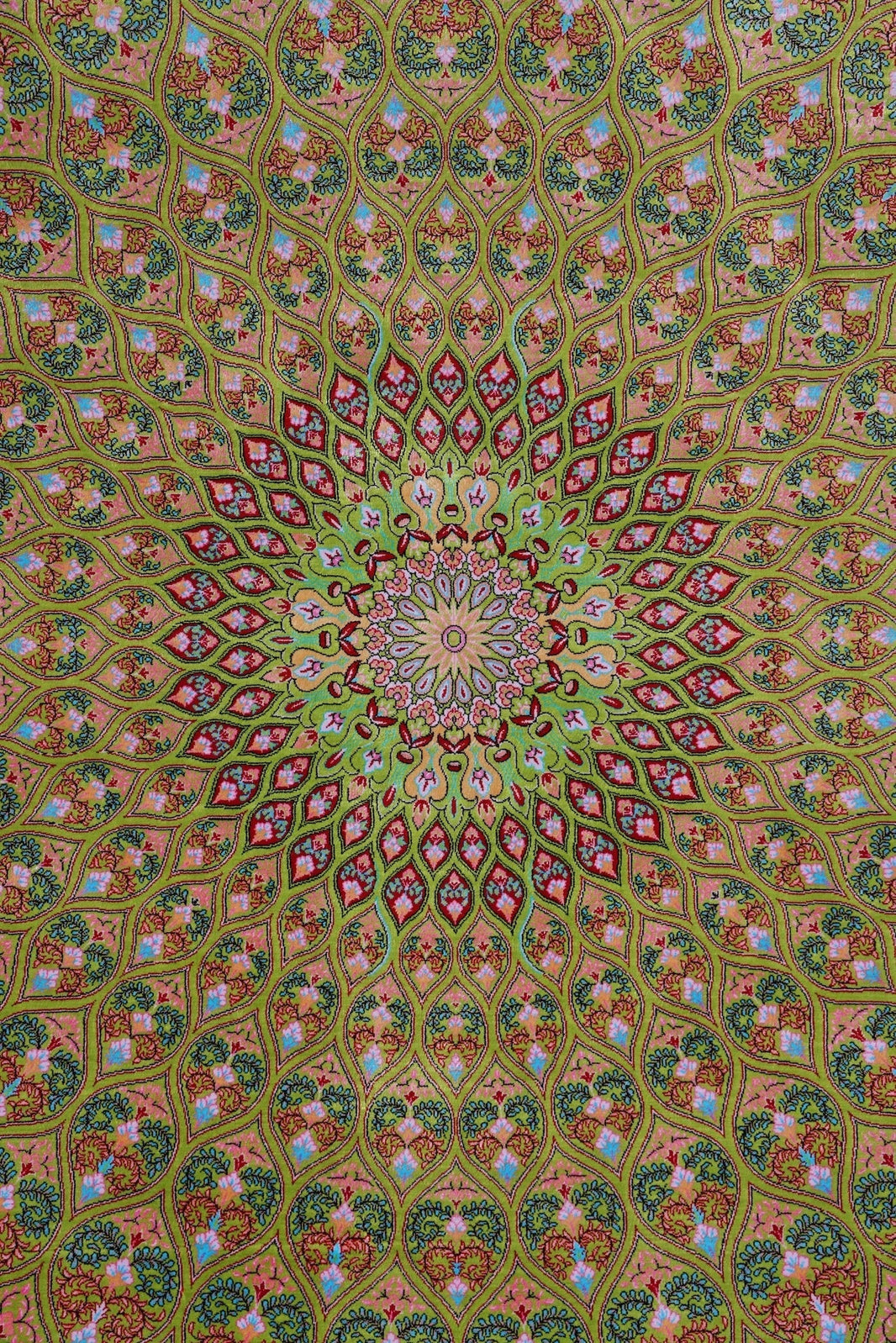
The boteh, a teardrop form that became the paisley of Western textiles, is one of the oldest symbols in Persian weaving, associated with flame, the cypress tree, or the soul, depending on region and period. The herati pattern, one of the most widely used in classical rugs, places a rosette inside a diamond framed by curving fish-like forms, a design so specific it can often be traced to its city of origin. The garden rug tradition represents paradise itself, the Persian word for garden, pairidaeza, is the root of the English word paradise. Geometric stars signal protection. Pomegranates carry abundance. The tree of life, running vertically through a field, marks a connection between earth and the divine. Understanding even a handful of these symbols changes the way a rug reads. It stops being a pattern and becomes a text.
Why do colours in Persian rugs look so different from modern dyed textiles?
Natural dye traditions produce colour at a depth that synthetic processes do not reach, and the reason is chemistry as much as craft.
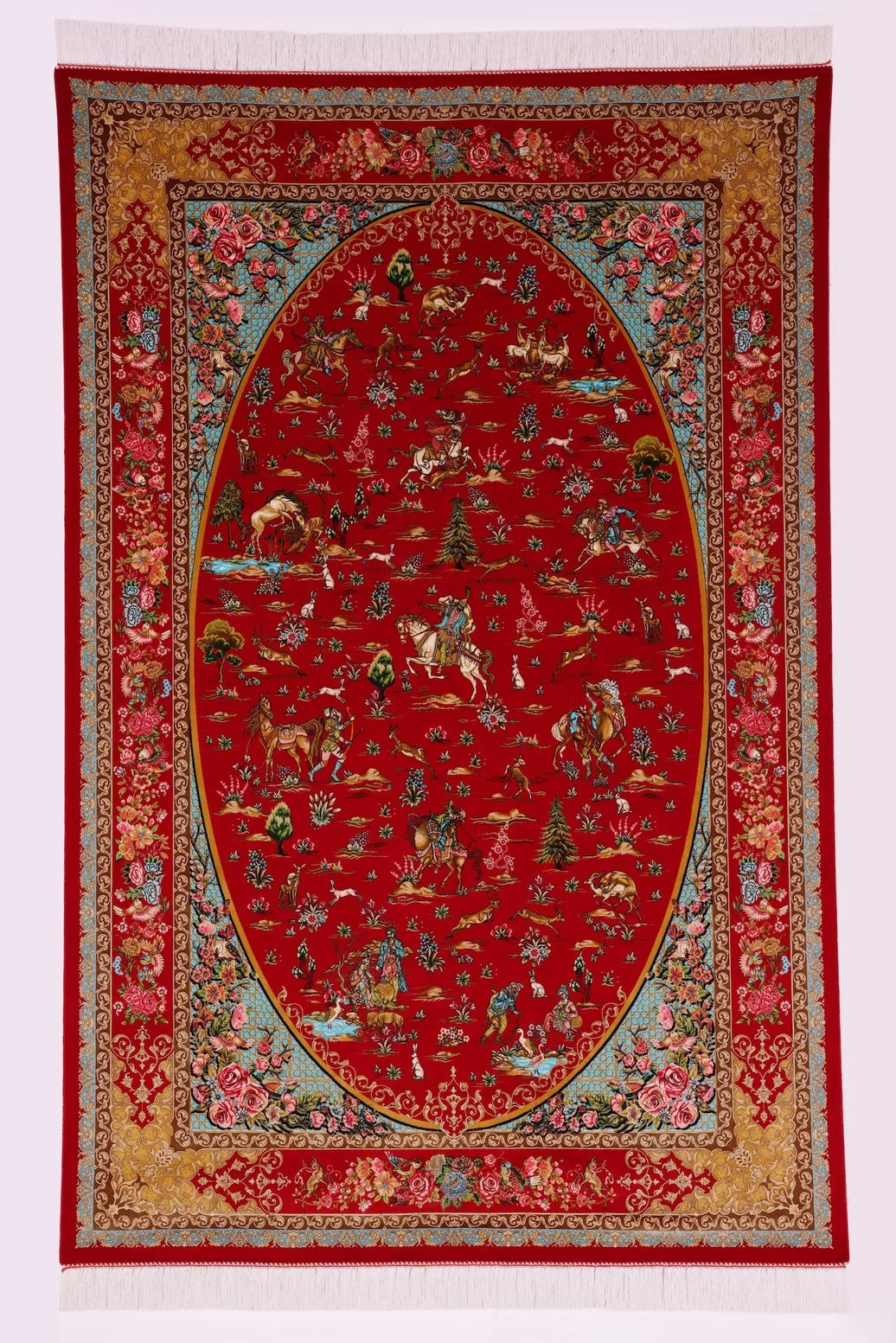
Madder root yields the crimson and terracotta reds that appear throughout classical Persian weaving. Pomegranate rind gives warm gold. Indigo, the same plant used in Japanese and Indian dyeing traditions, produces the deep, slightly mineral blues that anchor so many Persian compositions. These dyes bond with fibre differently from synthetic alternatives. They shift subtly under different light, absorbing and releasing warmth depending on the hour, the season, the angle of a window. The Sufi Red carries this colour intelligence, a red that performs differently at noon than it does at dusk. That responsiveness is not a coincidence. It is the direct inheritance of a dye culture that spent centuries understanding how colour and light negotiate. As covered in The Room That Knows Its Own Colours, the way a rug's palette moves through the day is one of the least discussed and most transformative elements of a well-composed interior.
How does a Persian rug's structure work, and does it matter for a buyer?
The structure of a Persian rug is its argument. Pile direction, border logic, and central field are not aesthetic choices made in isolation. They are a system.
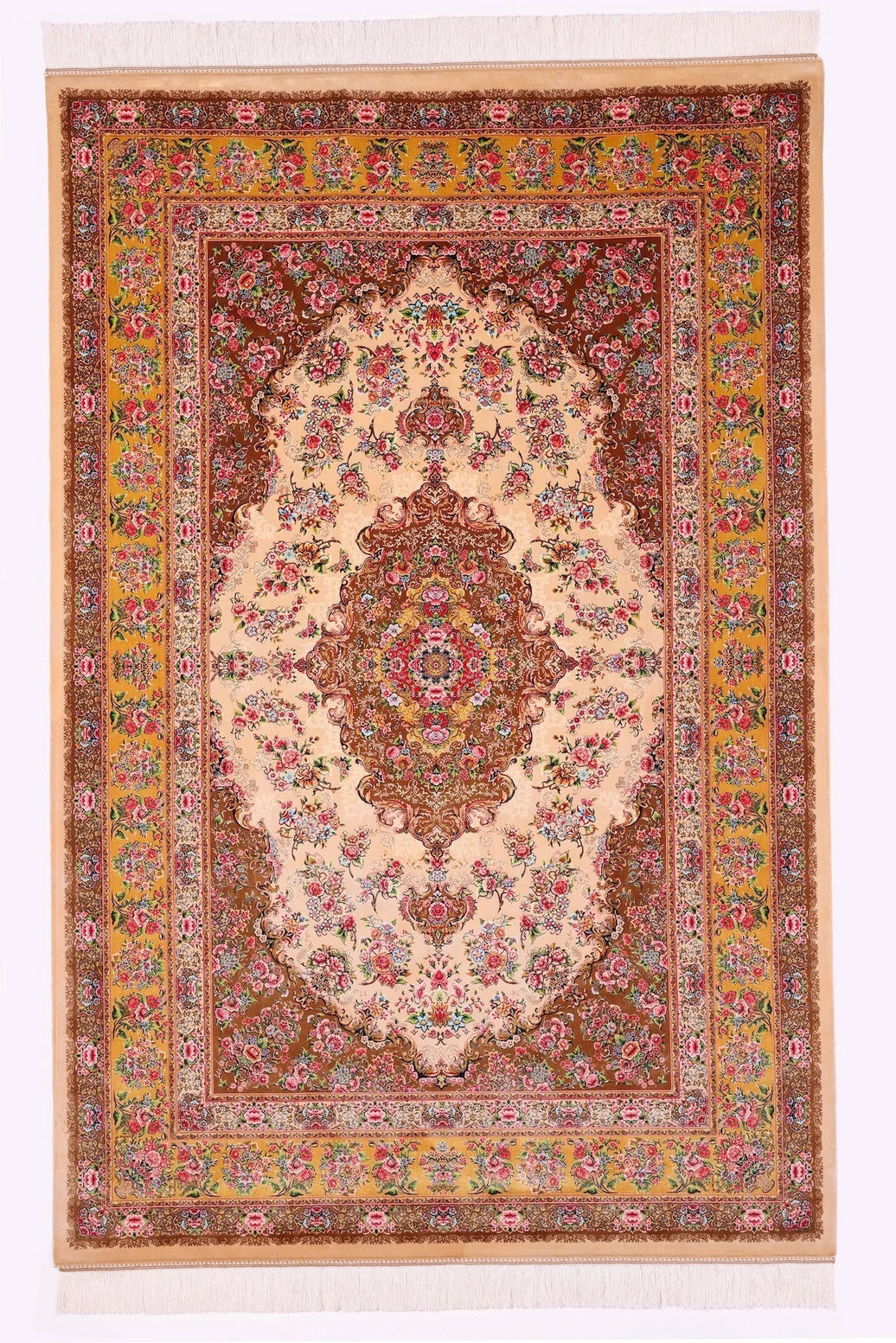
The border functions as a frame, containing the field and establishing the rug's visual boundary. A strong border holds a composition together even in a busy room. The central field is where the primary design lives, whether medallion, all-over repeat, or open ground with scattered motifs. Pile direction determines how the rug reflects light, running your hand one way reveals one colour, the other direction shifts it entirely. The Arghavan demonstrates this clearly, its deep violet and rose field reading differently from the doorway than from a low sofa, which is part of how a considered rug earns its place rather than simply filling it. For anyone working through how these elements interact in a full room, The Room That Has Everything, and Still Feels Empty addresses exactly how structural rug choices prevent a furnished space from feeling unresolved.
Is bringing a Persian rug into an Australian home culturally appropriate?
Bringing Persian rug heritage into an Australian home is an act of curation, not imitation.
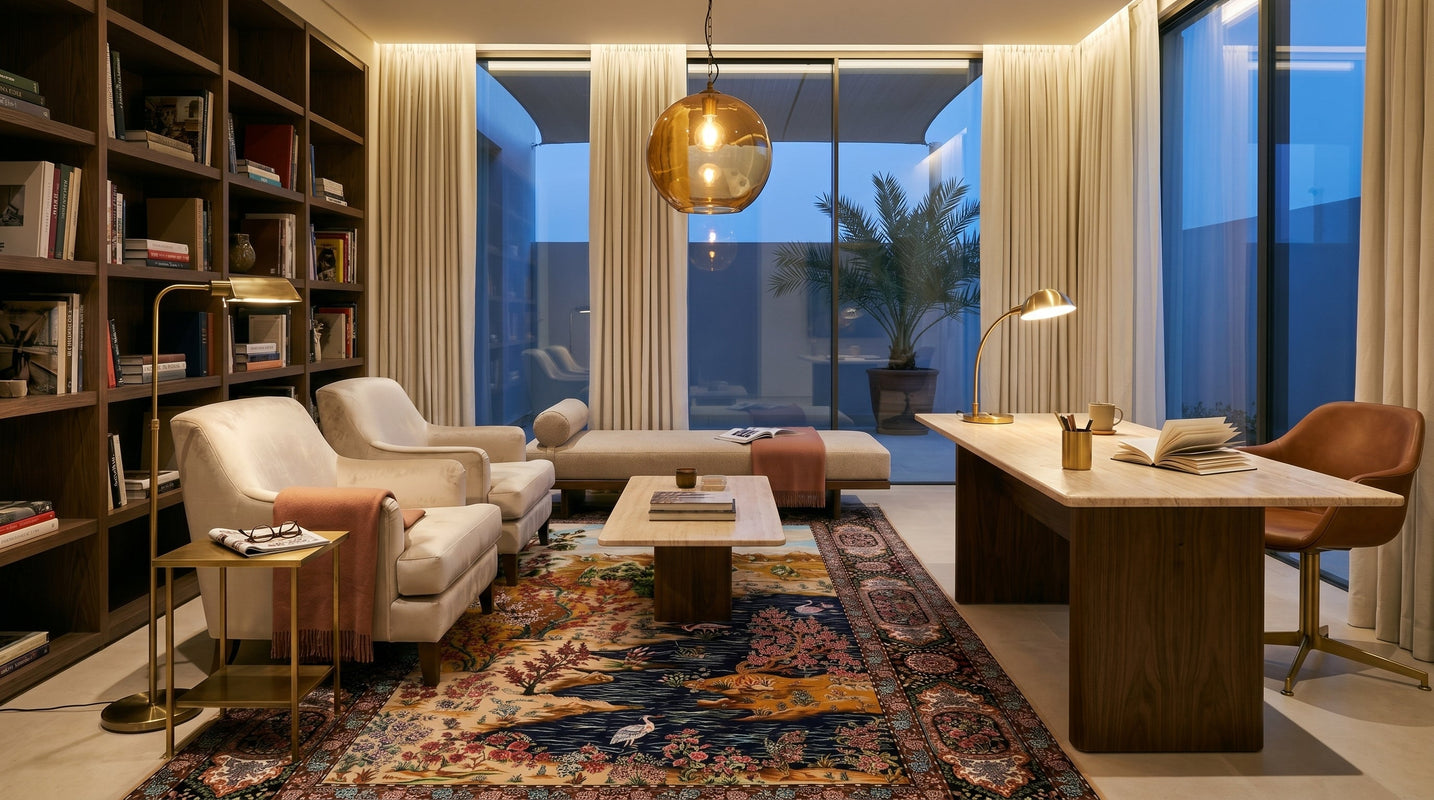
Persian rugs entered European and colonial interiors centuries ago, not through cultural ignorance but through genuine recognition of an extraordinary design tradition. What matters now is the quality of attention brought to the choice. Selecting a rug for its heritage, understanding the regional tradition it comes from, choosing it for what it contributes to a room rather than its price per square metre, this is how a piece travels well across cultures. The Persian design tradition is one of the oldest and most documented in the world. Inviting it into a Sydney terrace or a Dubai apartment is not incongruous. It is how living culture moves. Six Living Rooms, Six Persian Rugs That Define Them shows exactly how that conversation looks in practice, across rooms that are unmistakably contemporary and unmistakably grounded.
A rug that carries centuries of craft does not need to be explained. It speaks the moment it lands on the floor.
Visualize this rug in your room →
Questions, answered
What is Persian rug heritage and why does it matter?
Persian rug heritage spans centuries of regional craft traditions, each city and weaving community developed its own design language, motifs, and dye practices. Understanding this heritage transforms a rug from floor covering into a text carrying symbolism, regional identity, and centuries of artistry.
Do the patterns in Persian rugs actually mean something?
Every motif is intentional. The boteh represents flame or the soul. Herati patterns place a rosette in a diamond framed by fish forms, often traceable to its city of origin. Garden rugs represent paradise itself. Stars signal protection, pomegranates carry abundance. Understanding these symbols changes how a rug reads, it becomes a text, not merely a pattern.
Why do Persian rug colours look so different?
Natural dyes, madder root for crimsons, indigo for deep blues, pomegranate rind for warm gold, bond with fibre differently than synthetics. They shift subtly under varying light, absorbing and releasing warmth across the day. A red reads differently at noon than at dusk. This colour intelligence is the direct inheritance of centuries spent understanding light and pigment together.
How do I choose a Persian rug for my Australian home?
Select for heritage and what it contributes to your room, not price. Bringing Persian artistry into a Sydney home or Dubai apartment is curation, not imitation. The design tradition is centuries old and documented. Quality of attention matters: choose for regional tradition, understand its story, and let it define the space deliberately.