
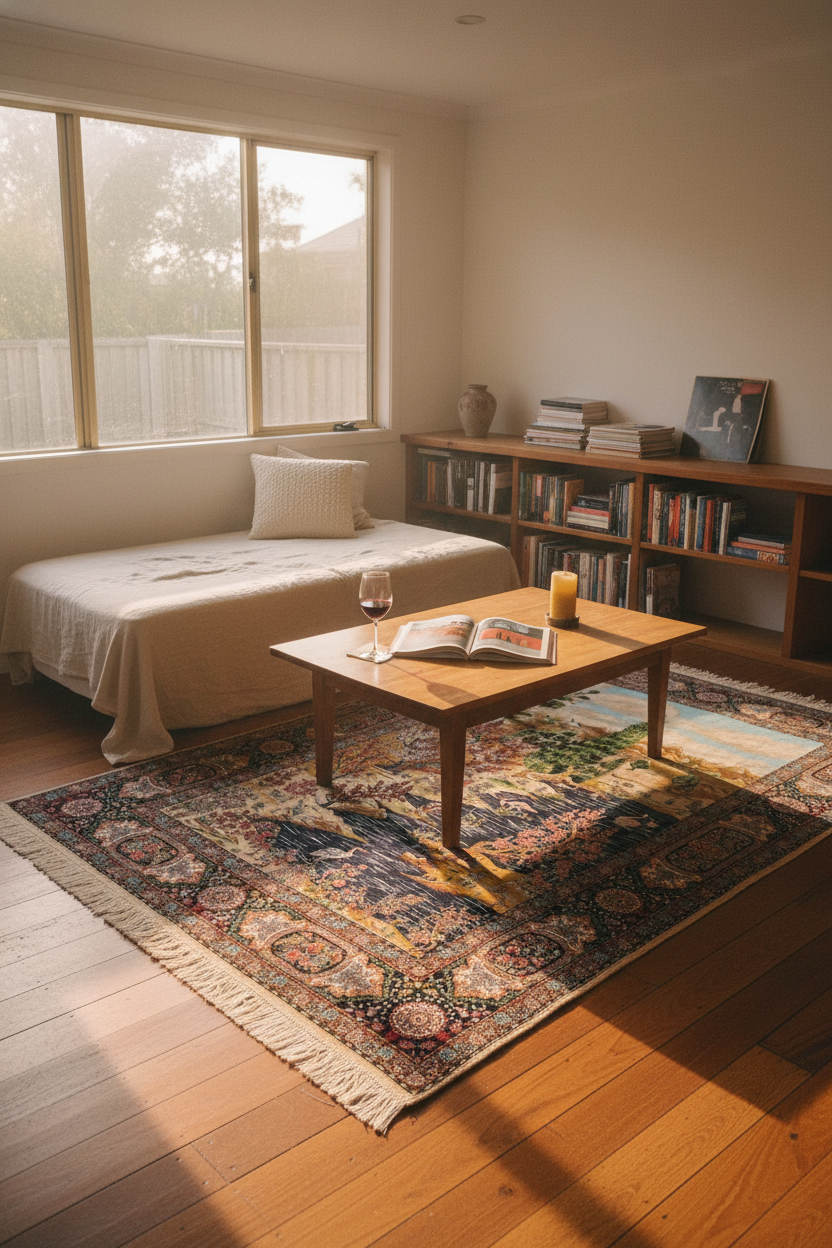

The Textile Conversation Your Room Has Been Waiting to Have
Zagrosa · Interior Living
Three centuries of Persian pattern, in conversation with a linen sofa and a wool throw — this is what a room sounds like when every textile earns its place.
Some rooms are loud without saying anything. Too much of one texture, one weight, one finish — and the eye moves through without landing. The fix is never more furniture. It is always more conversation between the textiles already in the room.
Layering textiles is not a decorating trend. It is how rooms have been composed for centuries — from the silk-draped interiors of Qajar-era Persia to the considered salons of contemporary Sydney and Dubai. The principle has not changed: contrast creates feeling, and feeling is what makes a space worth living in.
The Bass Note Beneath Everything
Every layered interior needs an anchor — something with enough presence to hold the composition together without dominating it. The Persian rug plays this role the way a bass note plays in music. Felt before it is consciously heard.
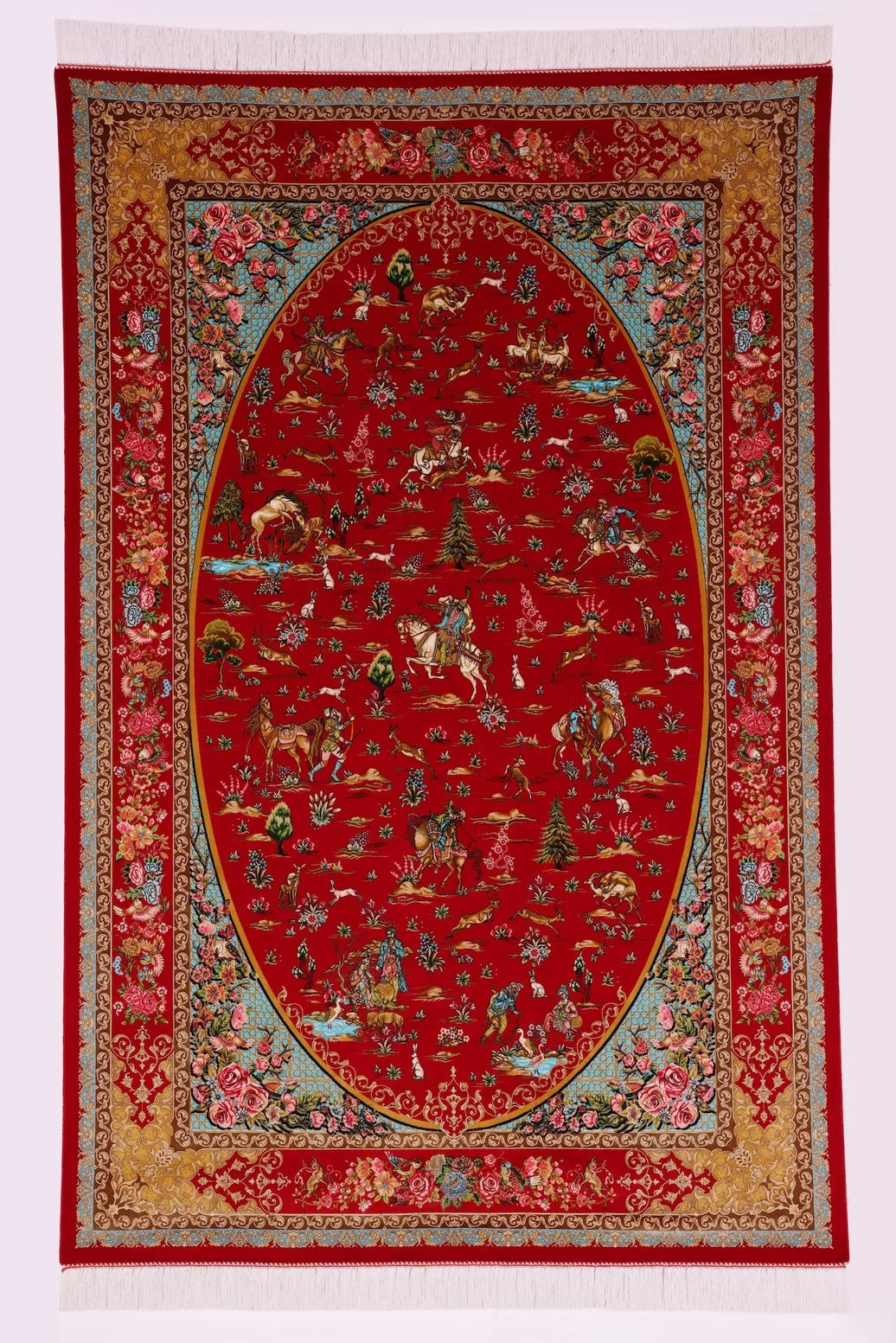
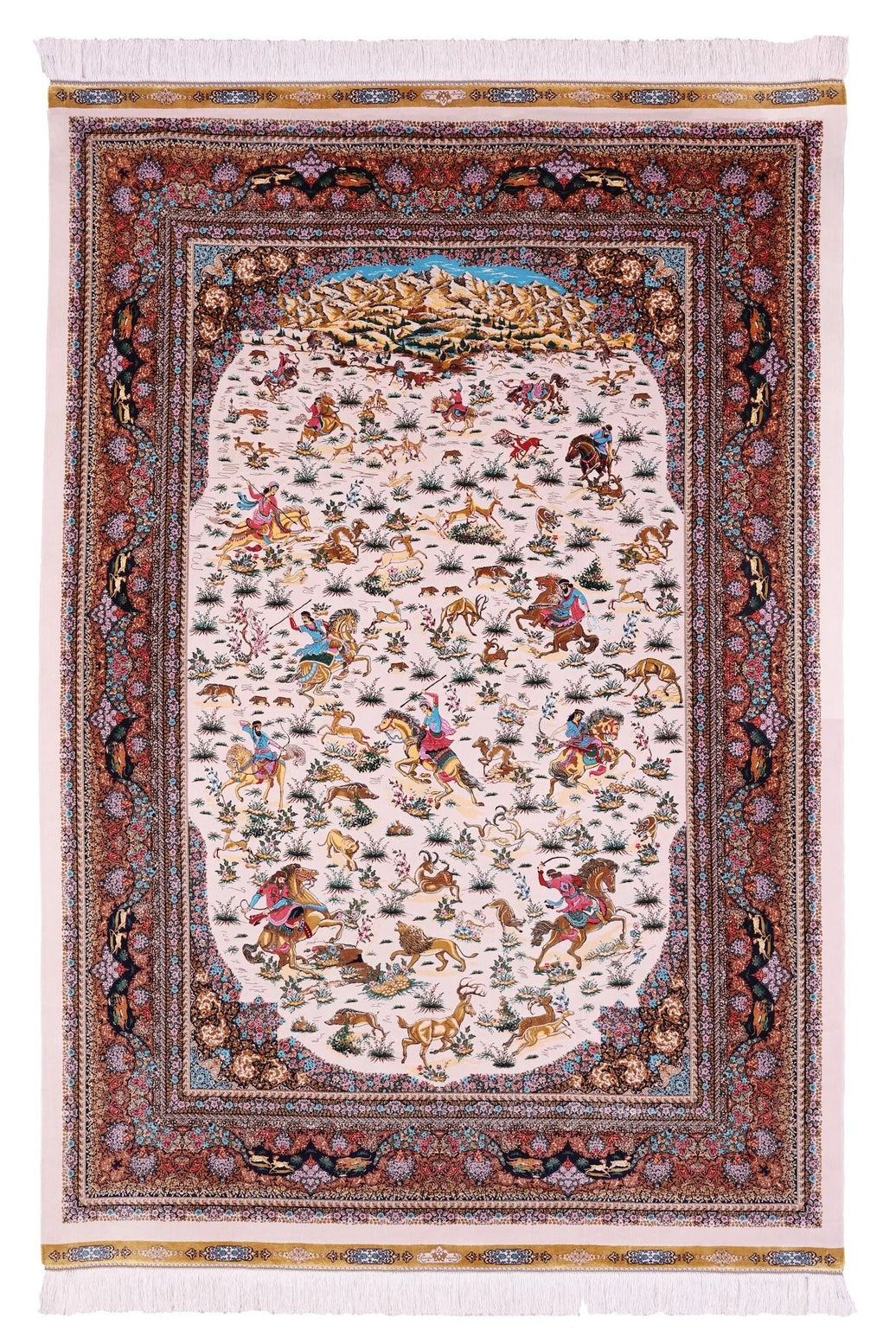
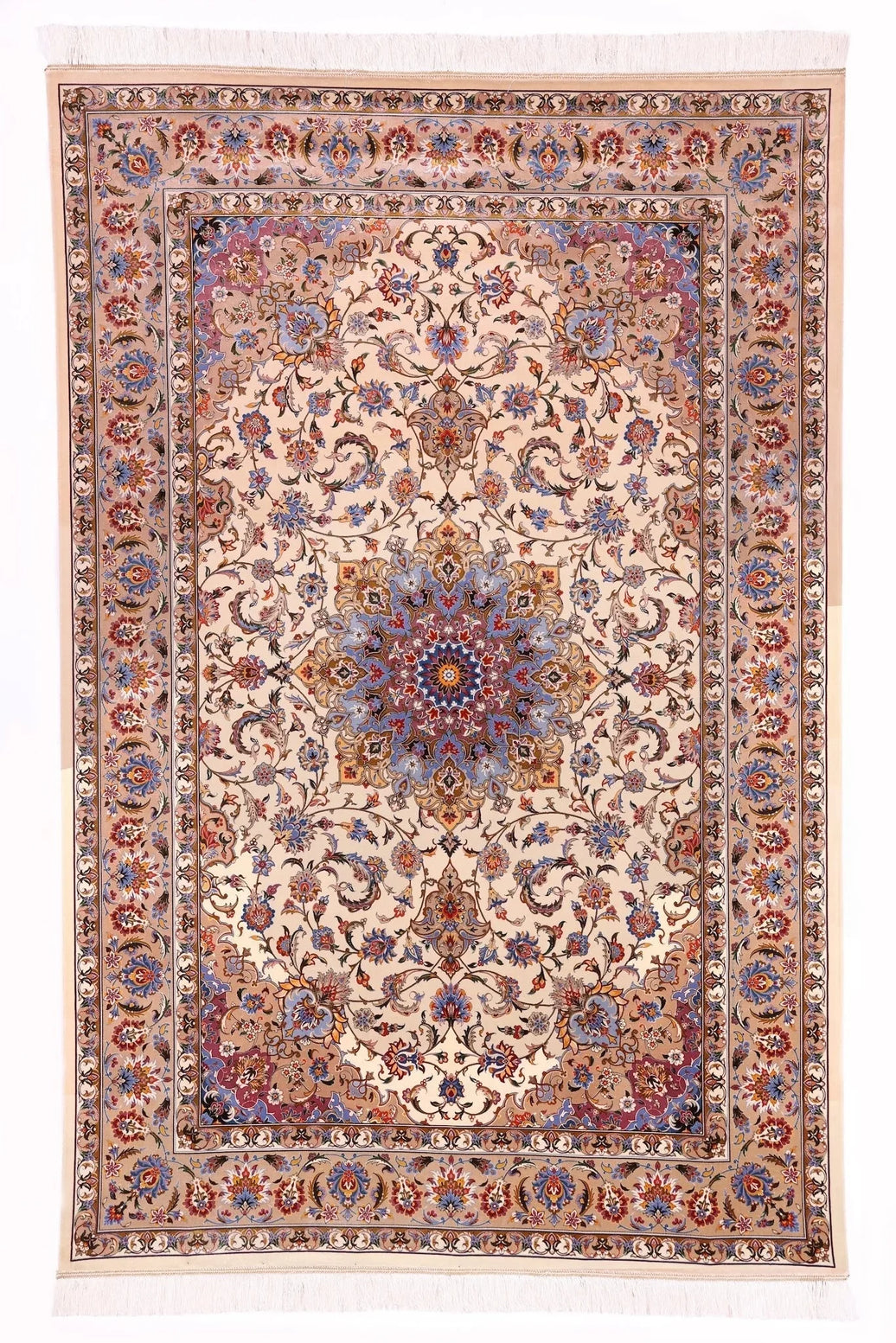
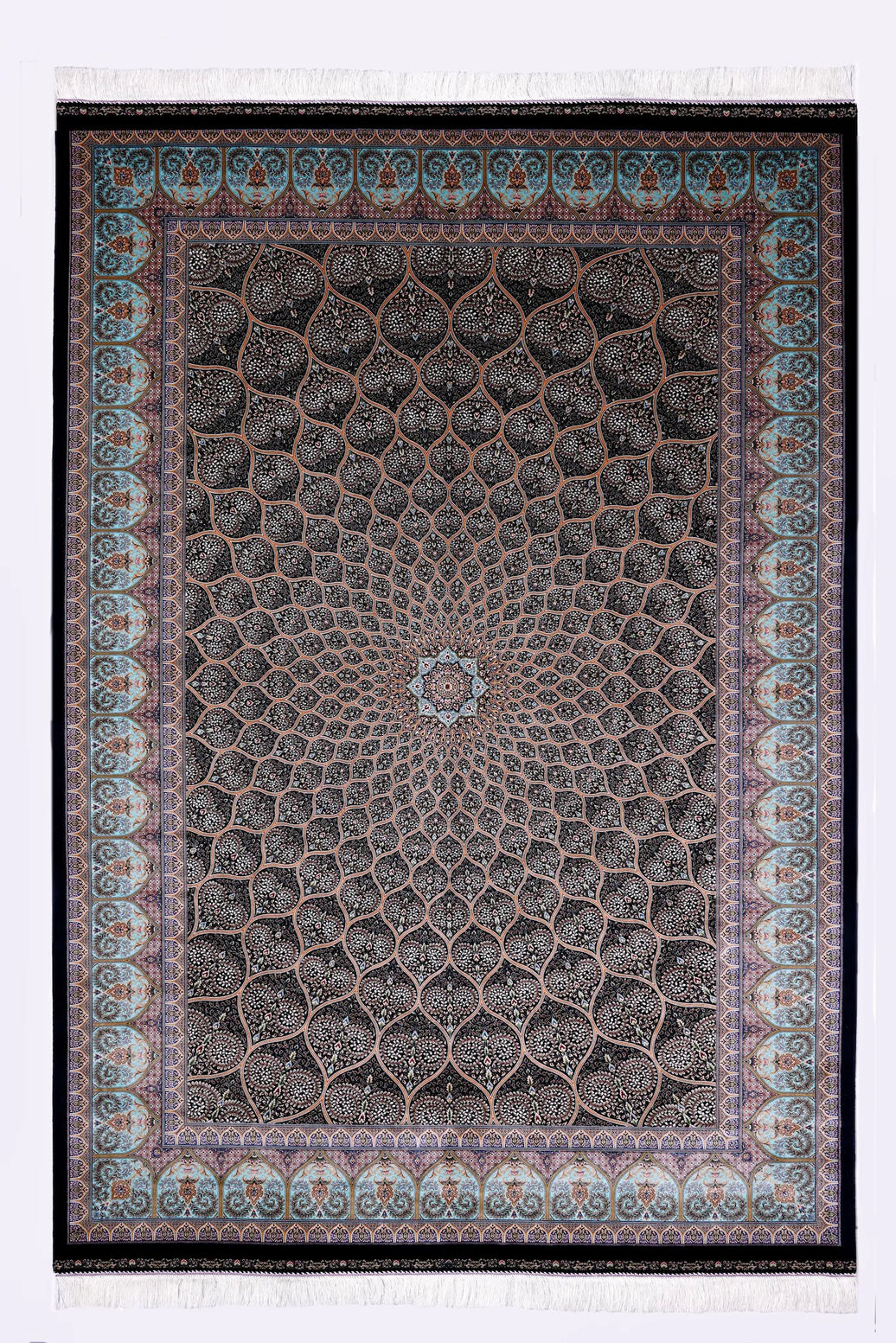
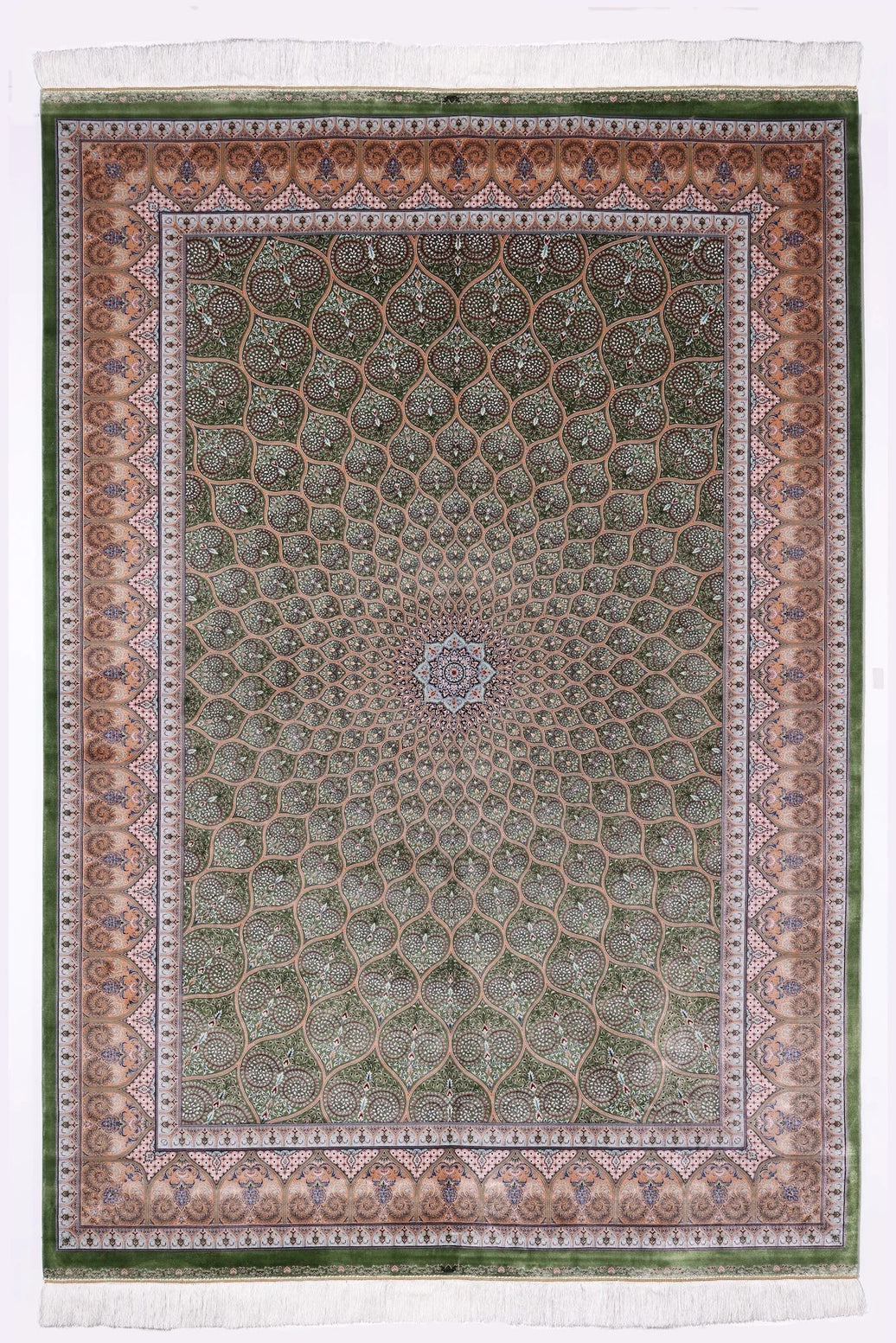
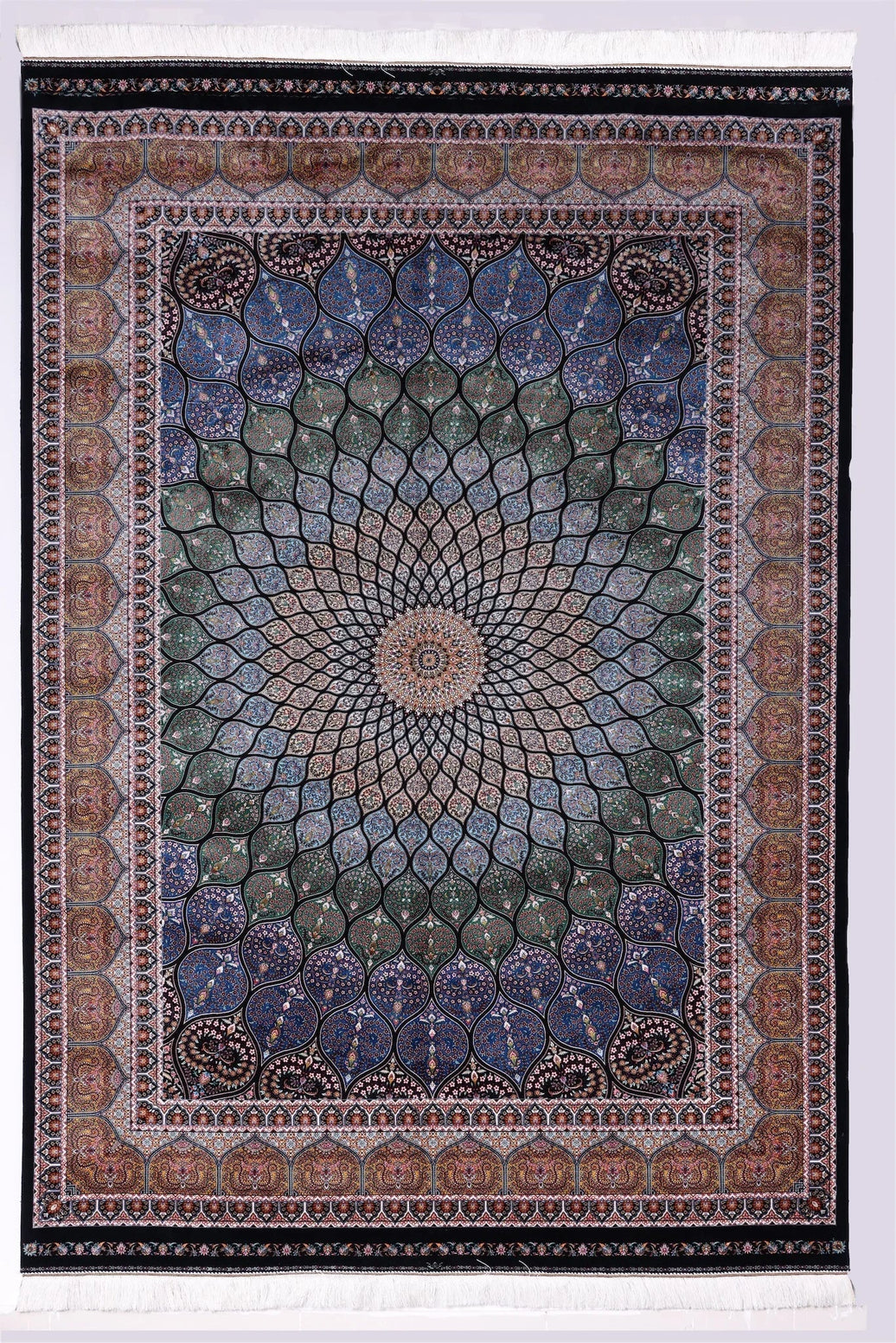
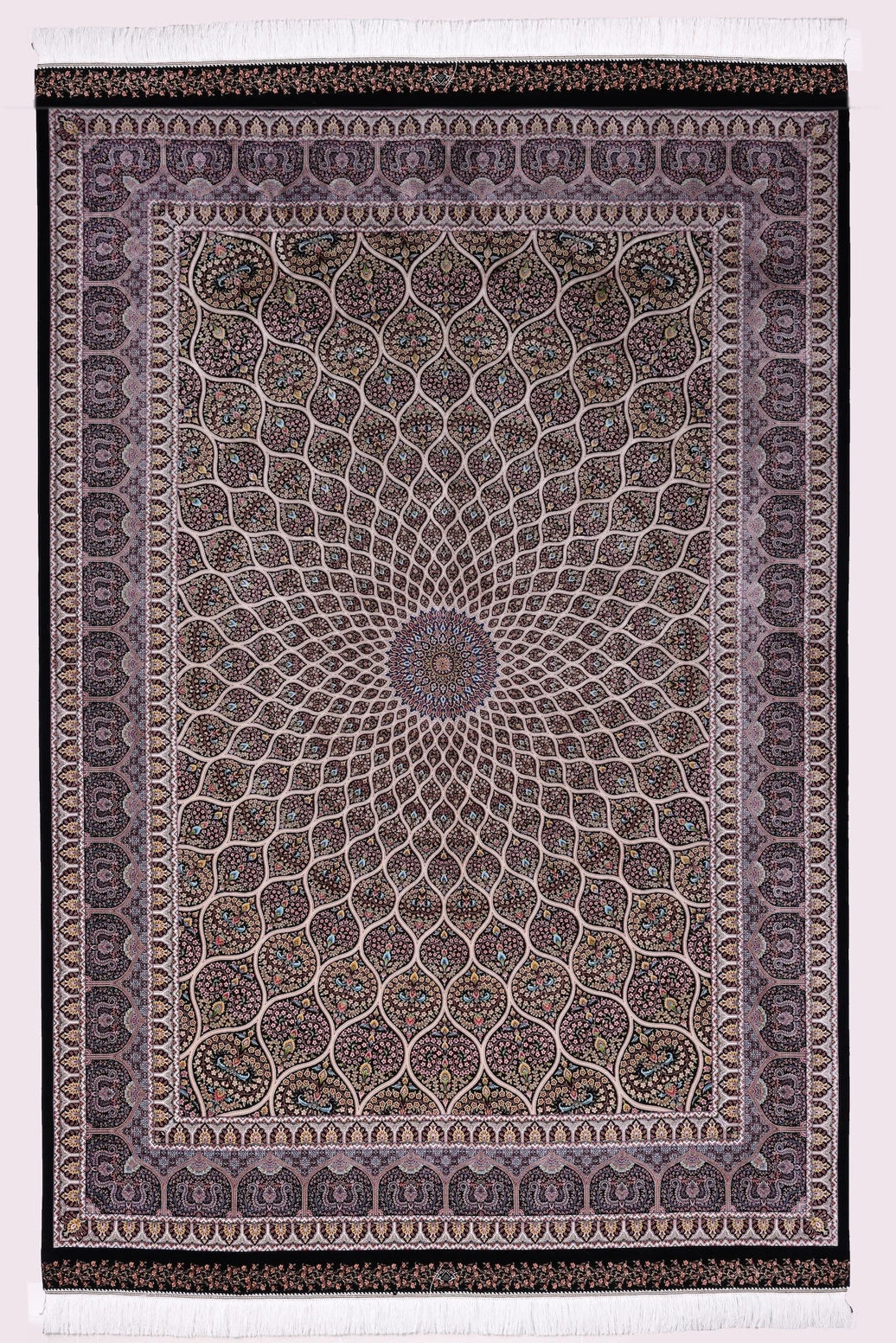
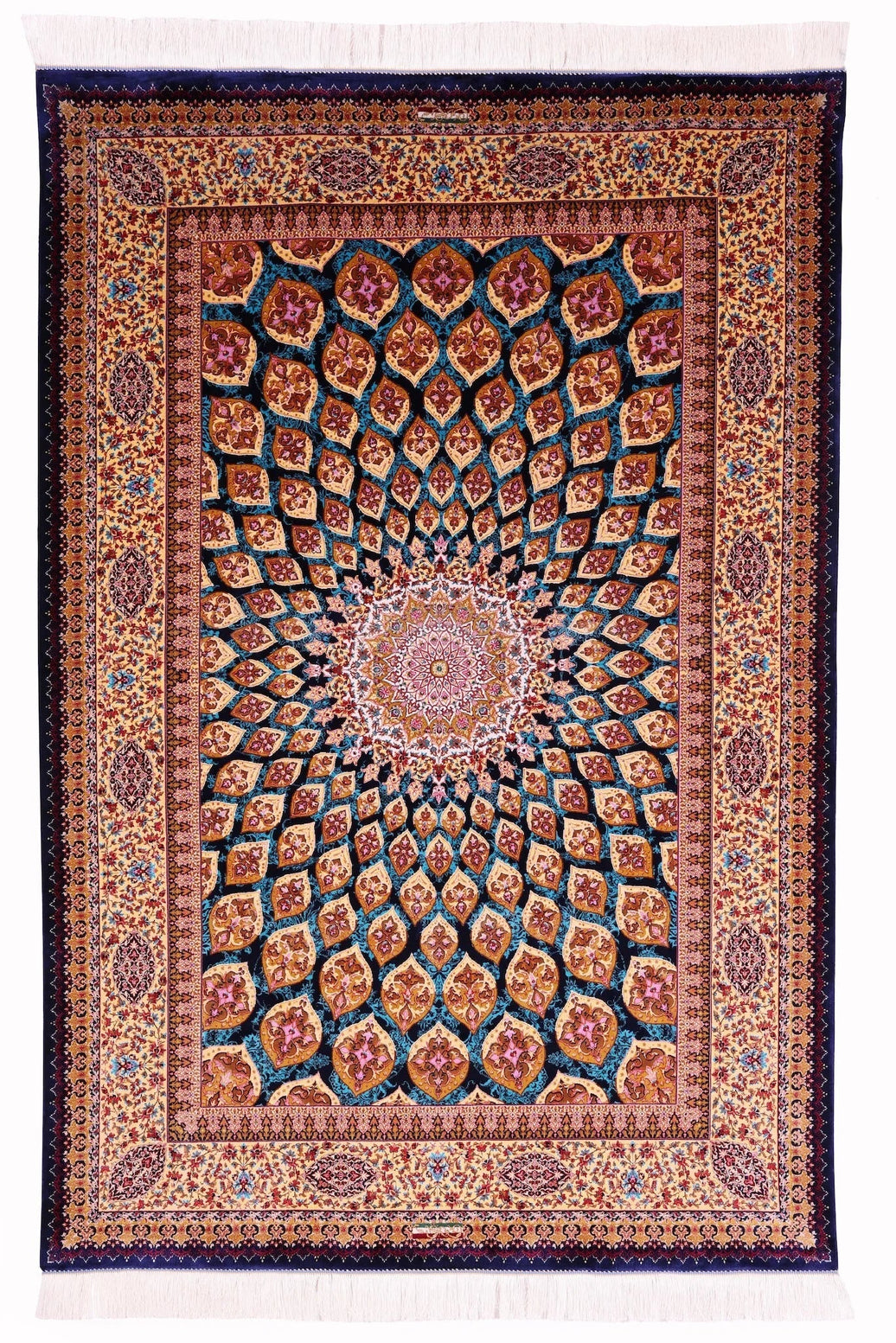
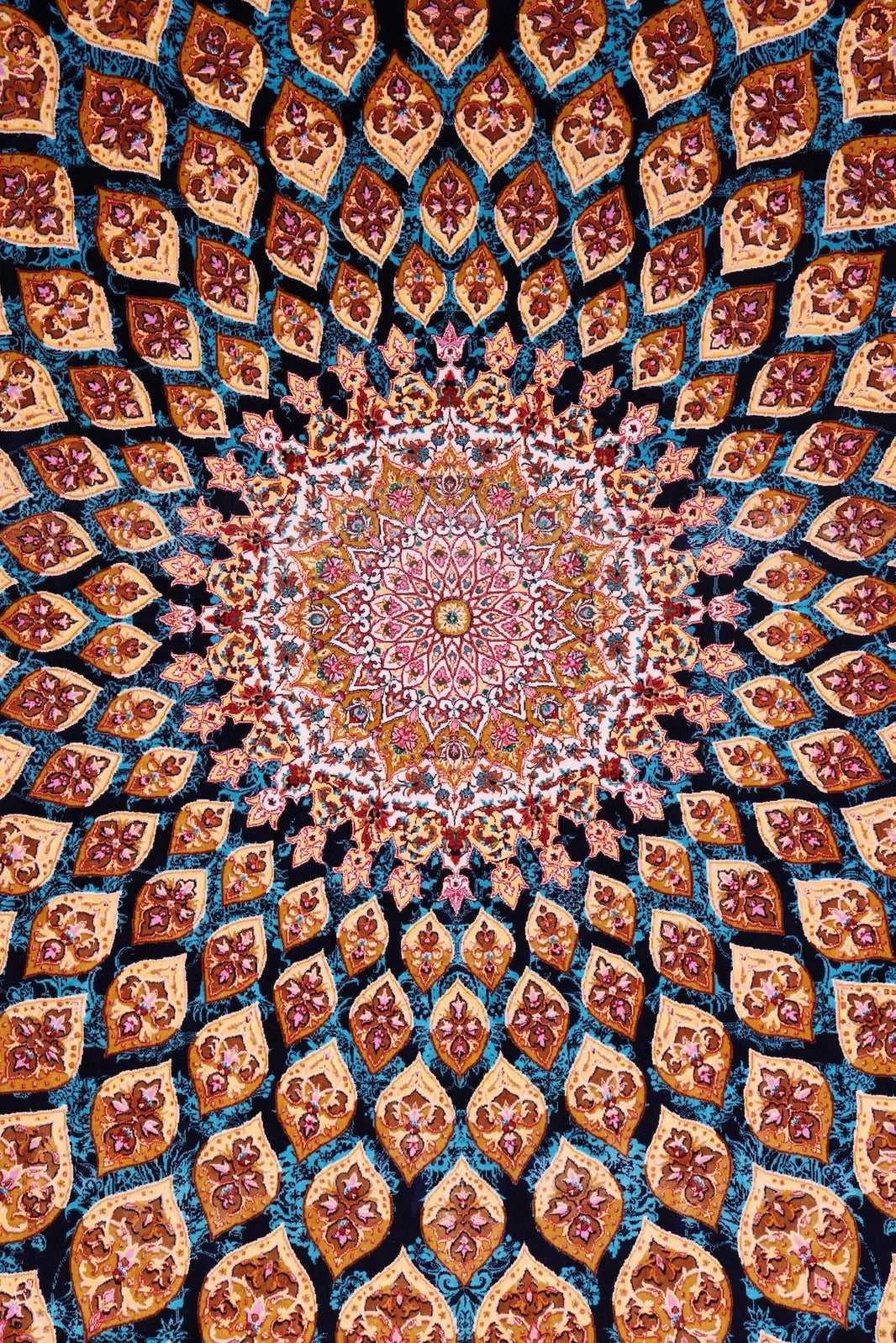
The Char Bagh rug does this with quiet authority. Its geometry is drawn from the classic Persian char bagh garden plan — four quadrants divided by channels of water, a design language that has structured both landscape and textile for over five hundred years. Laid beneath a linen sofa and raw-cotton cushions, it does not compete. It holds.
When the rug anchors, everything above it earns its place through contrast. Rough against smooth. Matte against sheen. Heavy against light. That is where the room begins to breathe.
Scale Is the Only Rule Worth Following
Textile layering interior design gets complicated when scale is ignored. It is the single most common mistake: a large-pattern rug paired with bold, busy cushions — the eye has nowhere to rest and the room feels cluttered despite being carefully chosen.
The rule is simple. A large-pattern rug demands simple, tonal textiles above it. Let the rug speak and give everything else permission to listen. A small-repeat rug invites bolder companions — a graphic throw, a printed cushion, a drape with texture.
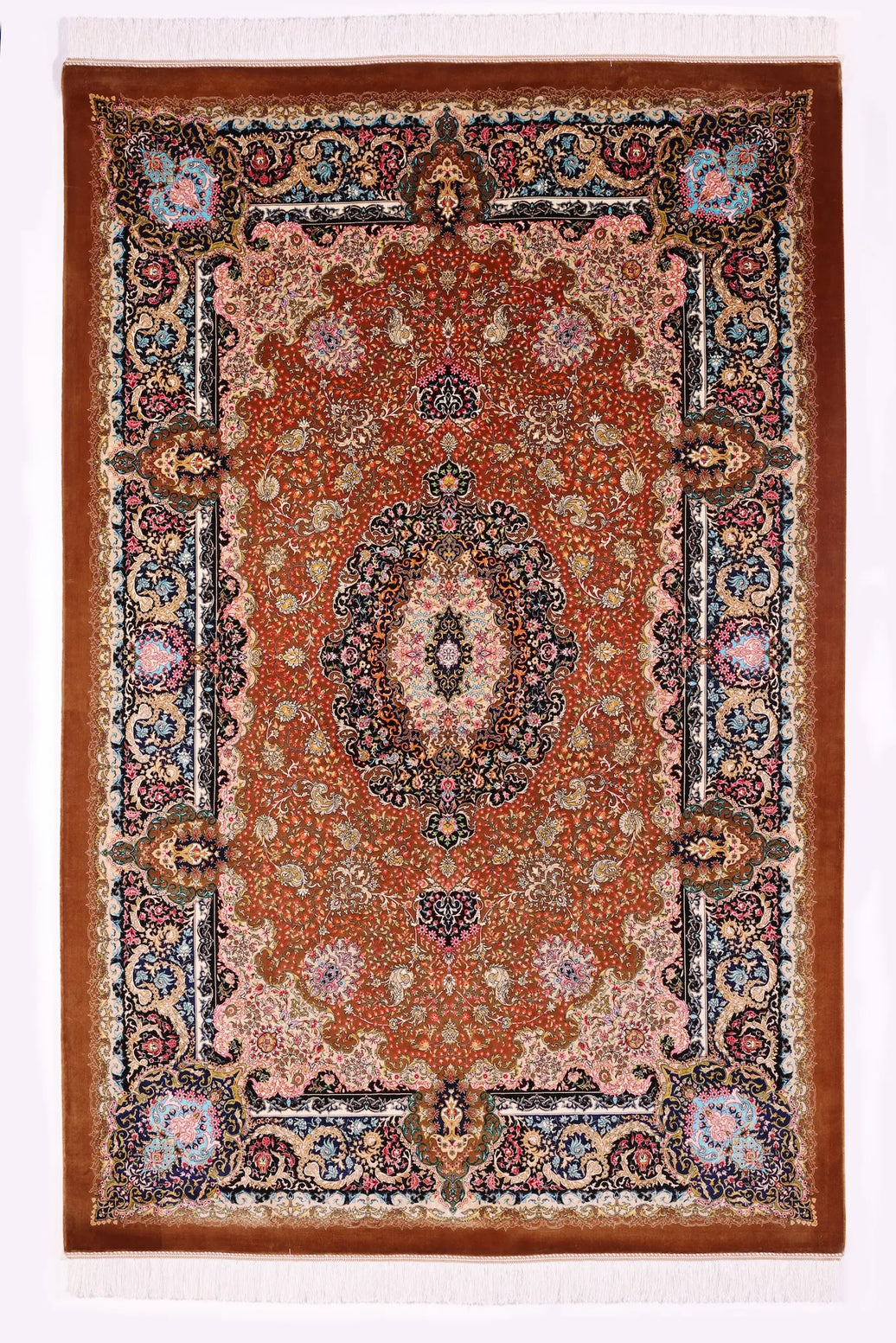
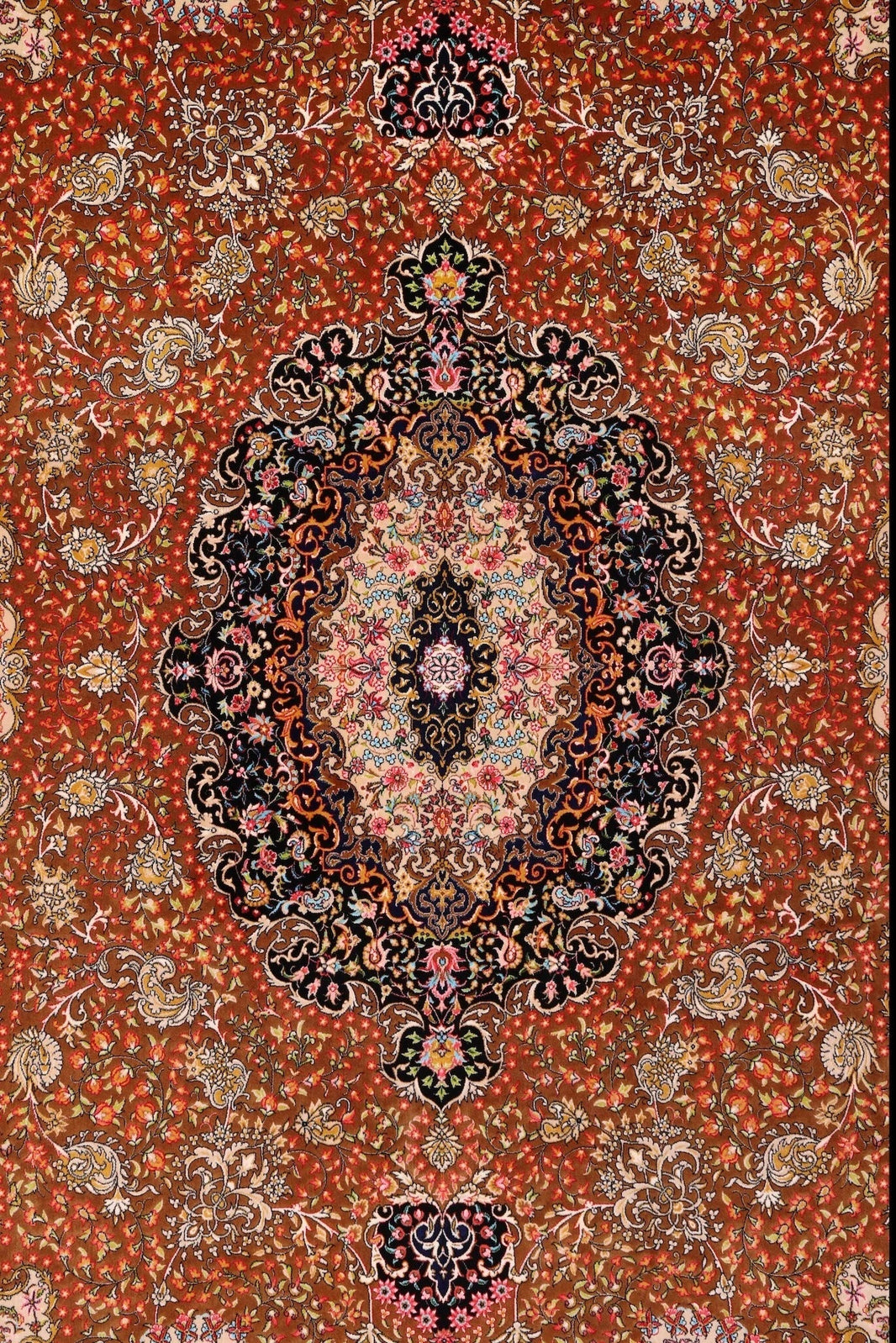
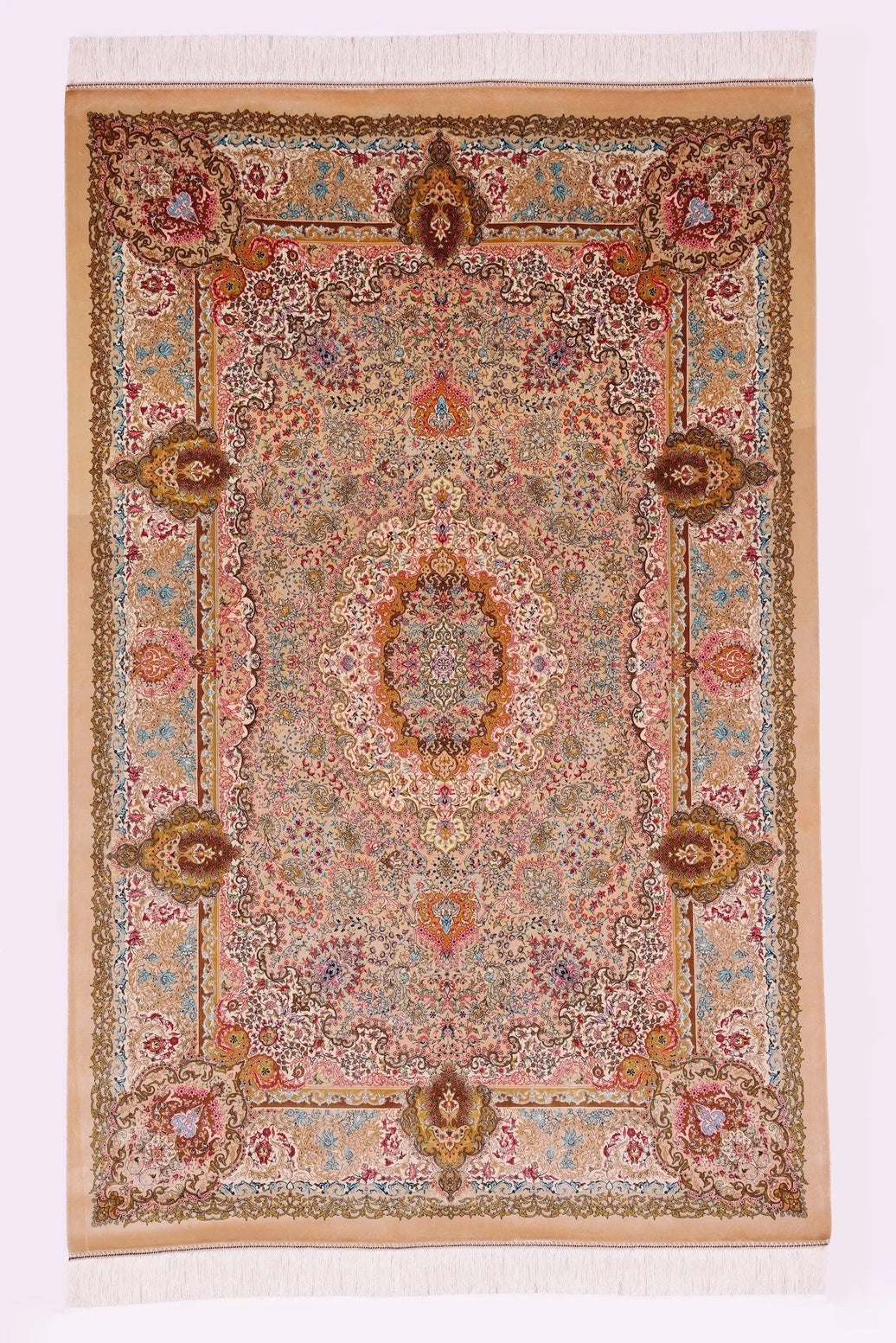
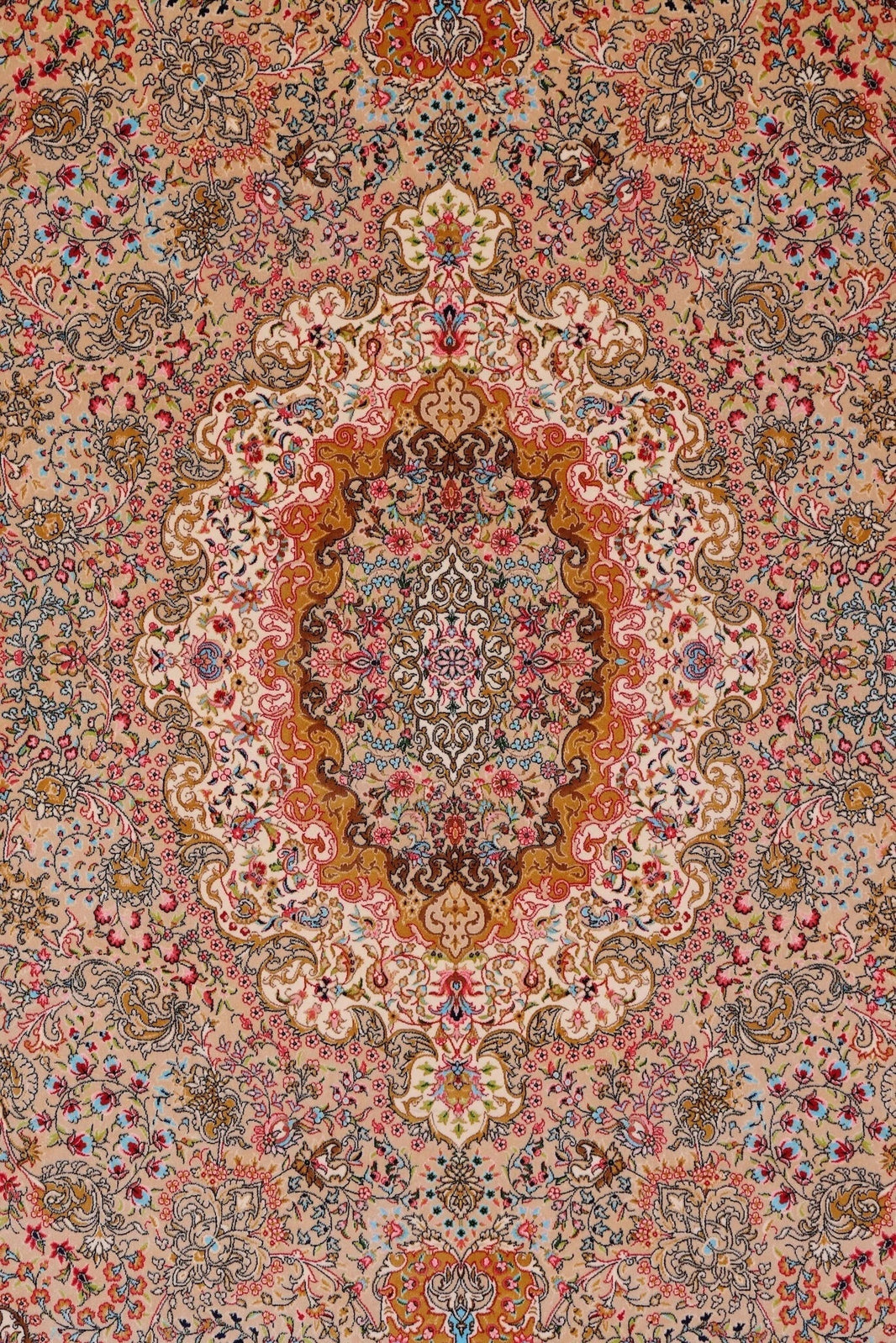
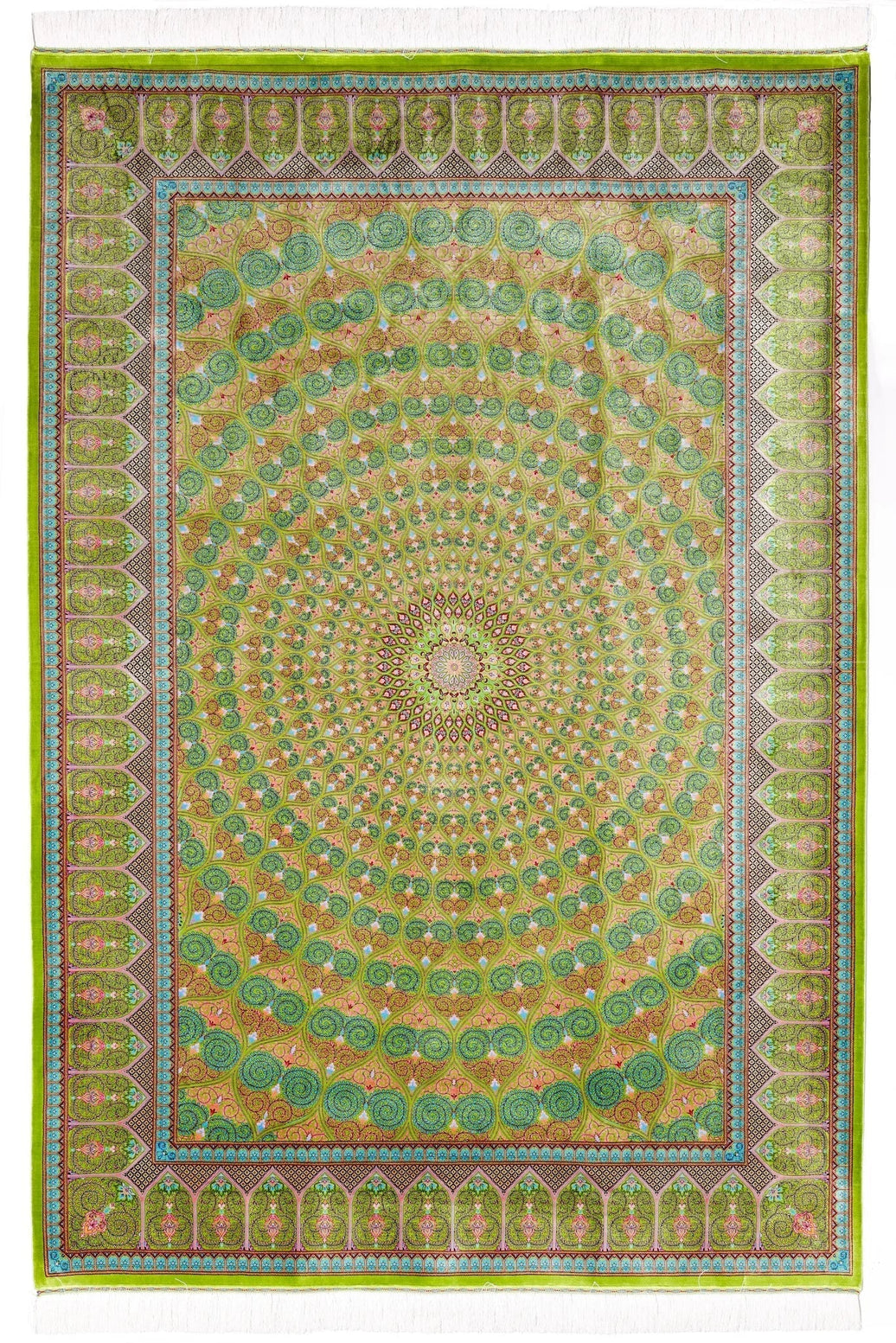
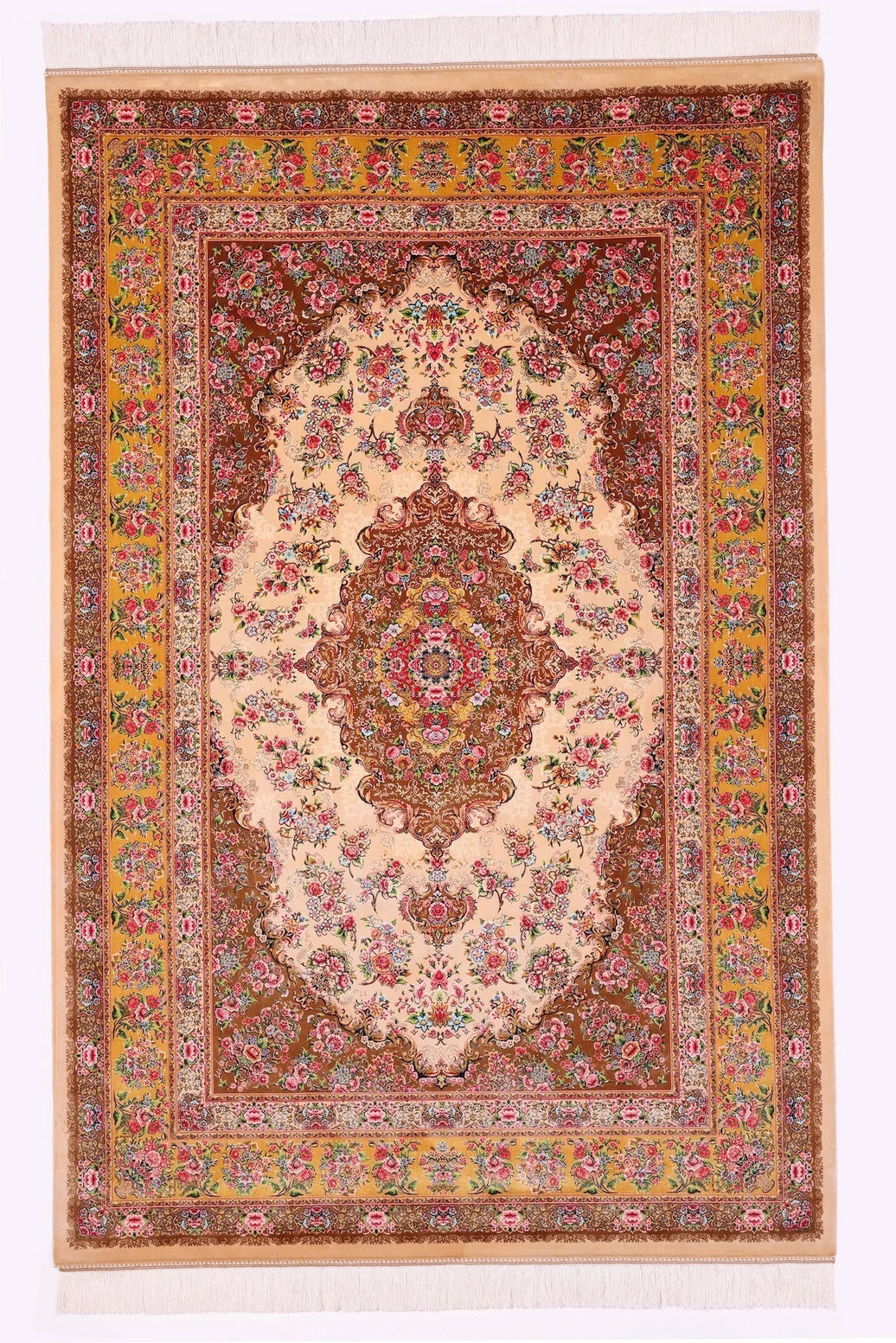
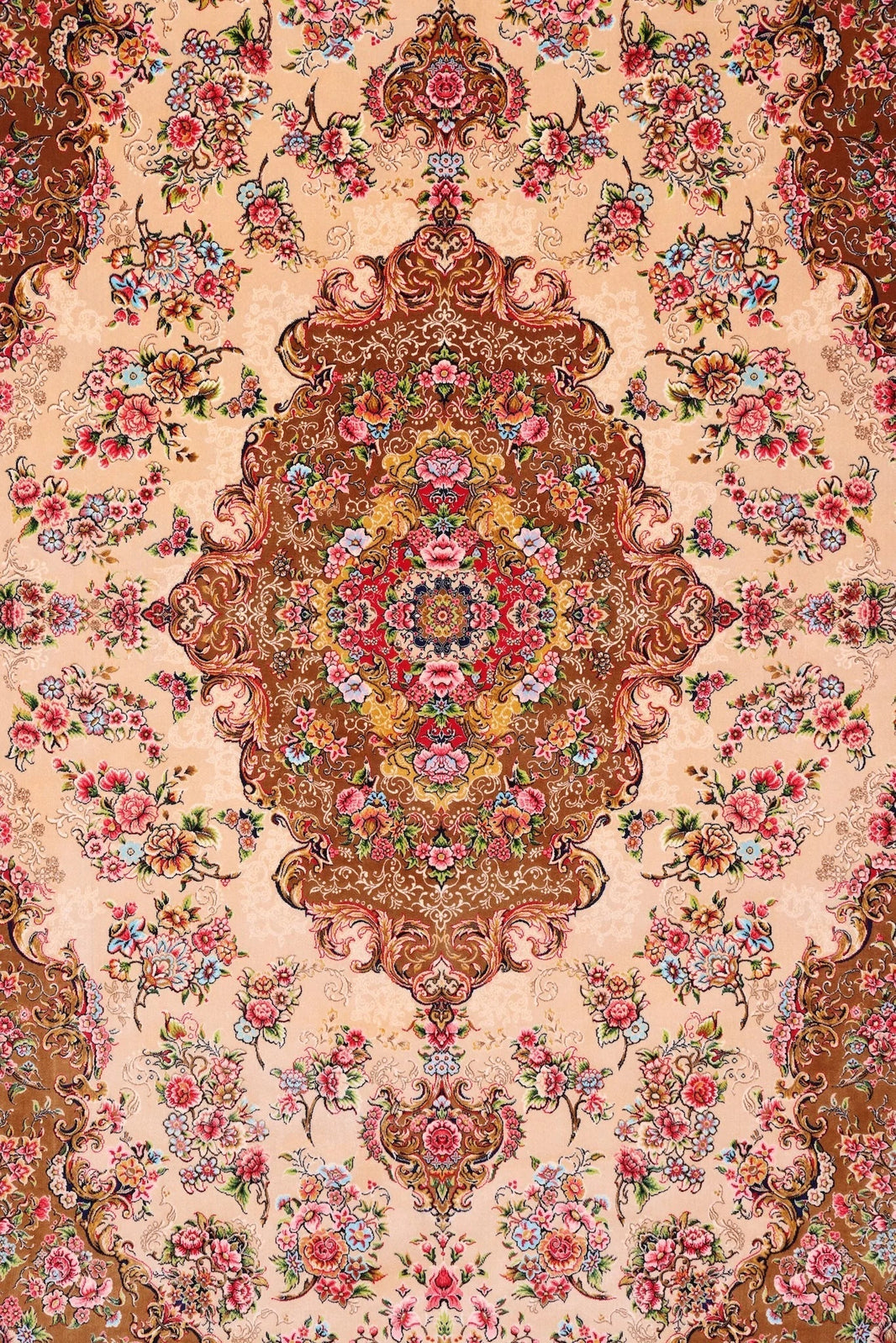
The Aylar Cinnamon rug is a study in this principle. Its warm terracotta ground and intricate medallion repeat carry visual weight. Pair it with undyed linen, chunky knit throws in cream or ochre, and velvet cushions in a single tone — and the room becomes an exercise in controlled richness. The rug earns the space. The textiles around it earn their simplicity.
The Floor-to-Ceiling Axis That Most Rooms Miss
Drapes and rugs occupy the same visual axis. One begins where the other ends. When their tones do not speak to each other, the room fractures — the eye reads the floor and the windows as separate conversations happening in the same space.
When they echo, coherence happens. Not uniformity — coherence. There is a difference. Uniformity is matching. Coherence is resonance.
The Arghavan rug carries deep jewel tones drawn from the Persian arghavan flower — the Judas tree that blooms in violet and rose across the spring in Persia. Paired with linen drapes in dusty plum or warm grey, the floor and ceiling plane become part of the same breath. The room does not just look finished. It feels inevitable.
Drape weight matters here as much as colour. Heavy interlined linen beside a silk-like pile creates the kind of textural contrast that holds attention without announcing itself. The friction is quiet. The effect is not.
The Deliberate Friction That Makes a Room Feel Curated
There is a moment in a well-layered room when you realise the comfort is not accidental. A knitted throw draped over linen upholstery. A jute cushion beside a velvet bolster. A silk-like Persian pile beneath bare feet that expected hardness and found depth instead.
That friction — rough against smooth, matte against lustre, heavy against weightless — is the difference between a room that has been decorated and one that has been composed. Decoration fills space. Composition creates feeling.
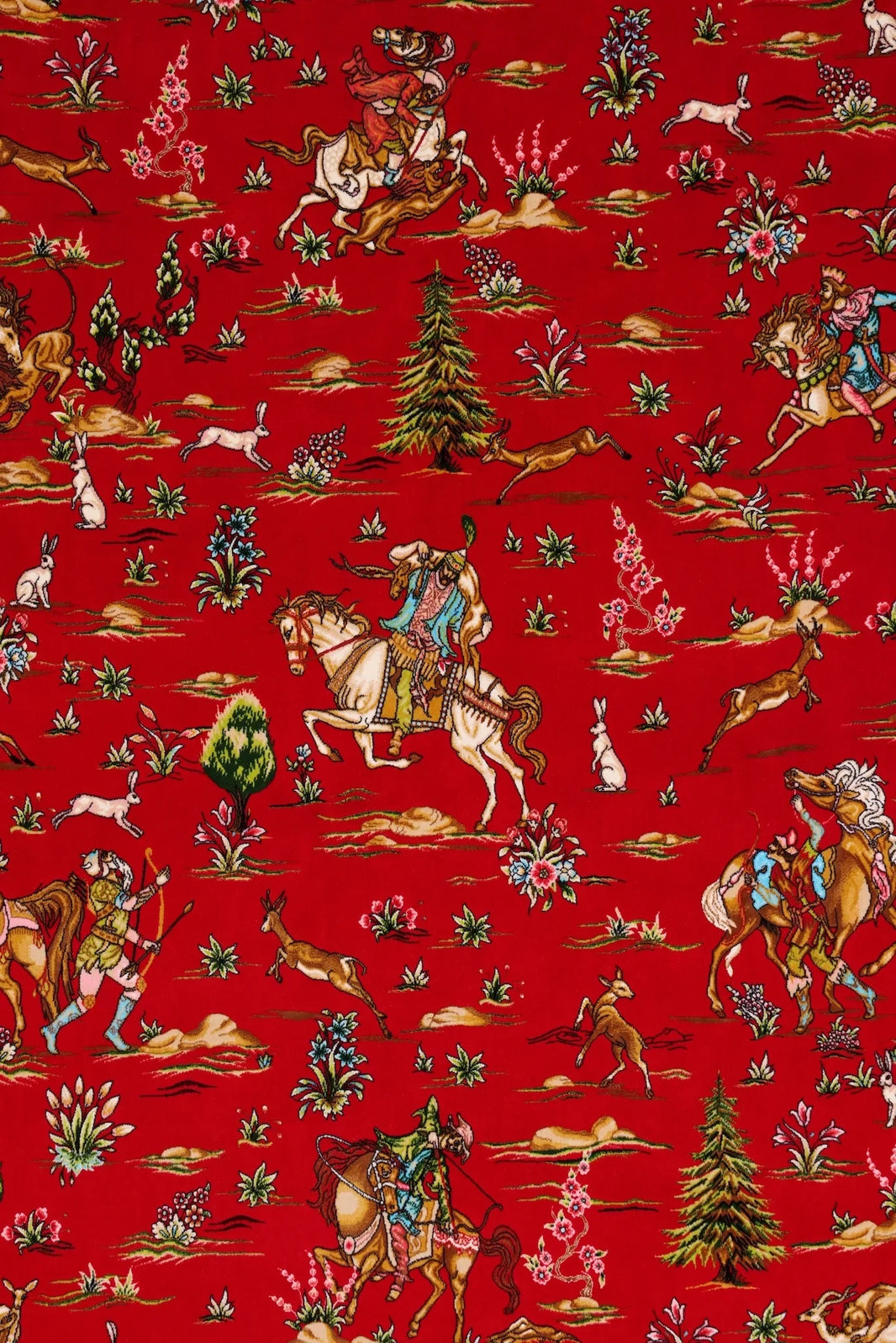
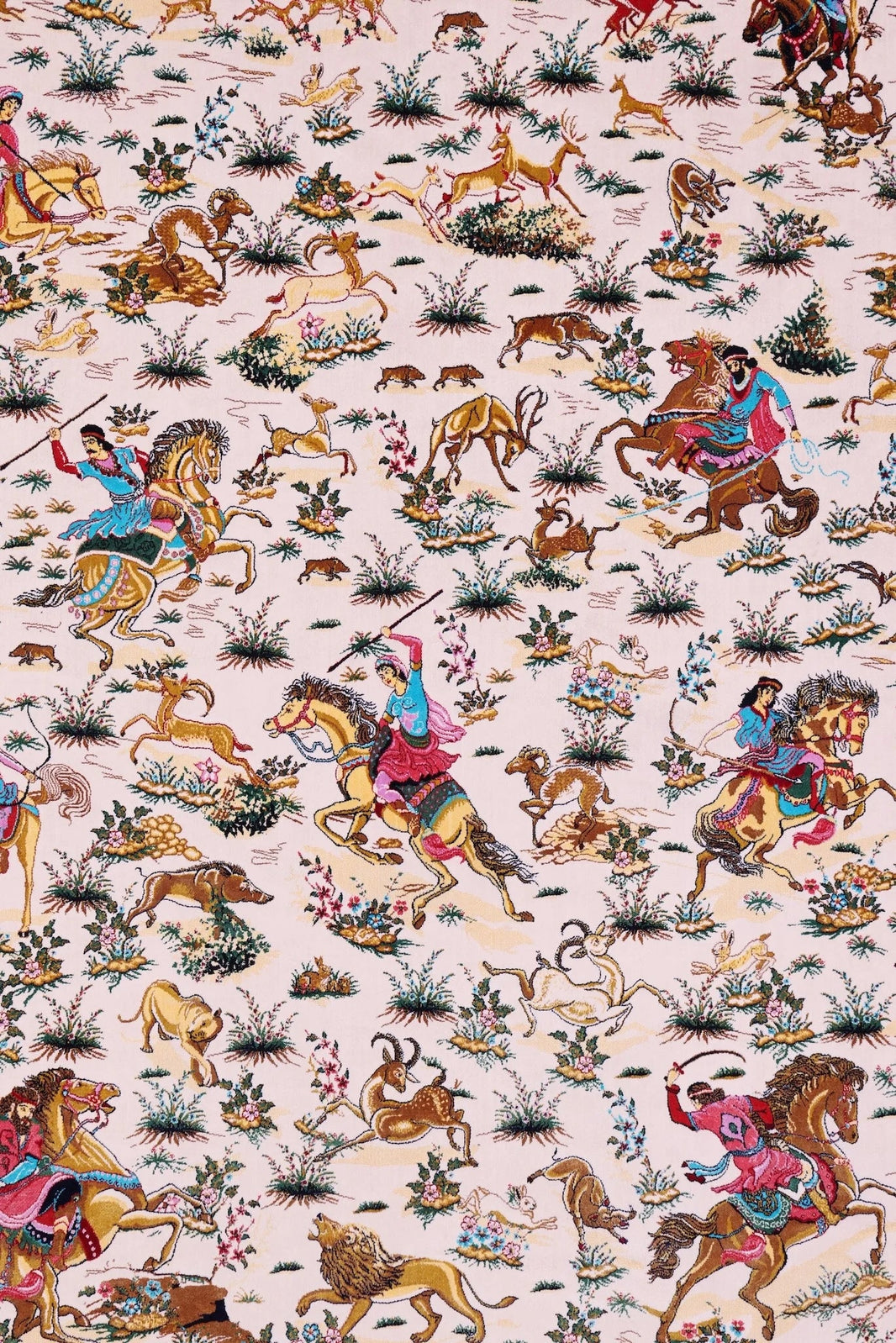
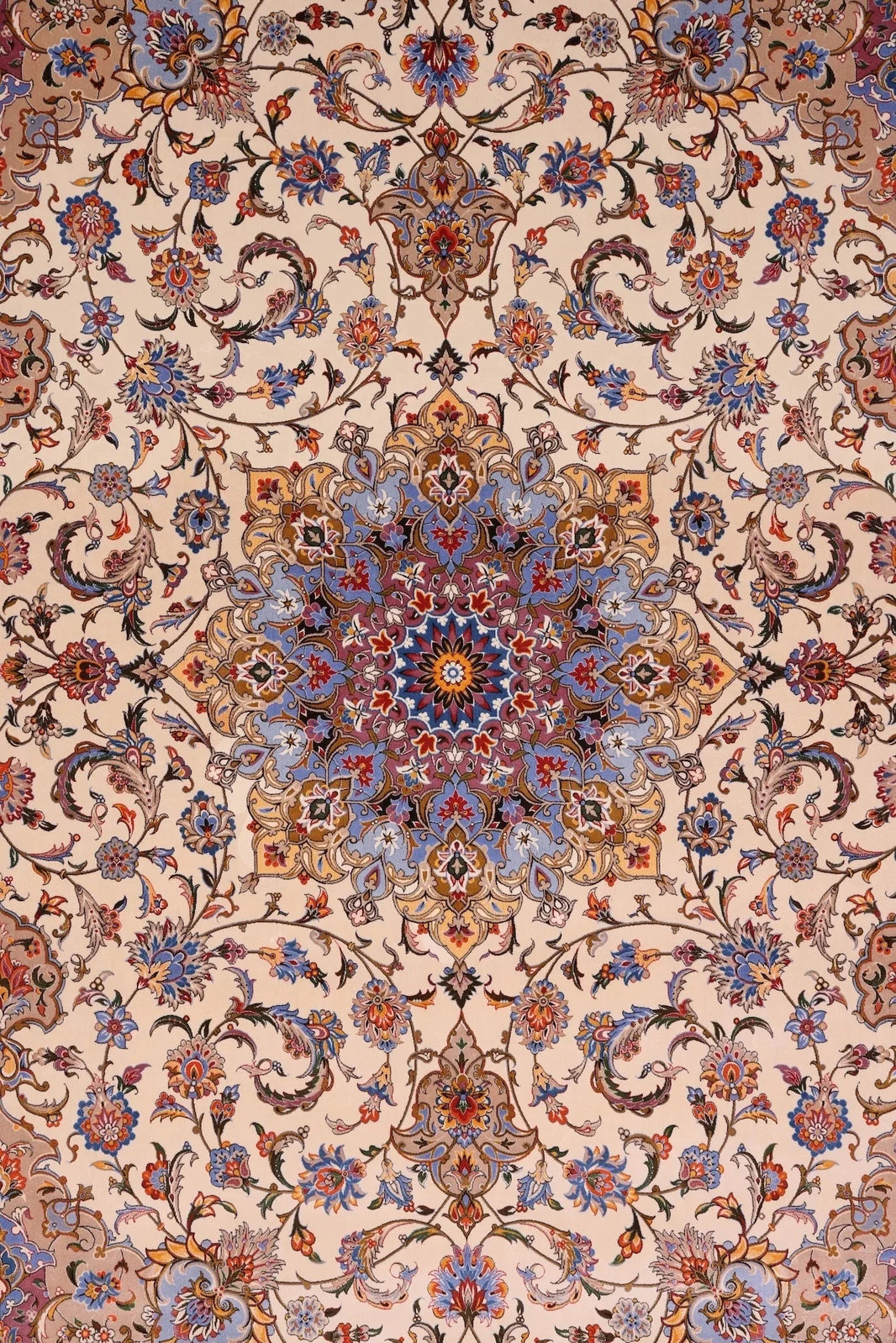
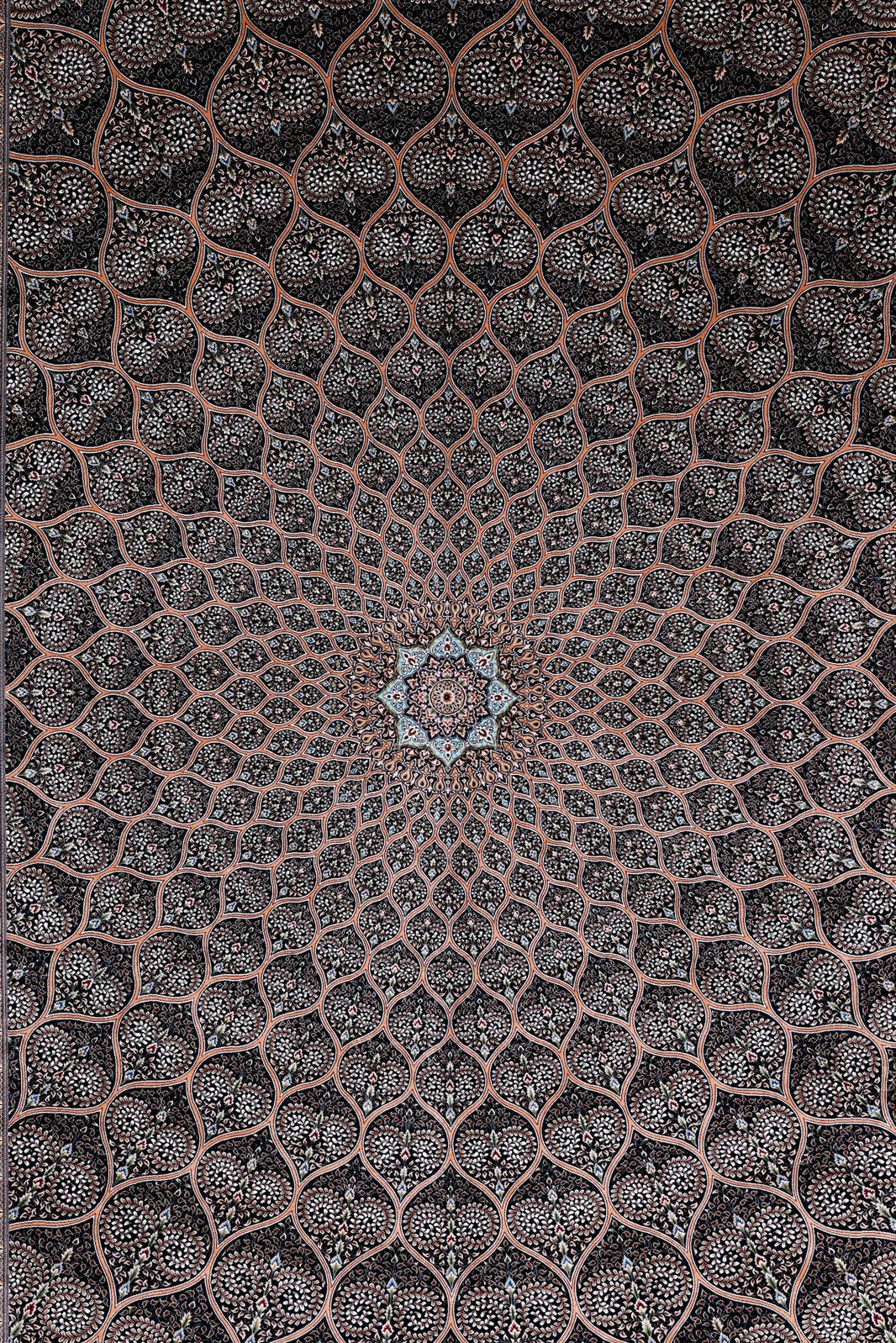
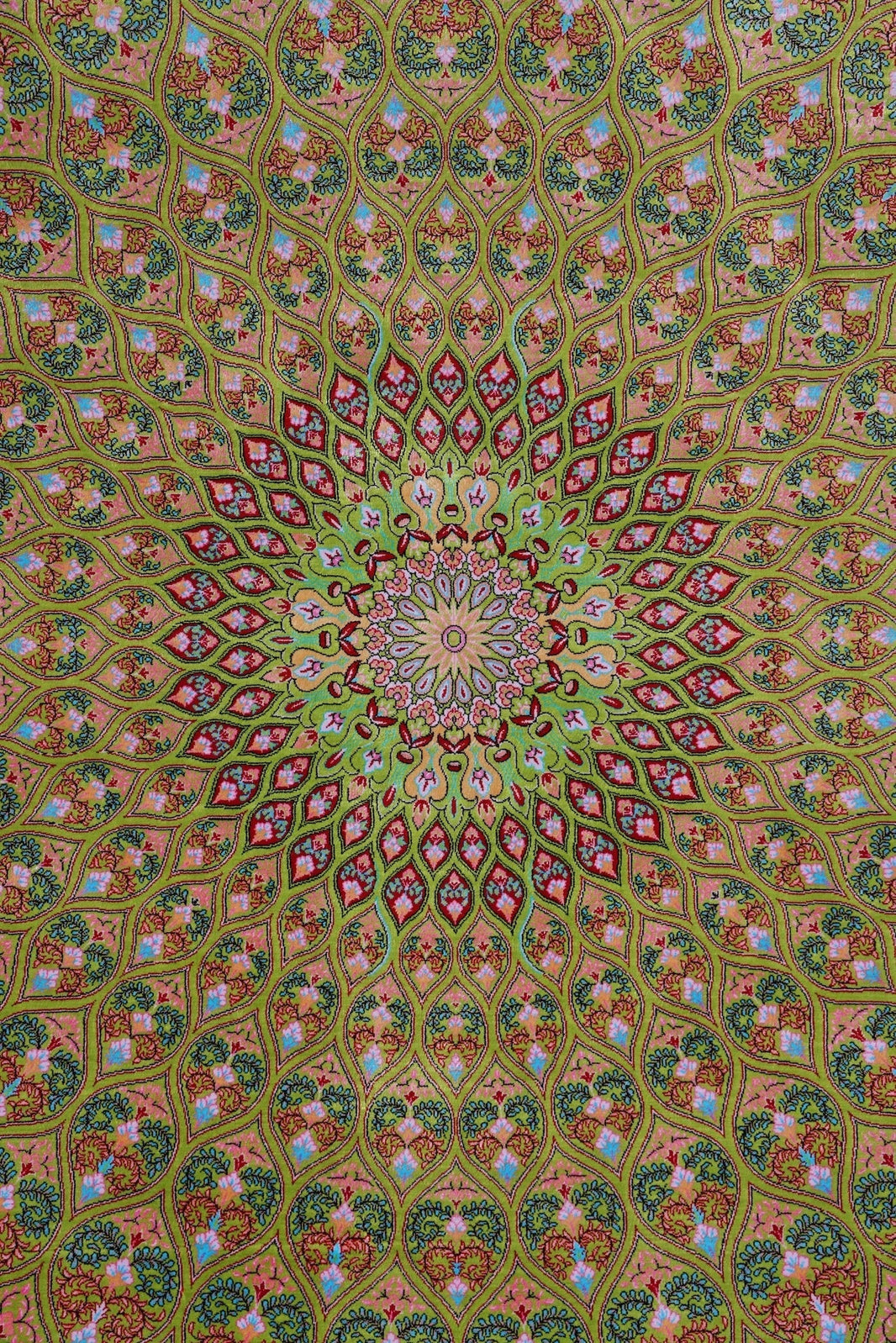
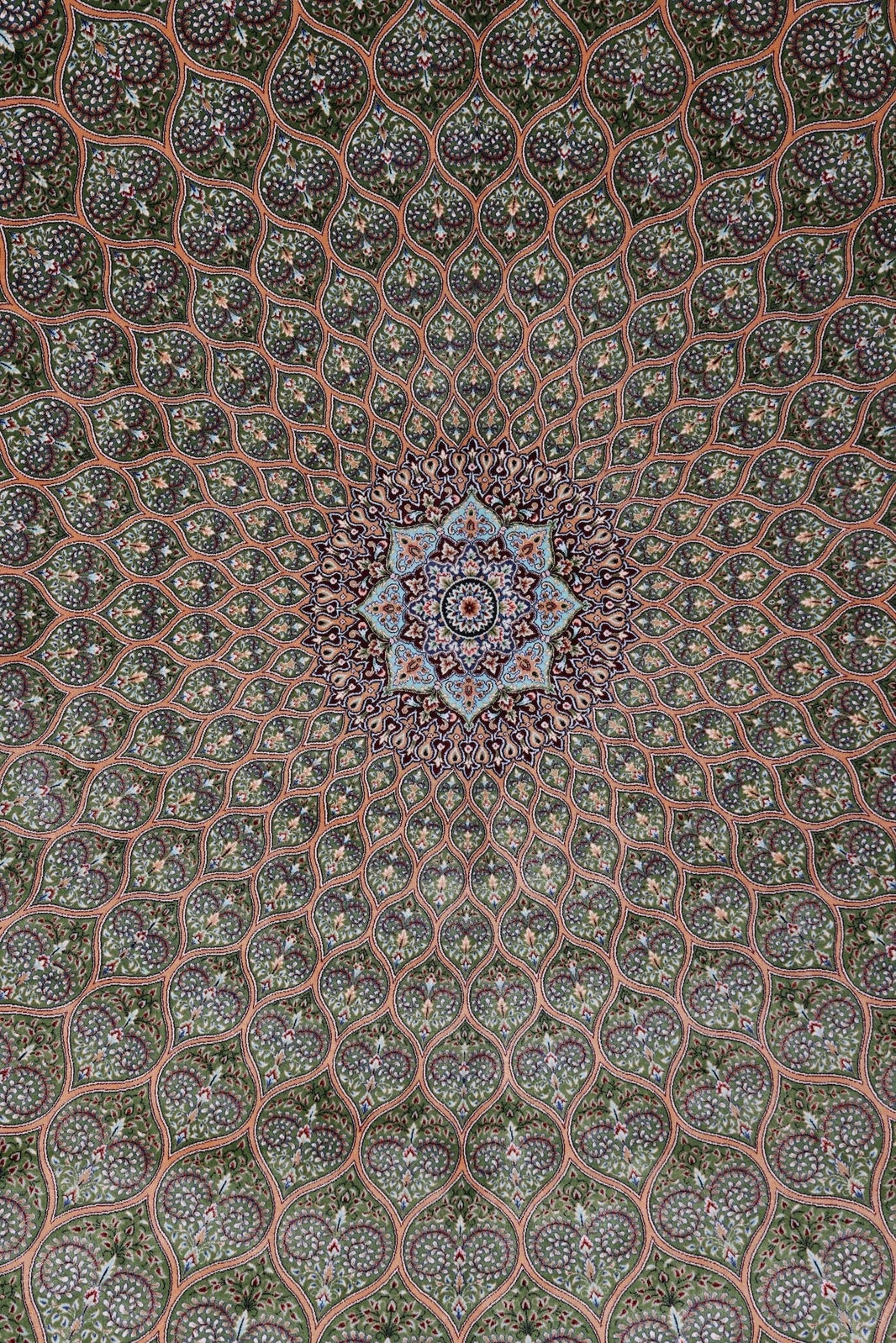
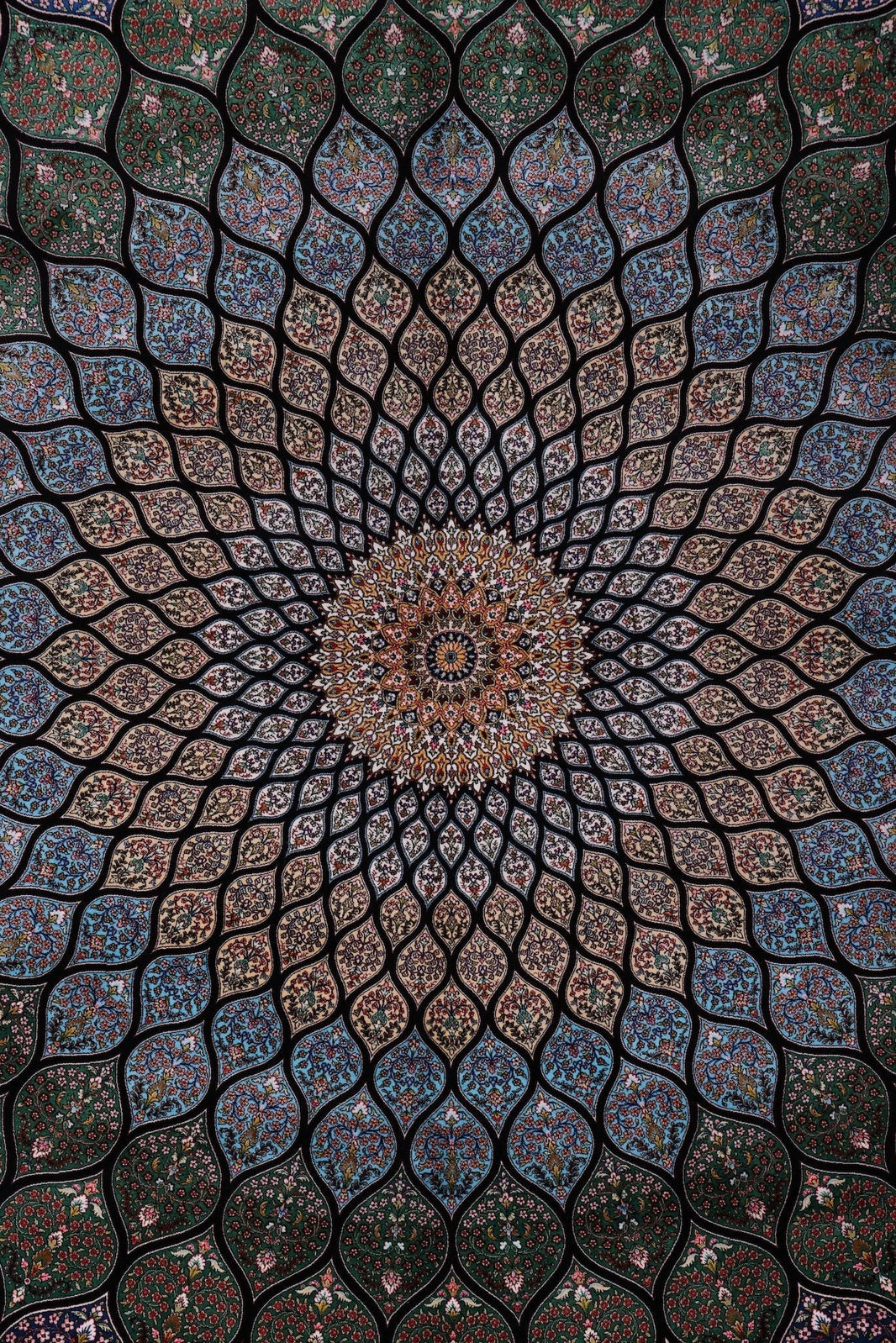
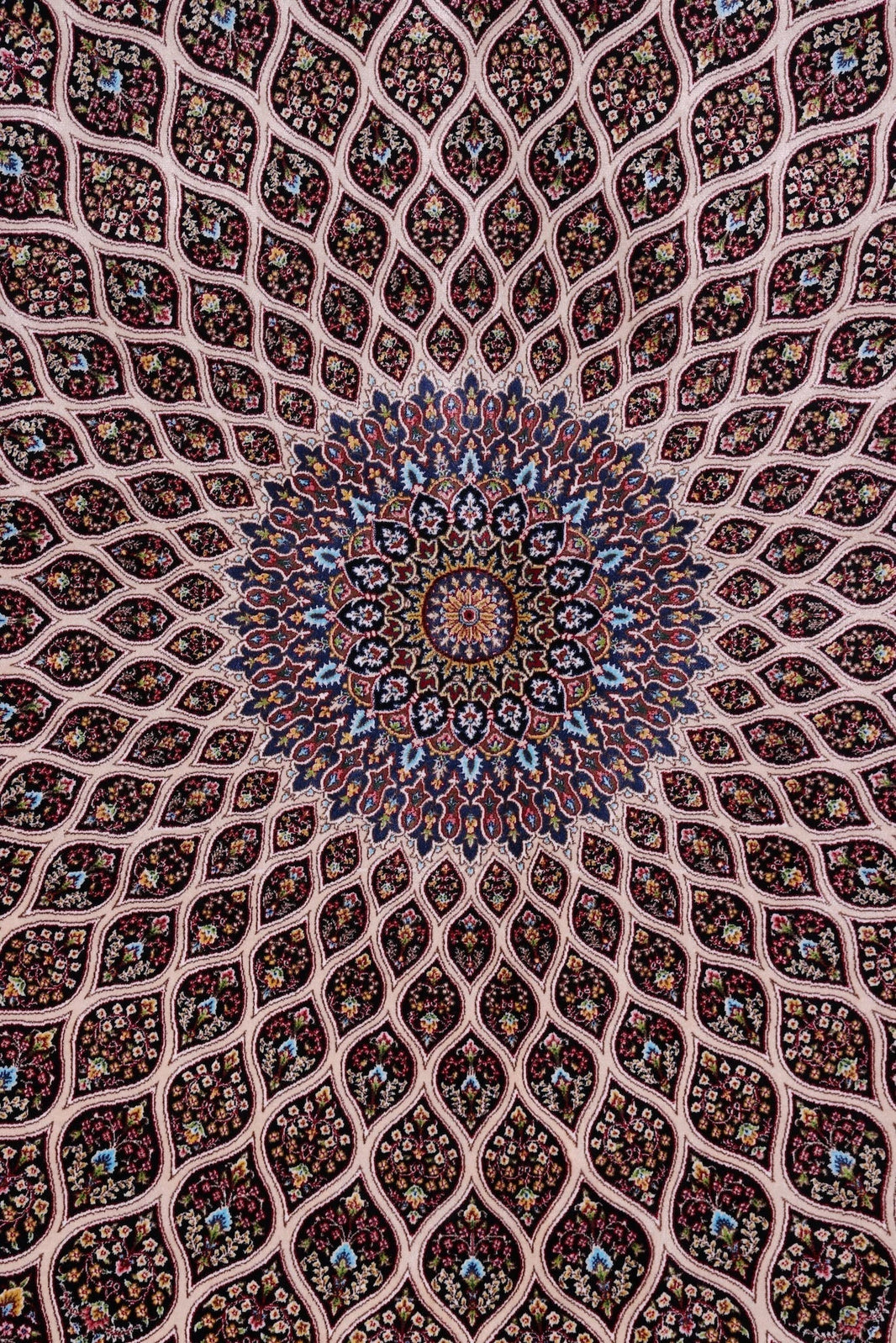
Persian rugs have always understood this. The pile of the Char Bagh catches light differently in the morning than in the evening. Its silk-like finish holds a sheen that shifts with the hour, the season, the quality of afternoon sun coming through west-facing glass. No other textile in the room does that. No other textile needs to.
The art of textile layering is ultimately an act of restraint. Each piece chosen not because it is beautiful in isolation, but because of what it does when placed beside everything else. The throw that makes the rug look richer. The cushion that makes the drape look softer. The rug that makes the entire room feel grounded.
The conversation your room has been waiting to have does not start with paint or furniture. It starts at the floor, with something that carries centuries of craft into the present, and asks every other textile in the room to rise to meet it.
Visualize this rug in your room →