

The Gulf Summer Interior Has Already Solved the Overcrowded Room
Zagrosa · Interior Living
When the outdoors becomes uninhabitable for months, the interior carries the full weight of calm. UAE summer interior design has long understood what many rooms take years to learn: restraint is not a style choice, it is an environmental response.
The room that survives a Gulf summer has already answered every question an interior can ask, what stays, what earns its place, and what the floor alone can hold.
There is an old idea, passed between generations without a named author, that a room reveals its owner's fears more honestly than their confidence. The overcrowded room is not generous. It is anxious.
The Gulf summer has no patience for anxiety. When the temperature outside holds above 45 degrees for weeks at a stretch, the interior stops being a complement to outdoor living and becomes the entire world. Every surface, every object, every unnecessary decision becomes load-bearing. The room either carries the weight of calm, or it collapses under its own accumulation.
What Extreme Heat Teaches About Empty Space
Gulf summers impose a ruthless editorial process on interiors. The flat white light that presses through shaded glass in July and August does not flatter clutter. It exposes it. Every object that cannot justify its presence reads as noise, and in a room that must function as sanctuary for months at a time, noise is not neutral. It is exhausting.
The traditional majlis understood this long before it became a design principle. Perimeter seating, a cleared central floor, and very little above eye level. The room's heart was deliberately left open, not because furnishings were unavailable, but because the emptiness was the point. That central space is where breath moves. It is where the eye rests. It is, in the language of centuries of Gulf domestic architecture, the room's argument for calm.
Contemporary UAE summer interior design returns to this logic even when the furniture is modern and the palette is pared back. The rooms that survive extreme seasons are the ones that carry only what earns its place. The overcrowded room is not an abundance problem. It is a confidence problem.
The Rug as a Resolved Decision, Not a Starting Point
In a spare room, the floor is not background. It is the primary surface. Under Gulf summer conditions, where the eye has nowhere excessive to land, the floor carries a disproportionate share of the room's visual and emotional weight. A rug chosen well is not the beginning of a layering sequence. It is one resolved decision within a composition that has already committed to restraint.
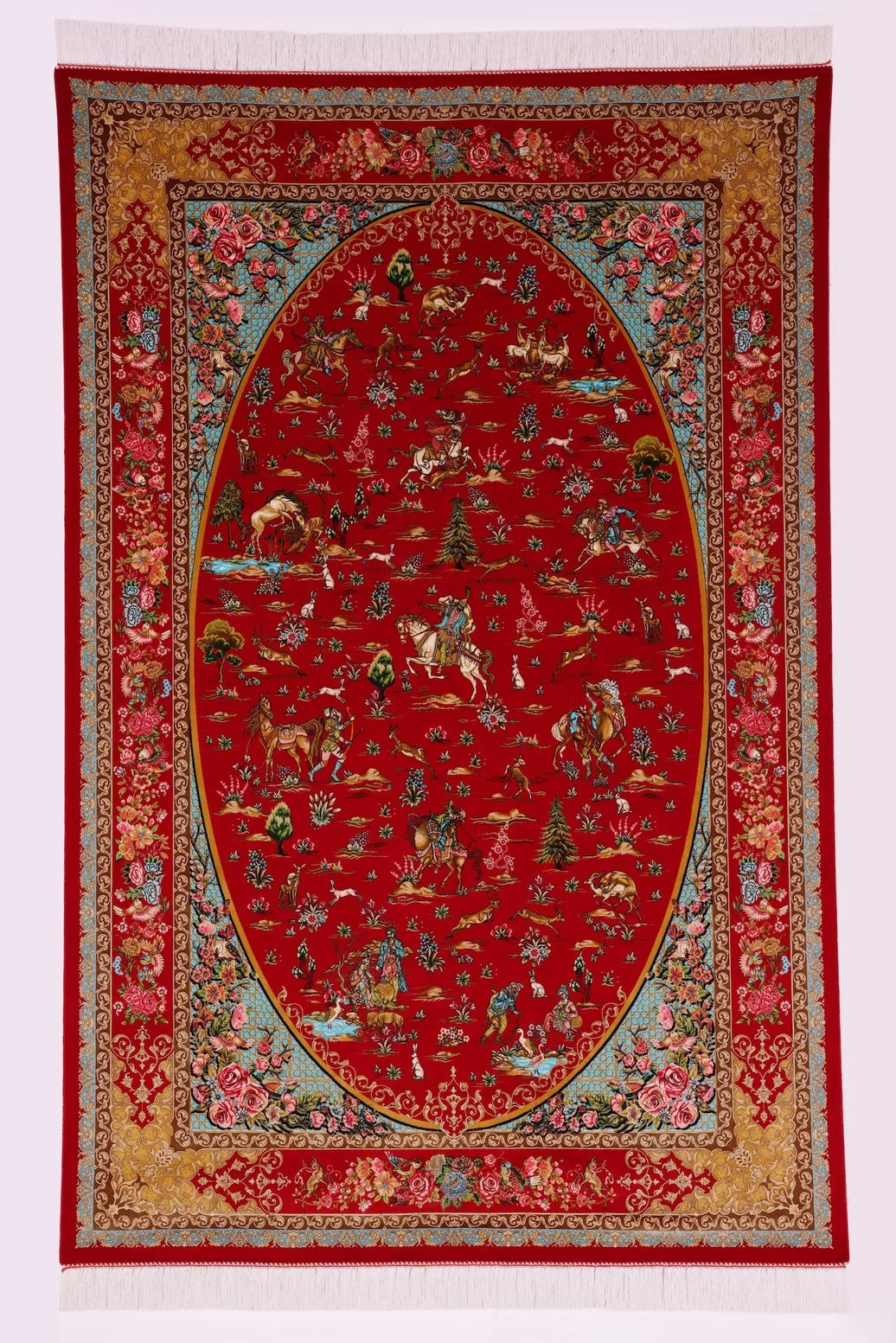
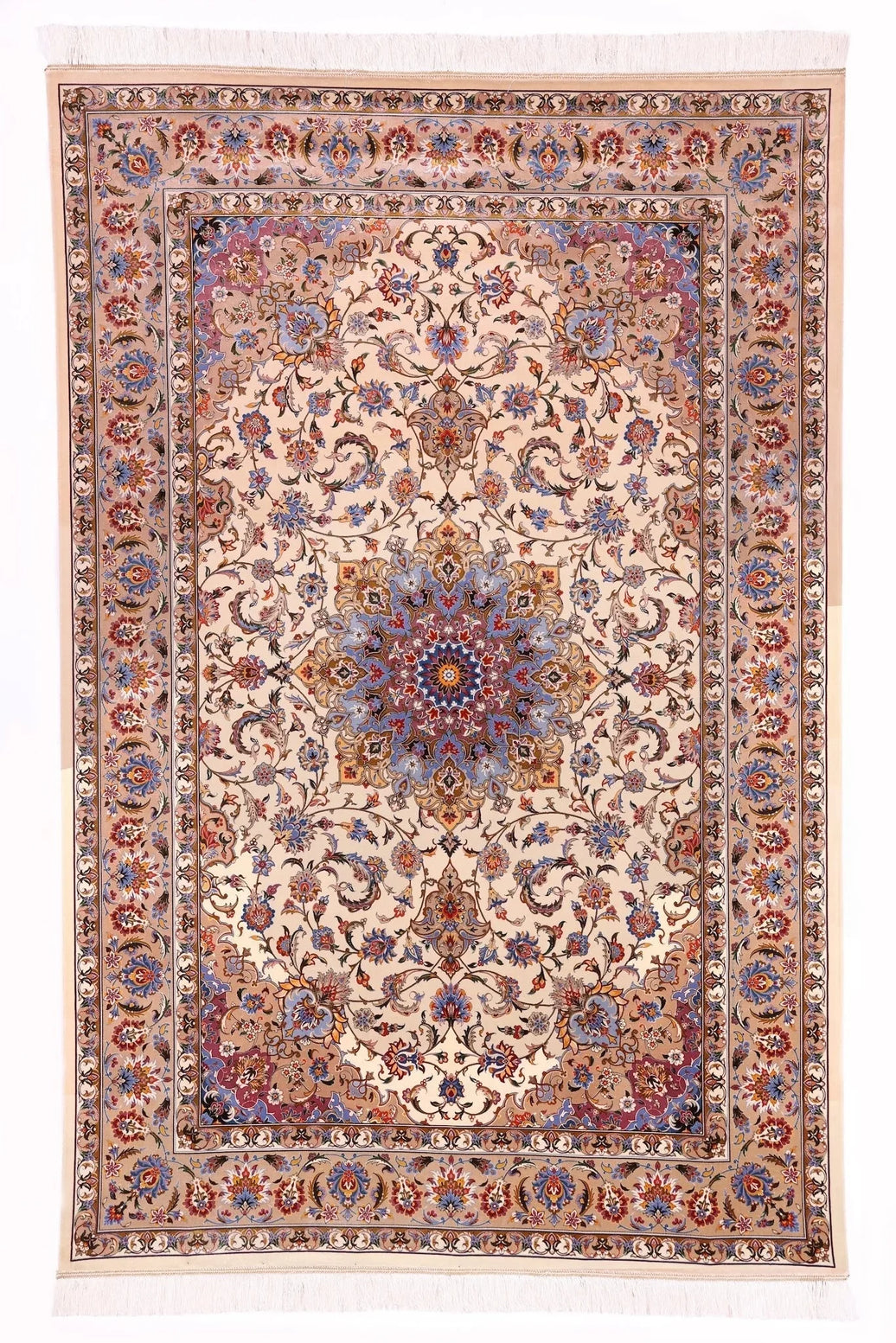
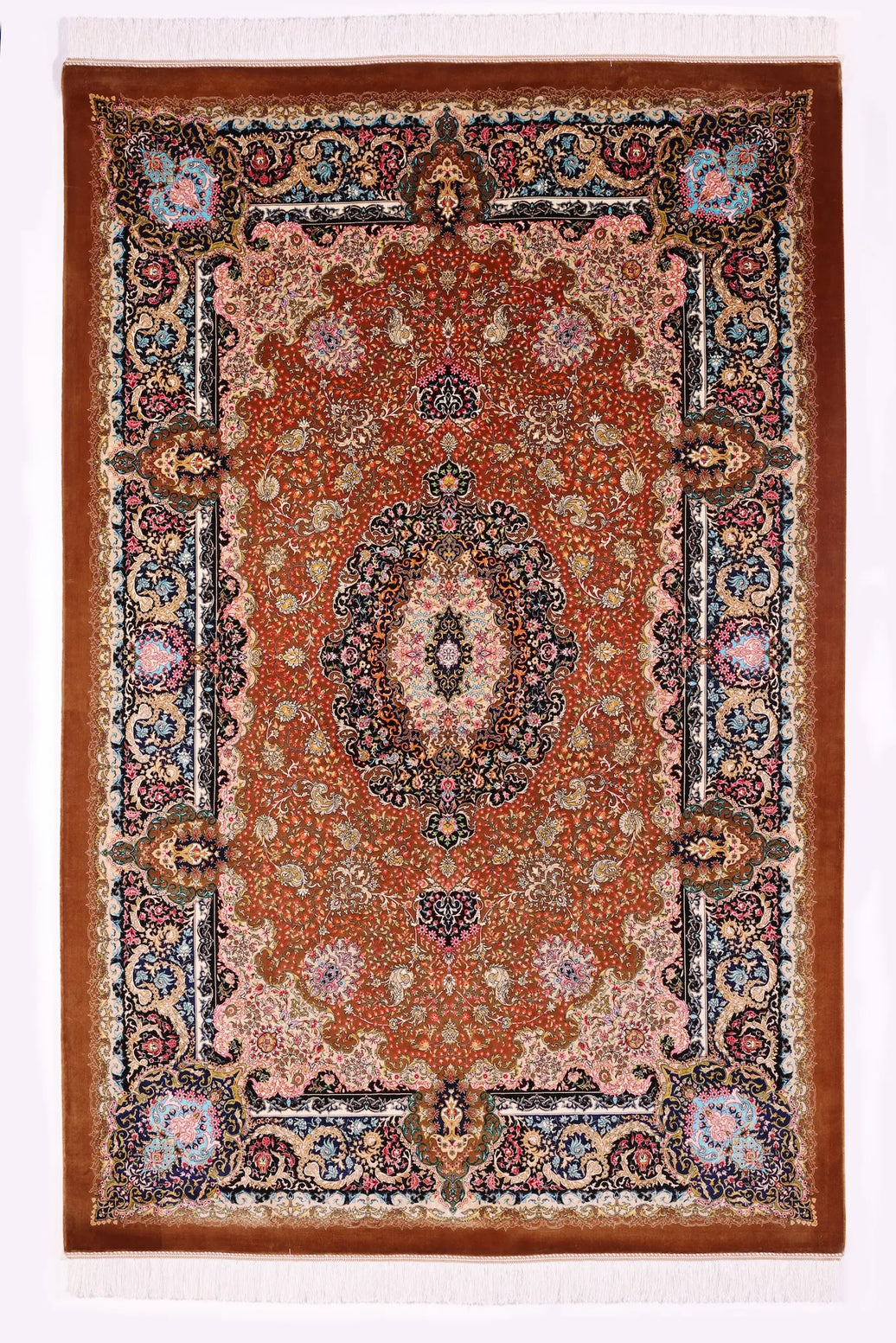
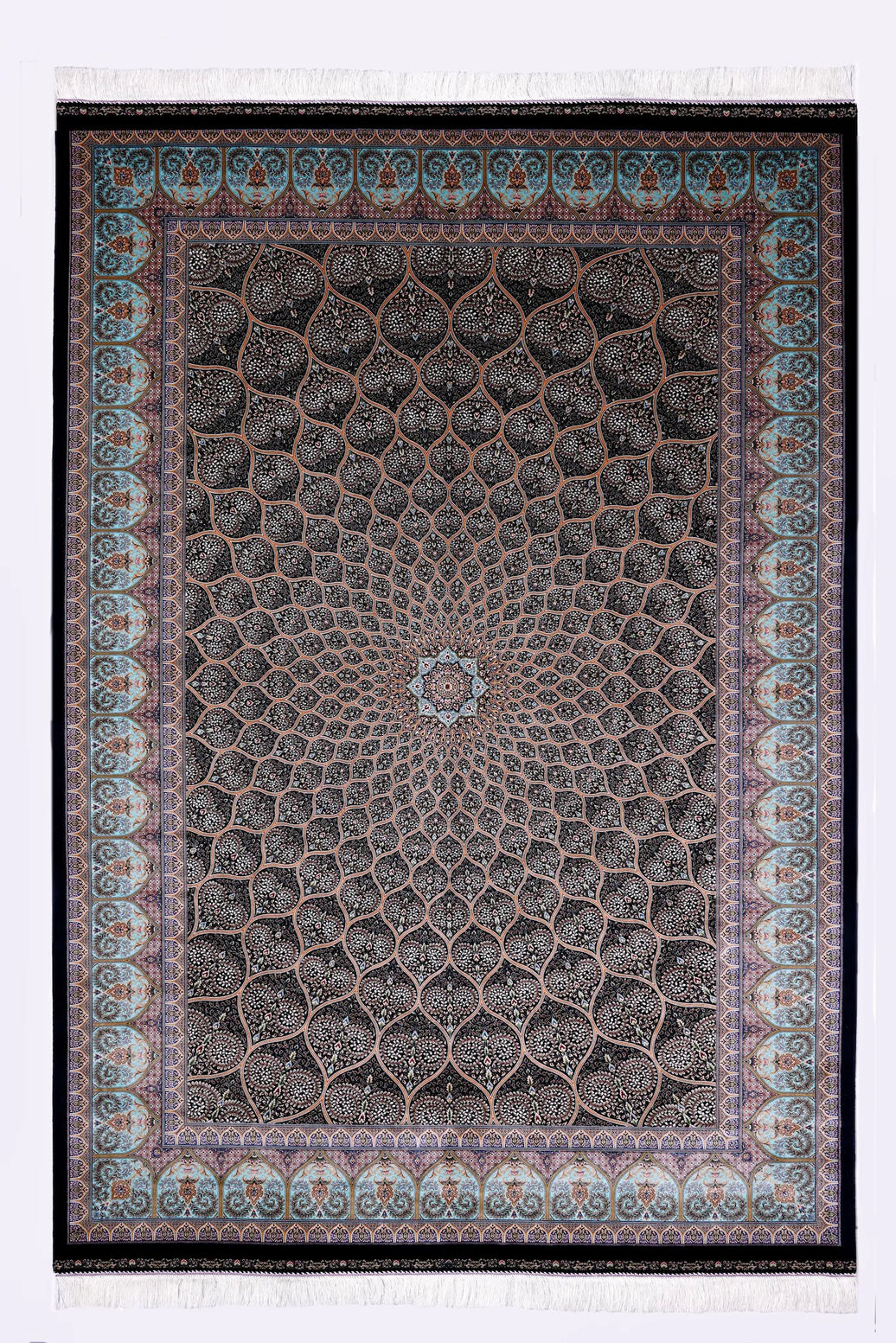
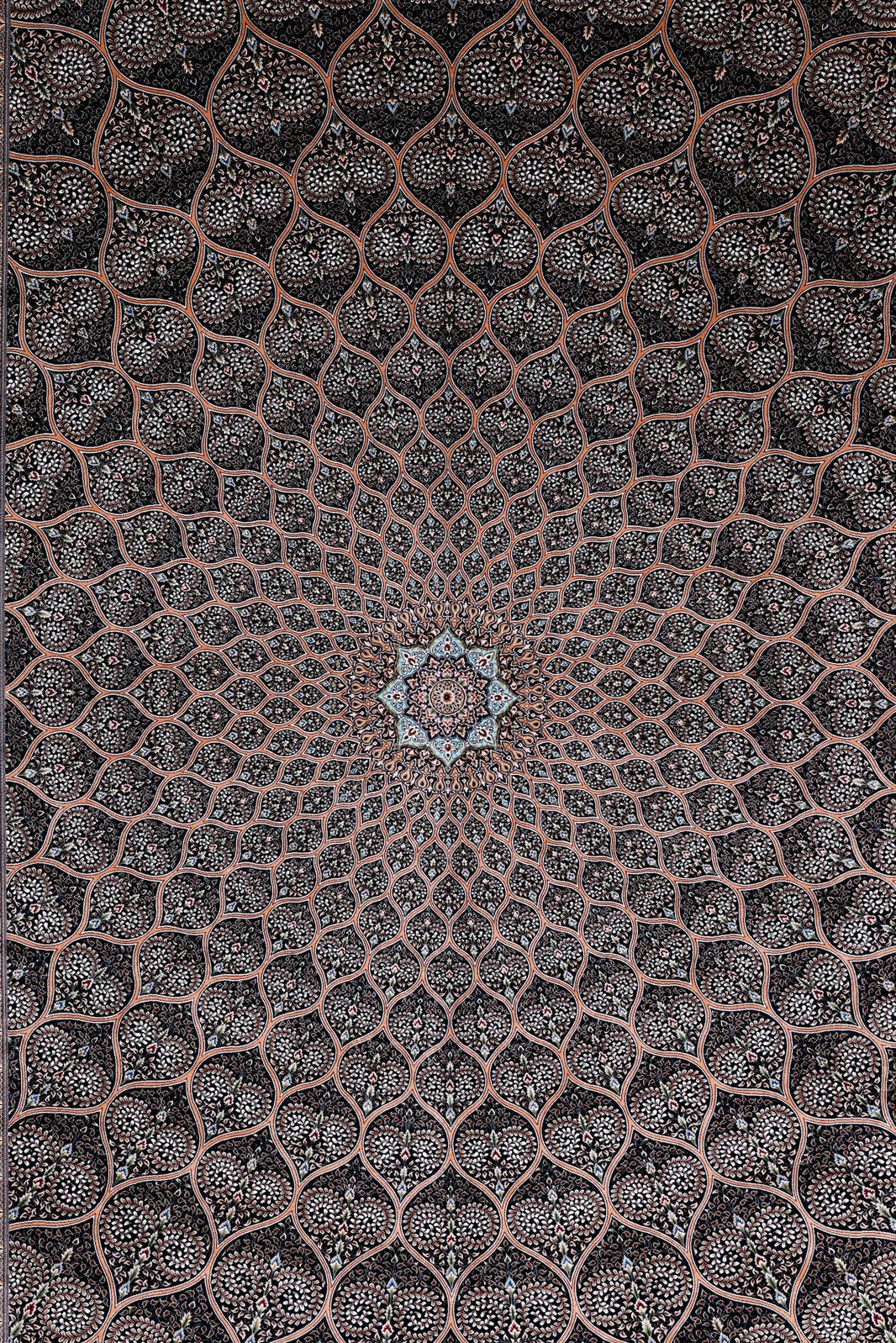
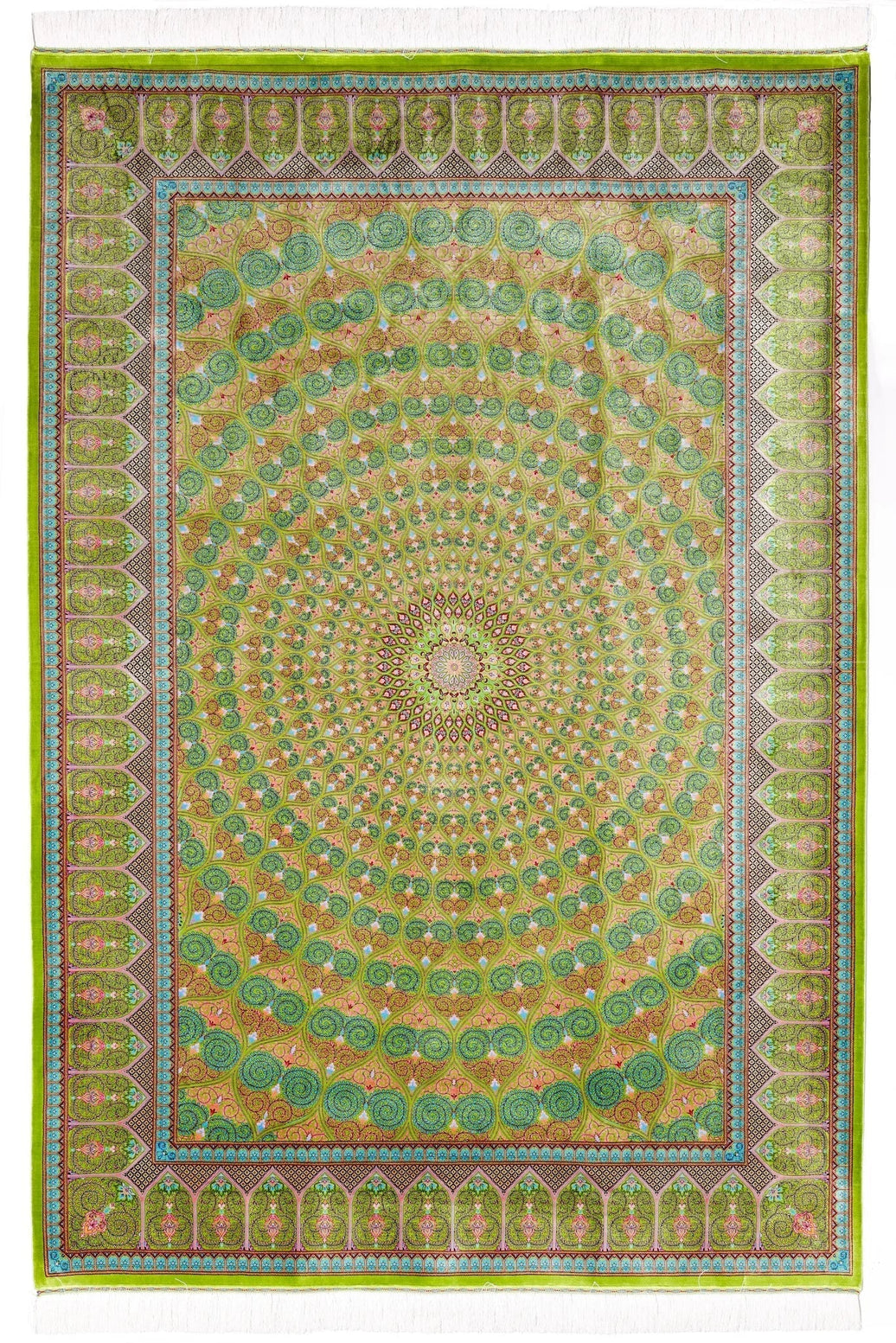
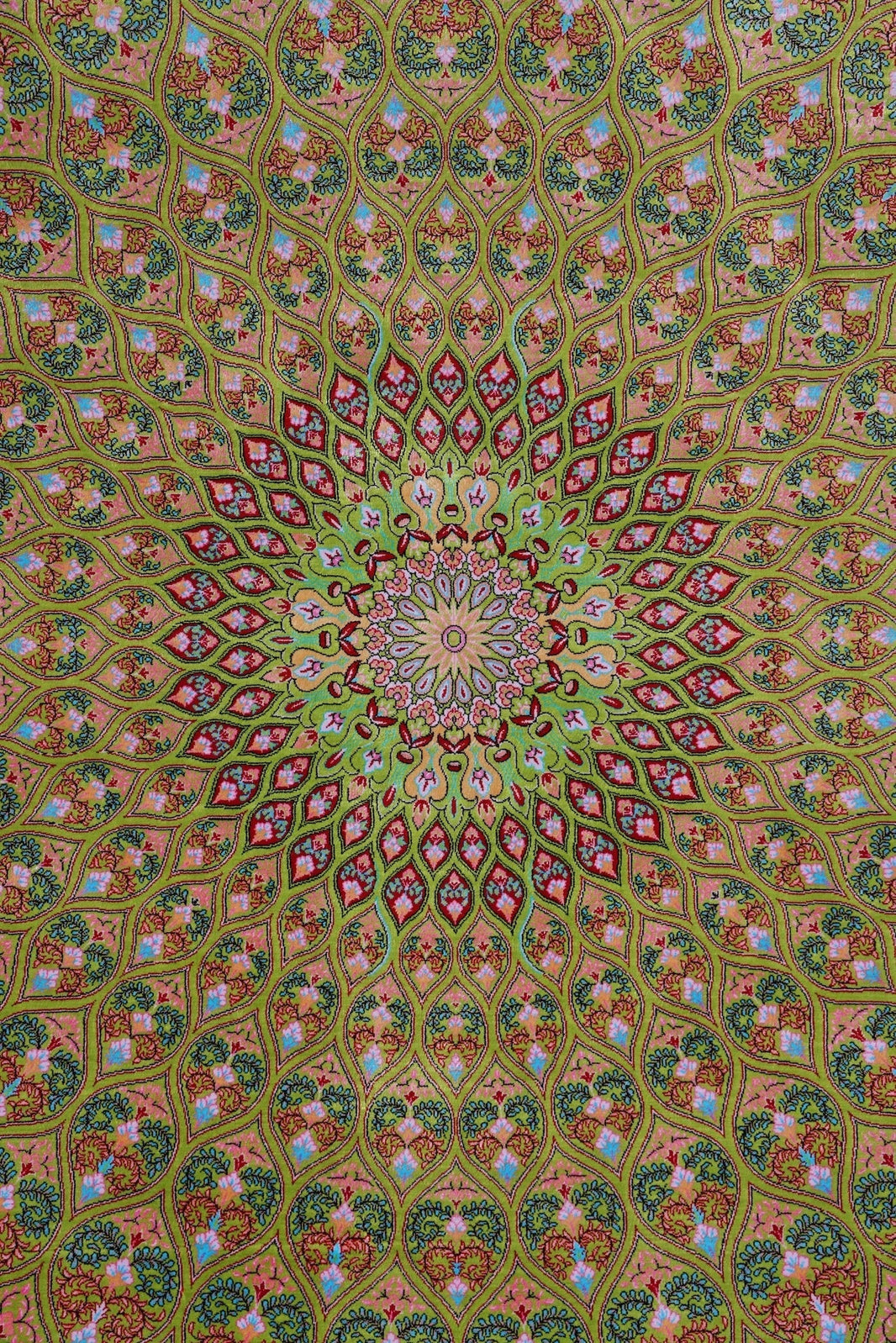
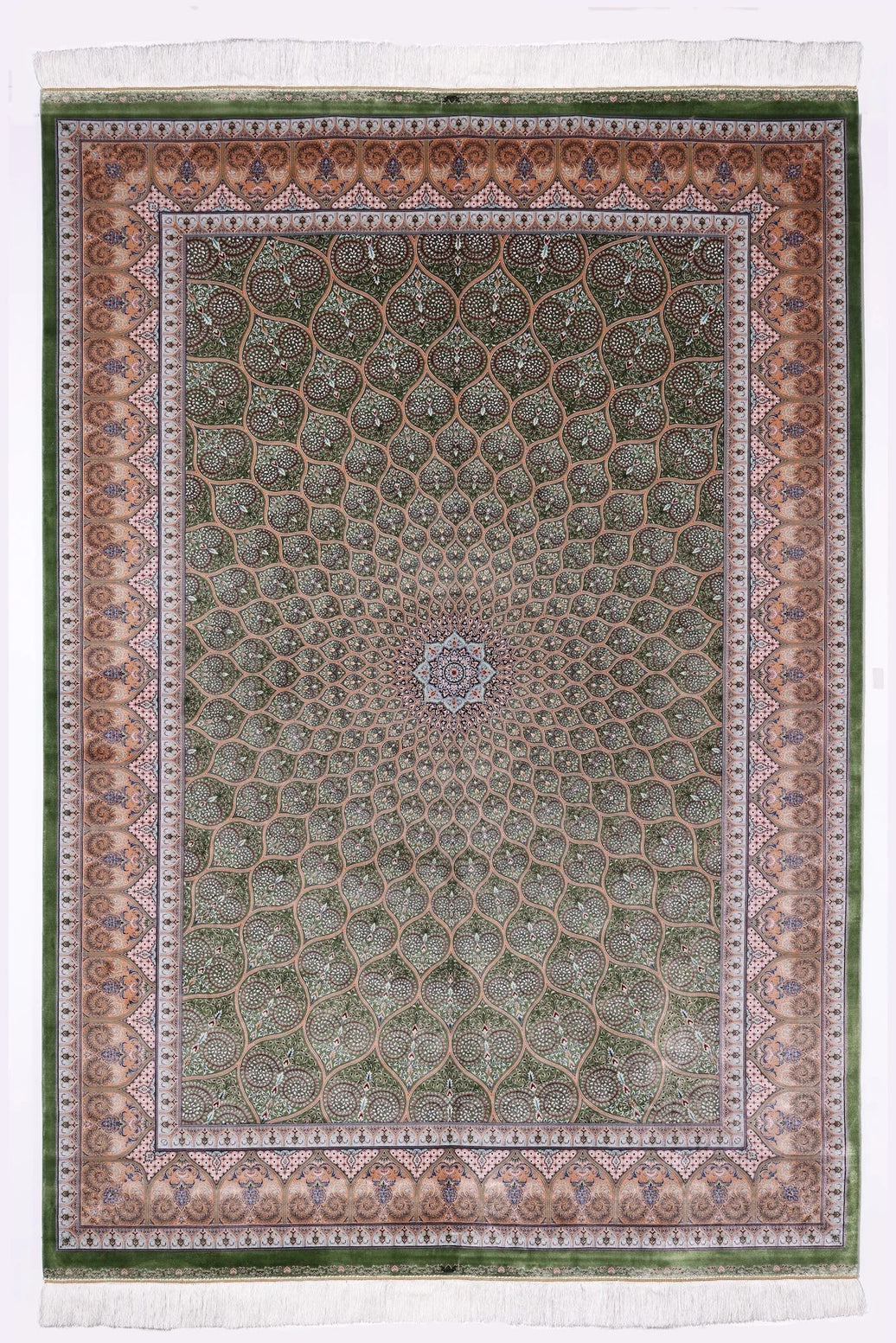
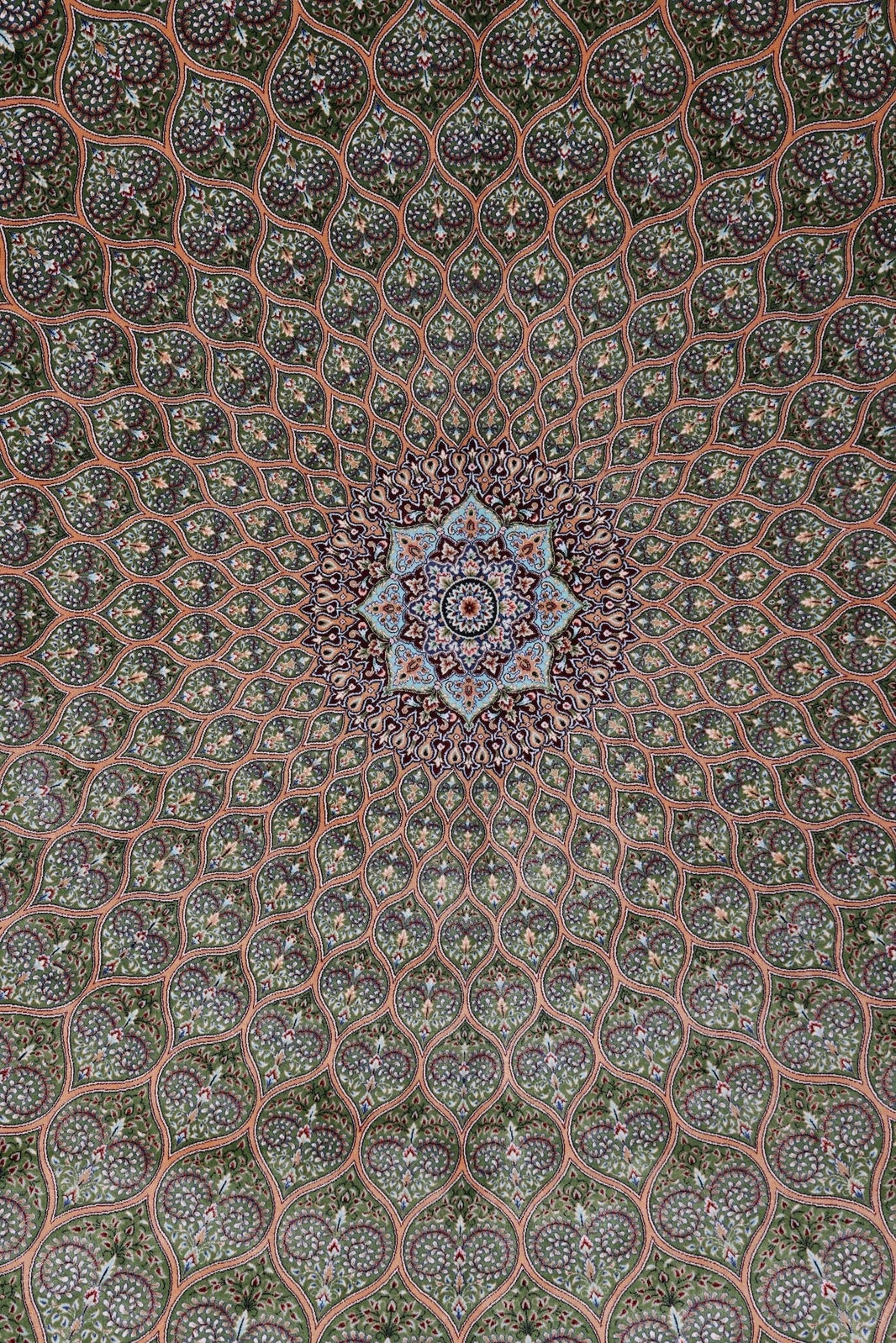
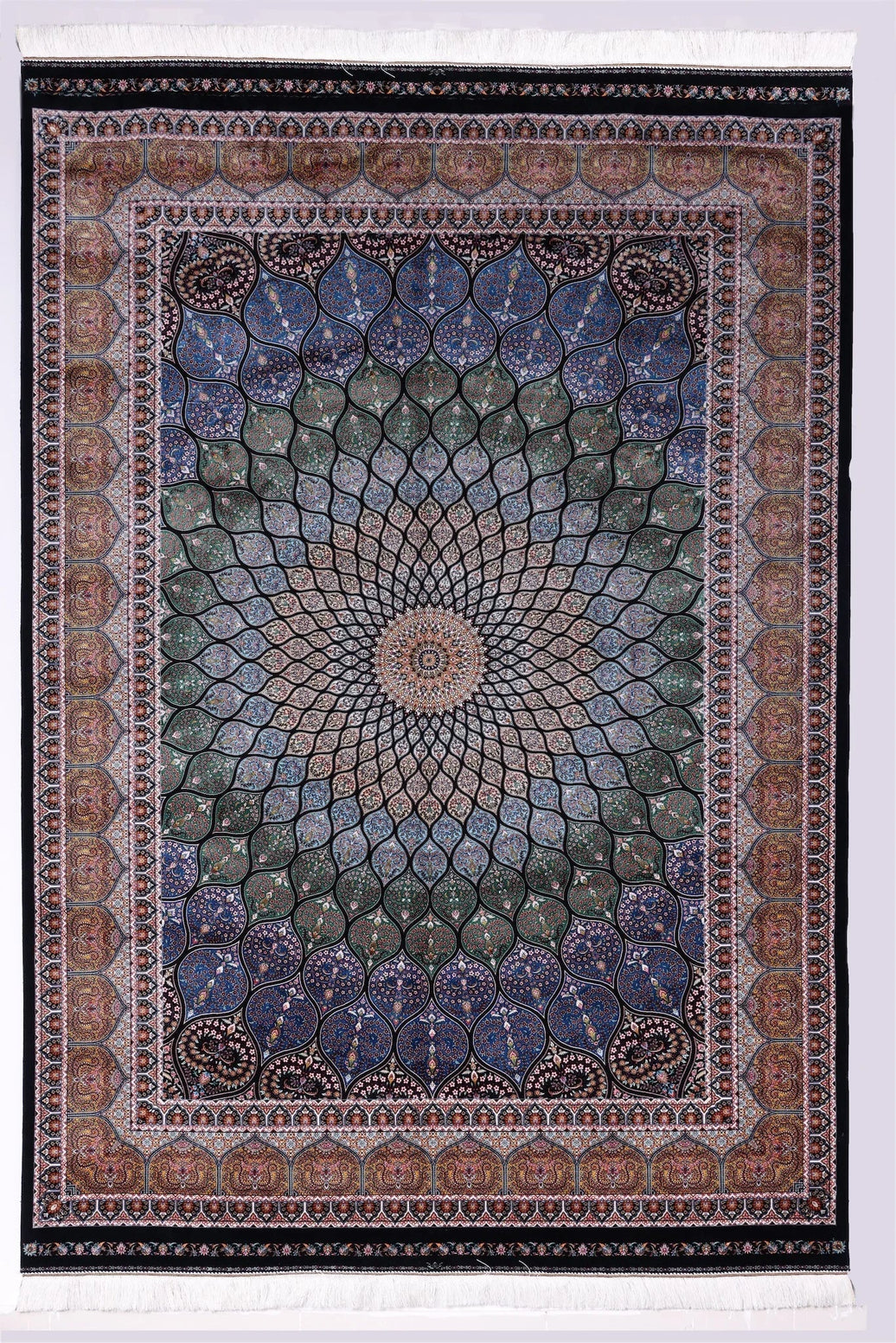
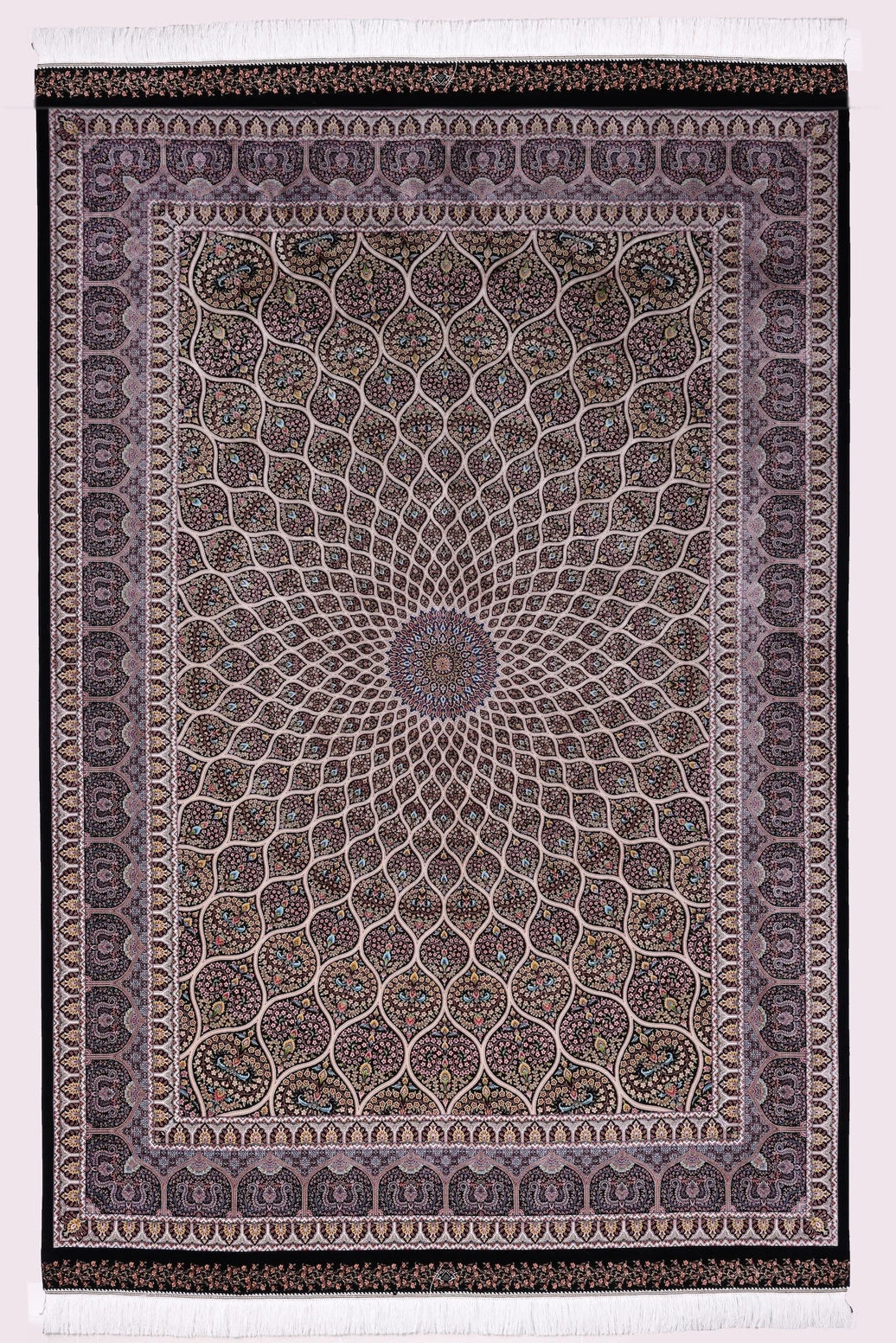
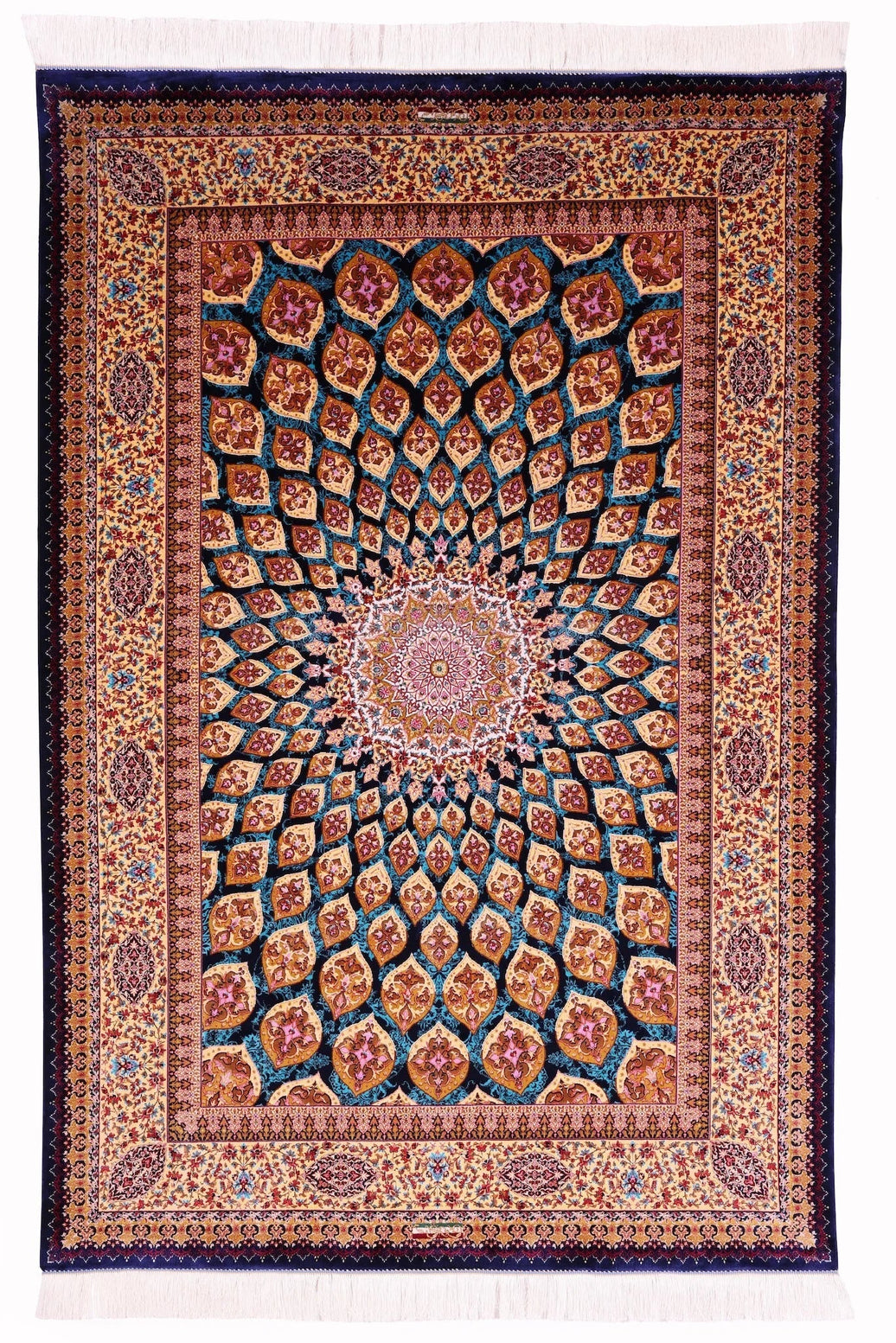
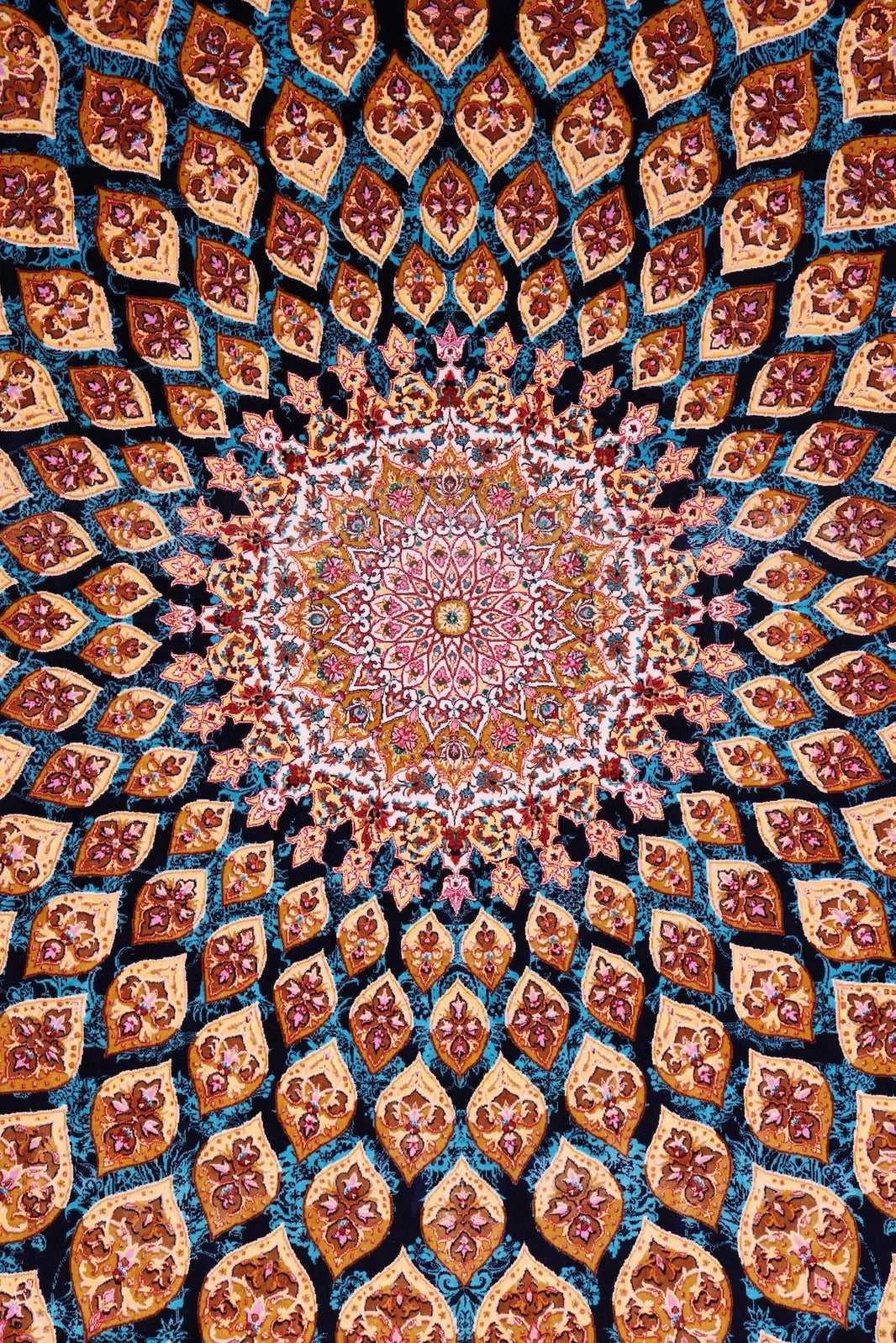
The Arghavan operates exactly this way. Its deep plum field and medallion structure carry the geometry of Safavid court design, a tradition refined over centuries in the weaving cities of Persia where precision was not ornament but argument. Placed in a room with perimeter seating and little else competing for attention, it does not ask to be paired with anything. It closes the composition rather than opening one.
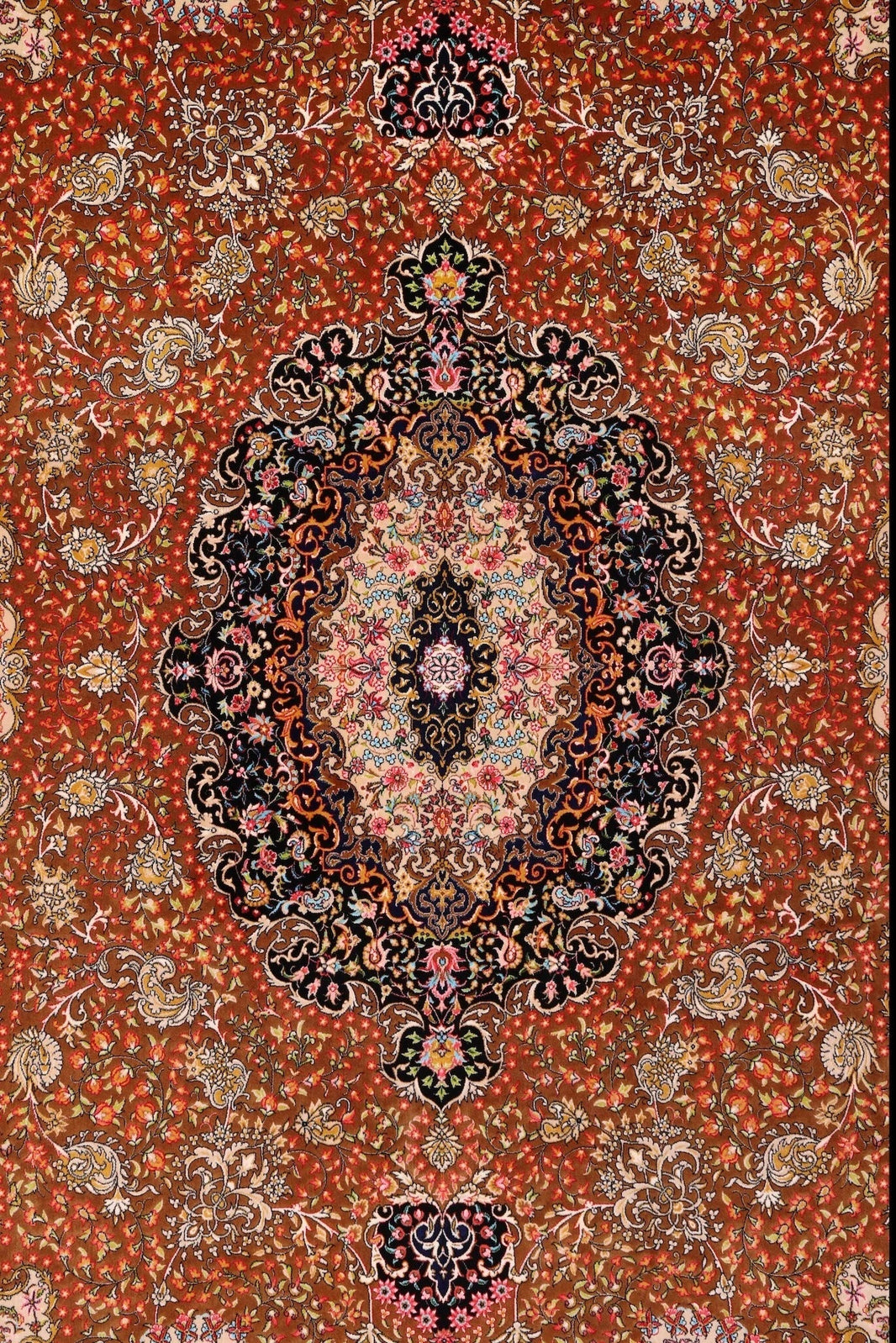
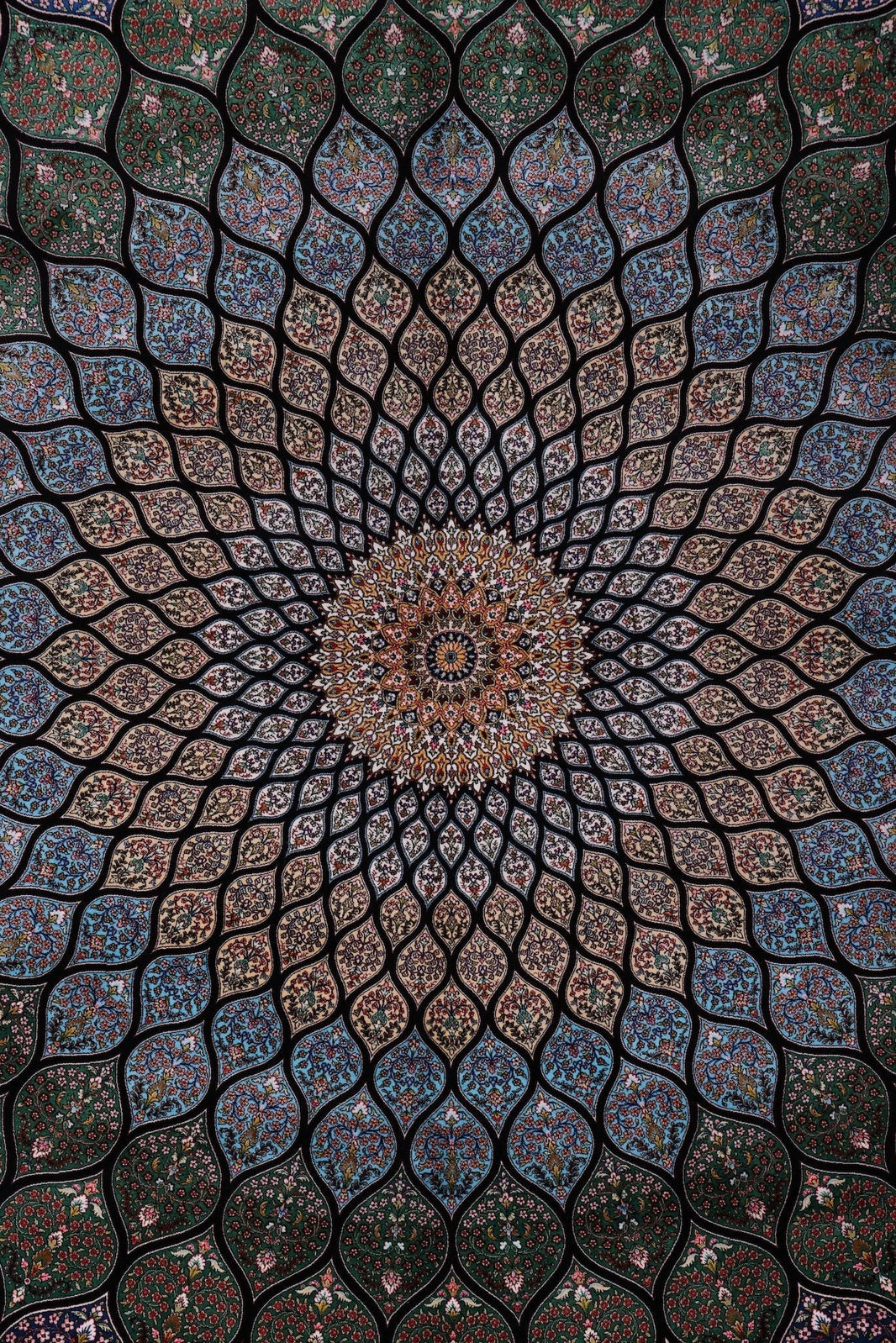
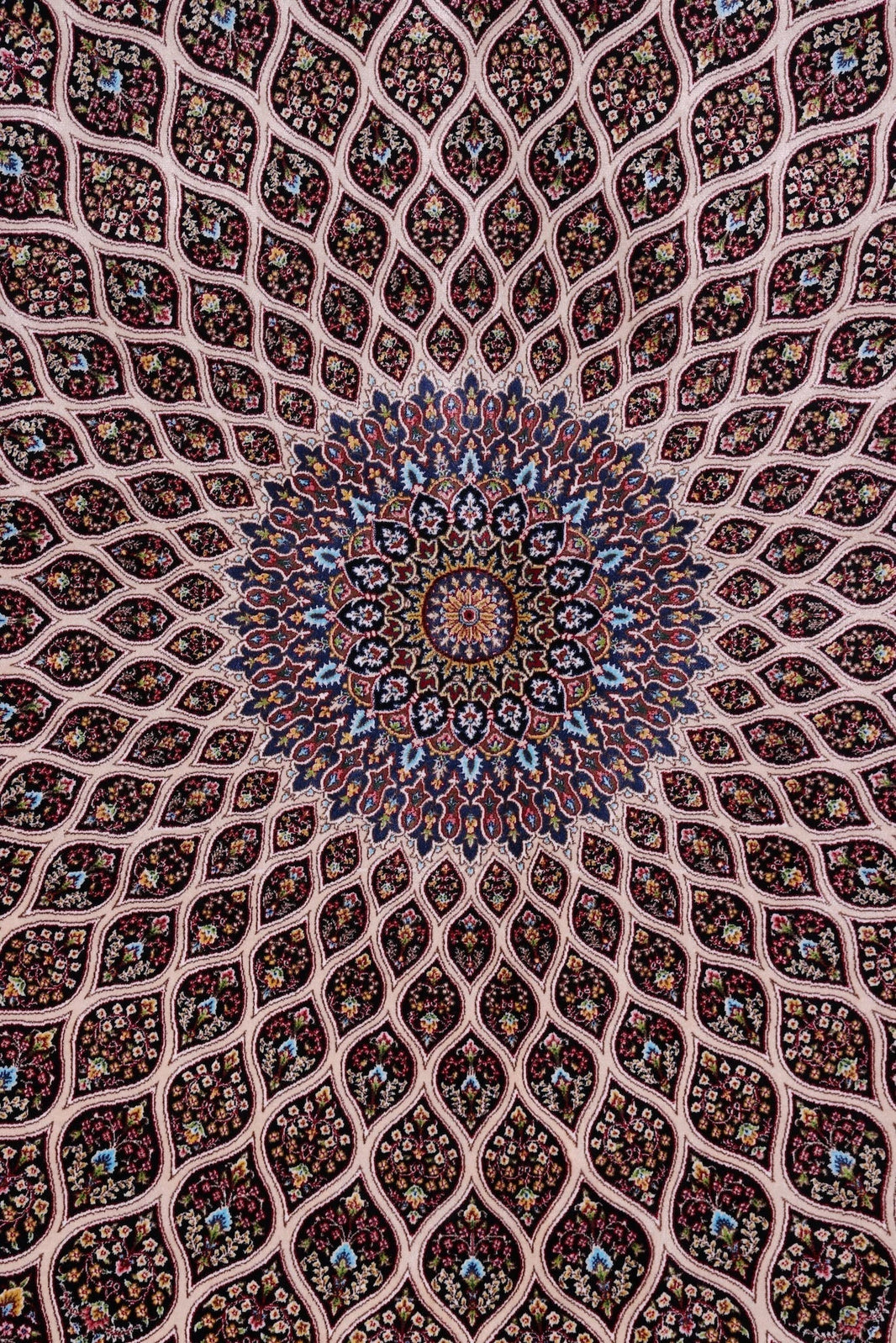
The silk-like pile reads differently in intense light than in softer climates. In the Gulf, where afternoon brightness is structural rather than ambient, the depth of a rug's pile creates its own microclimate of visual cool. Dense weave and saturated colour absorb rather than reflect. The room feels resolved because the floor is resolved.
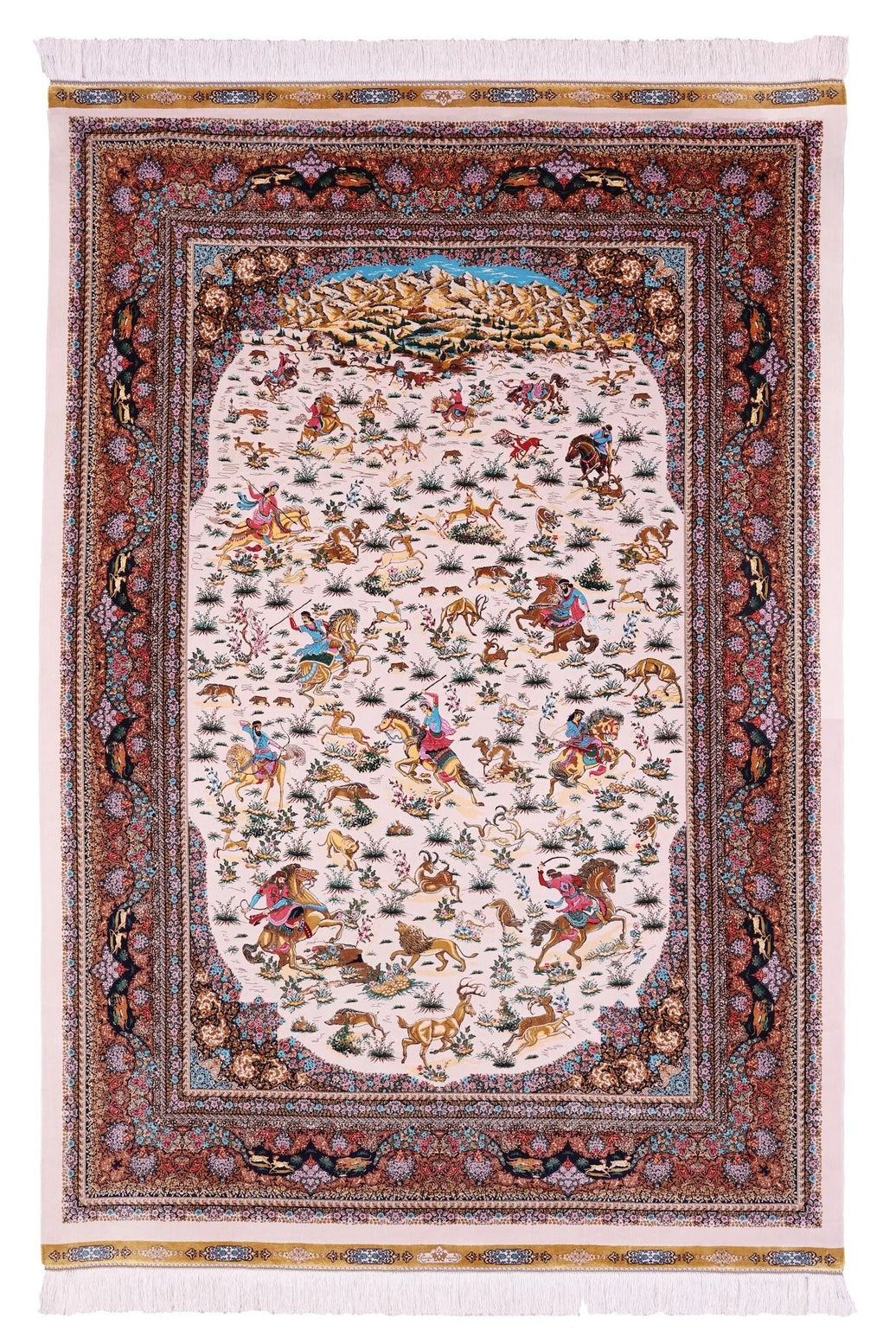
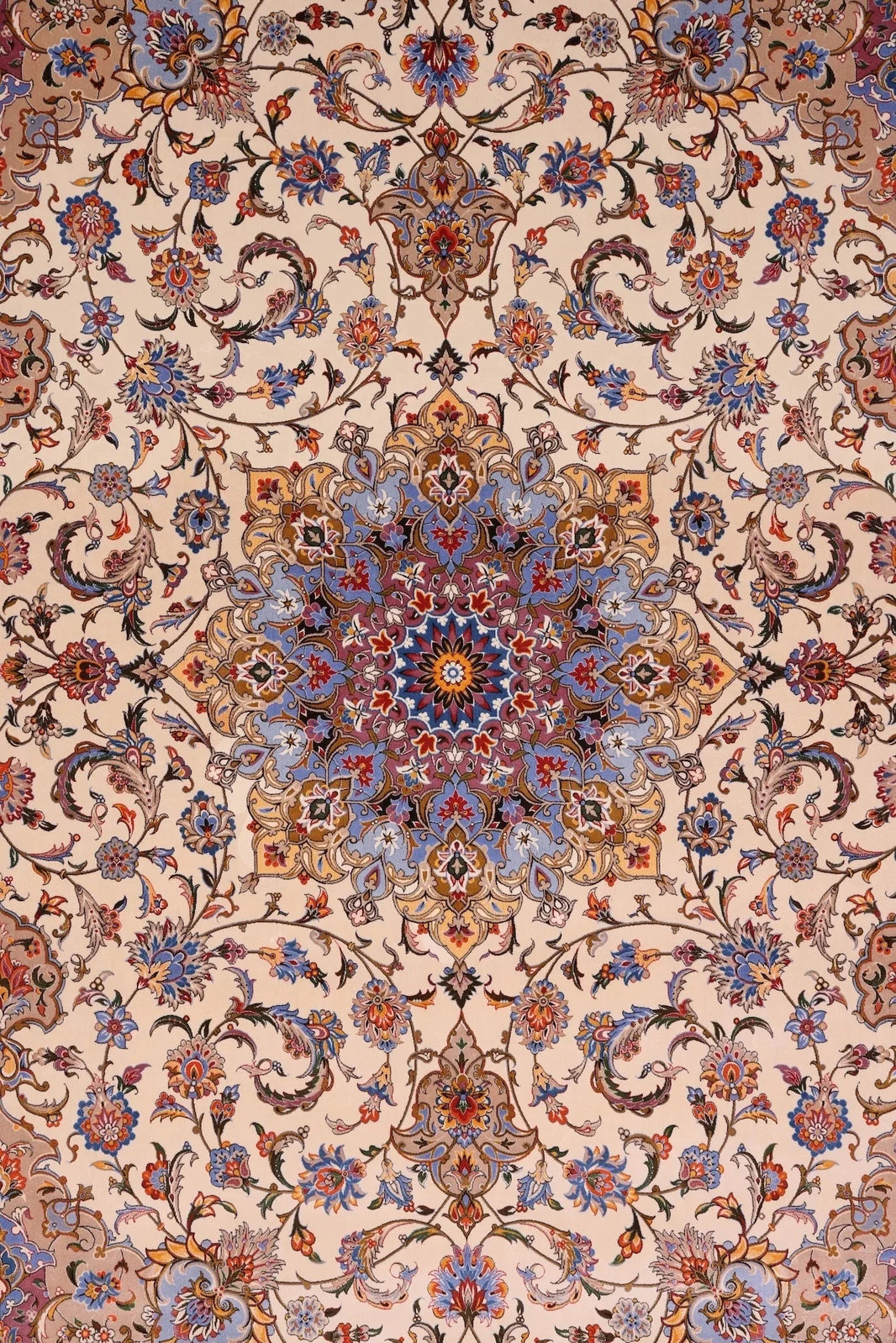
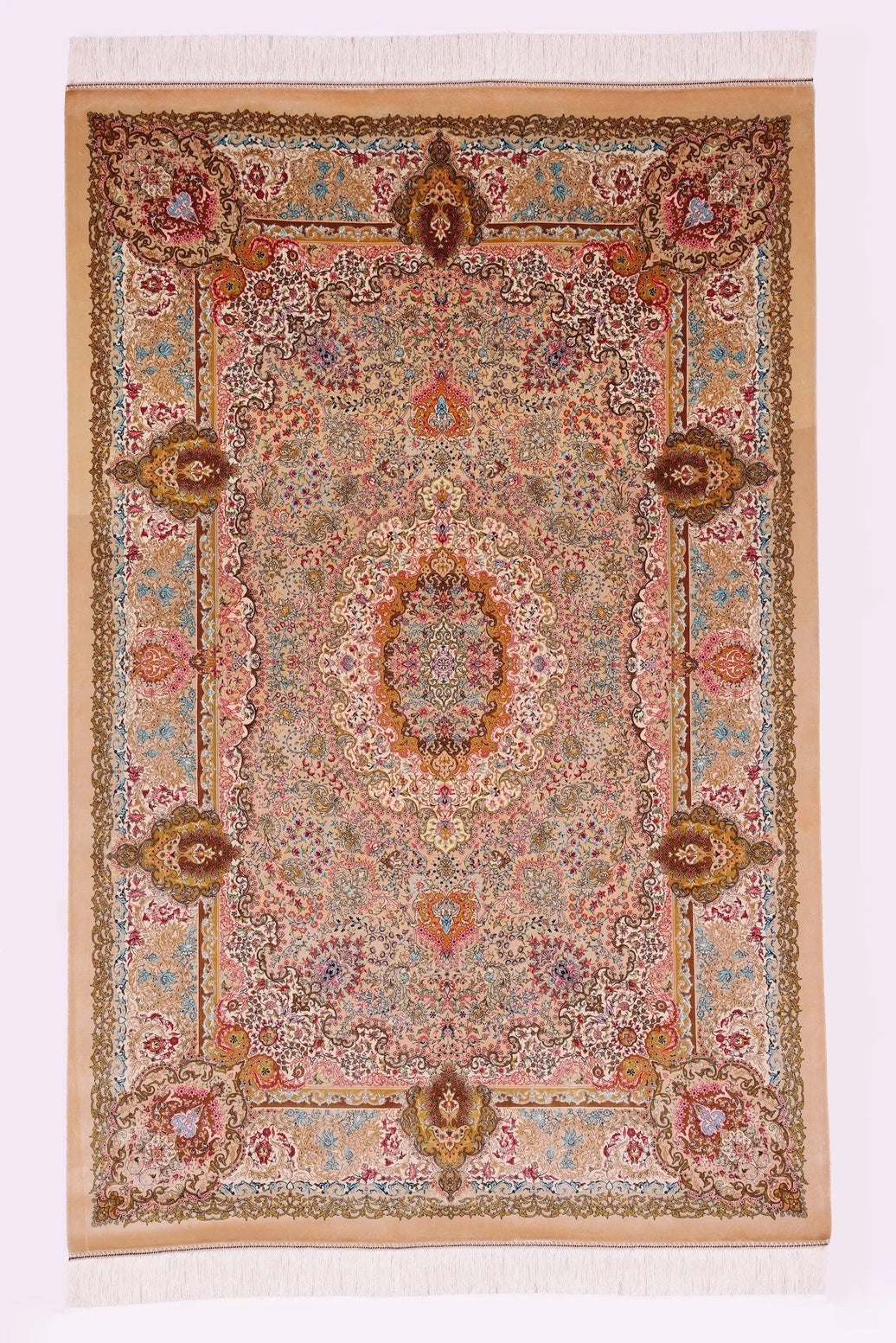
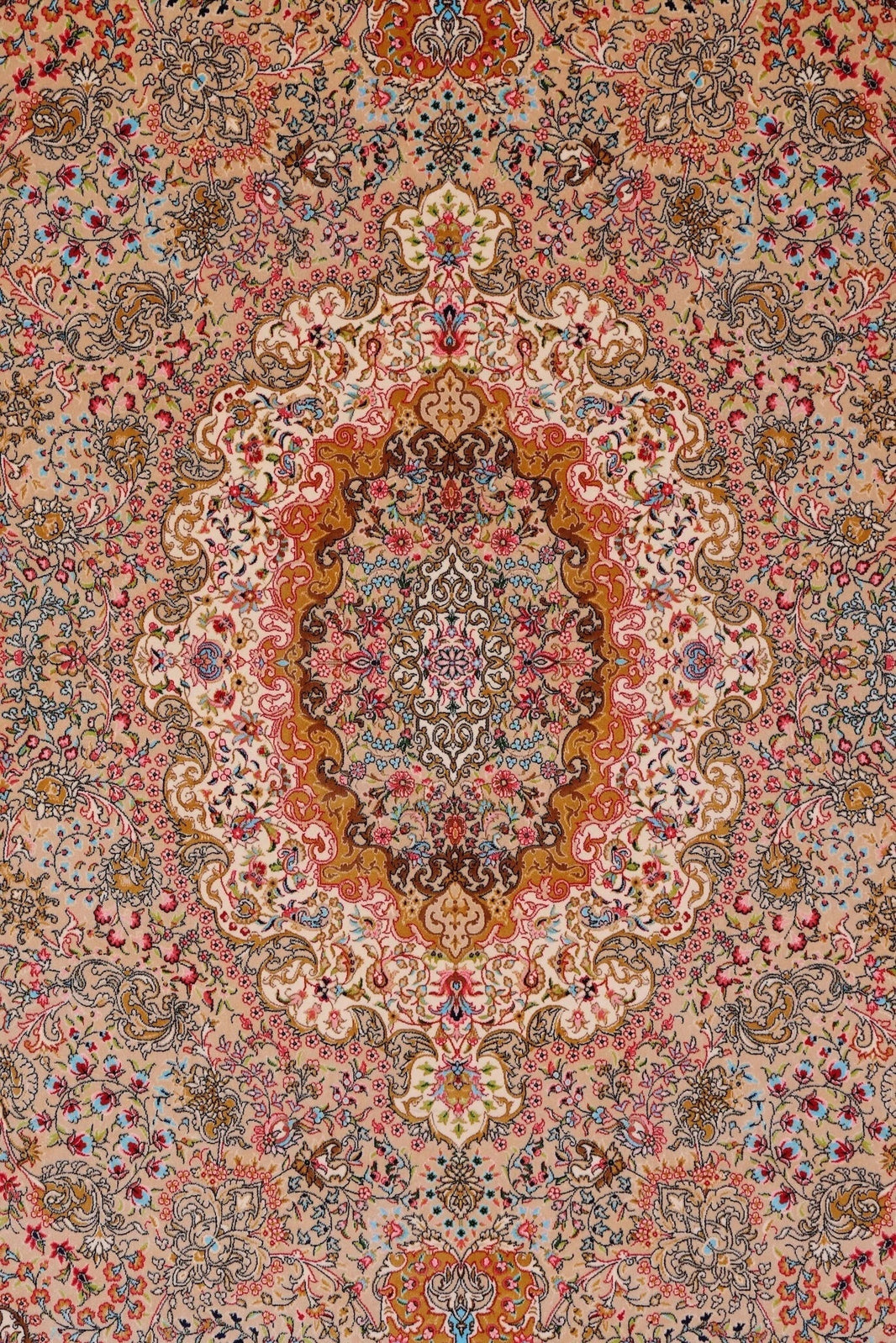
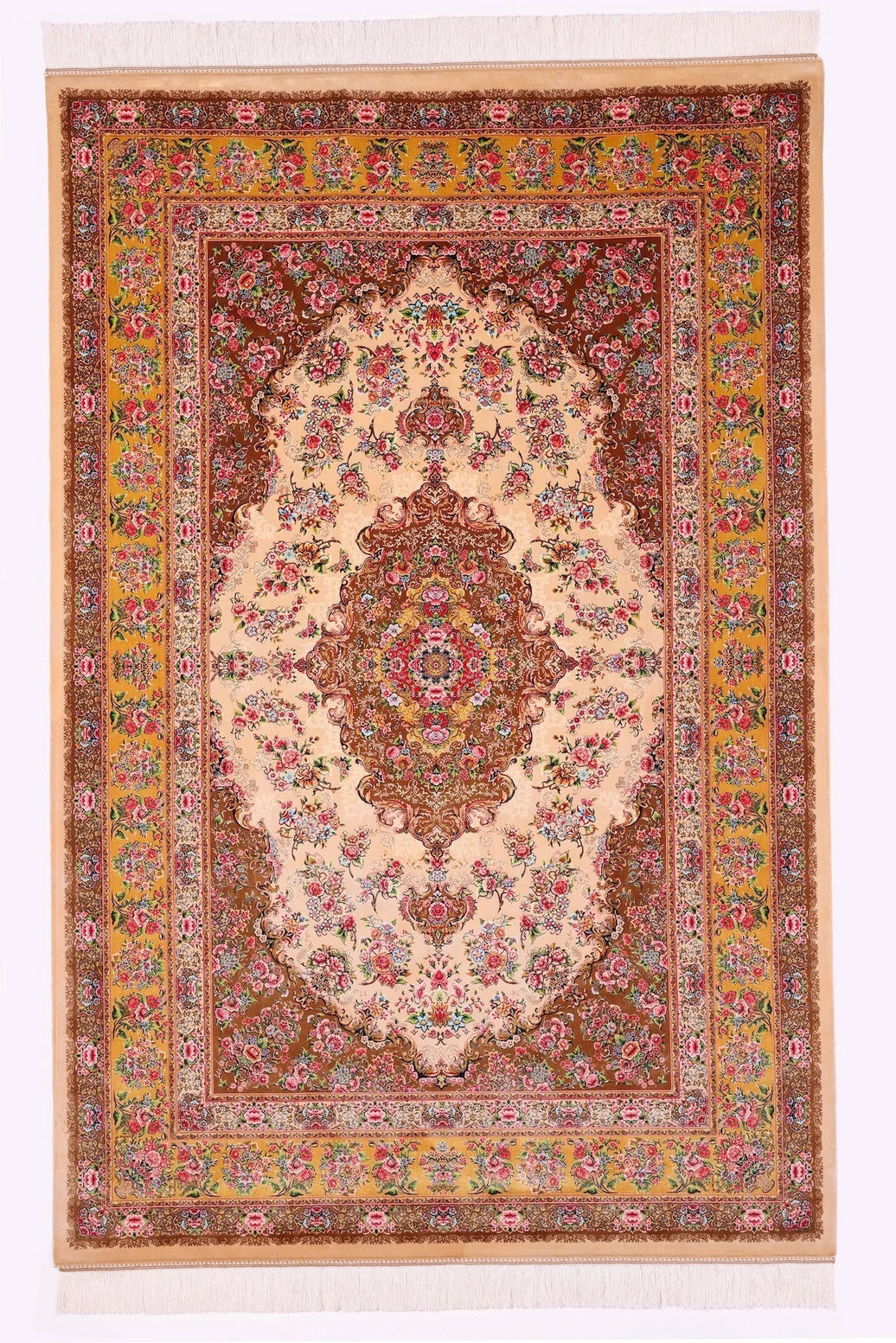
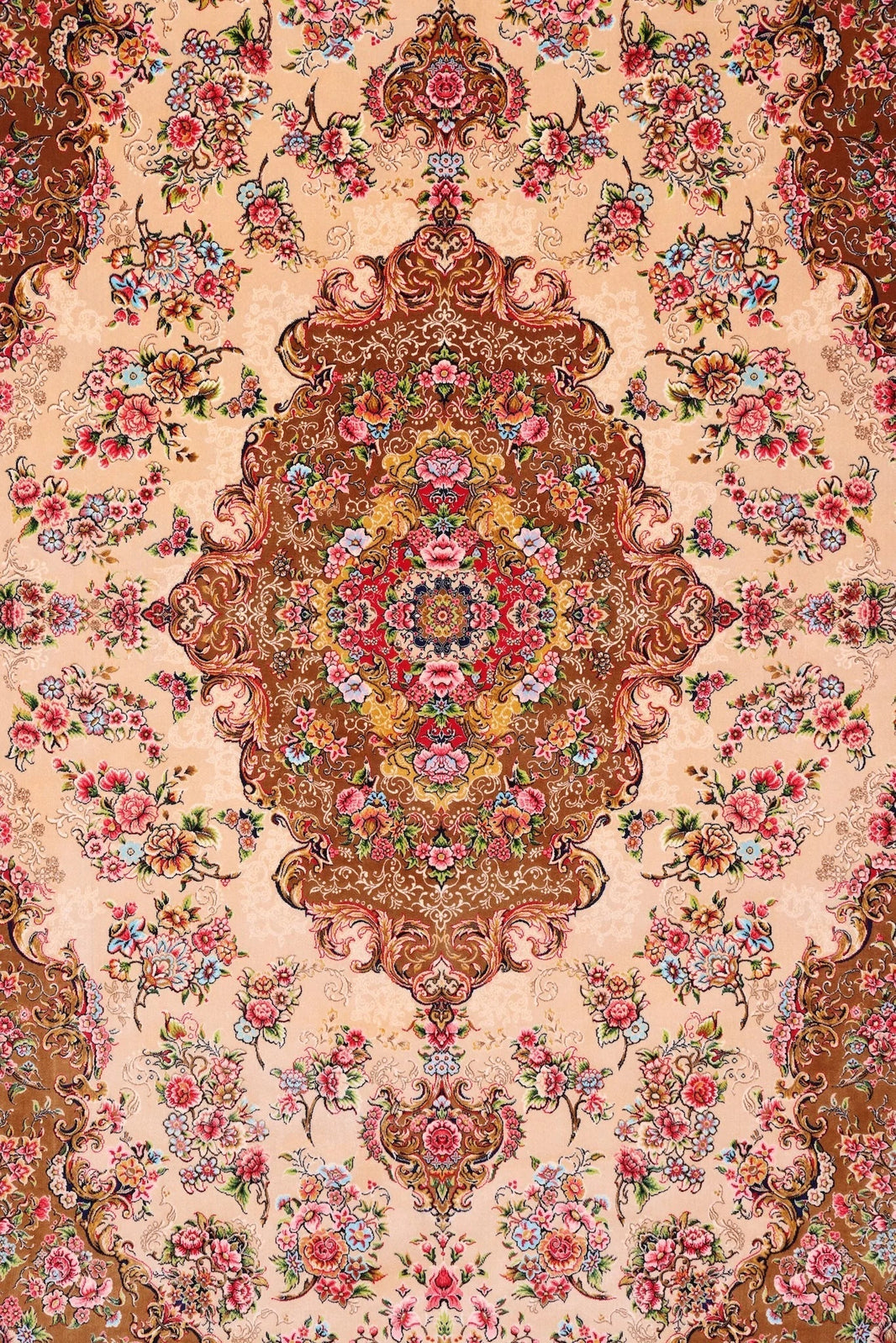
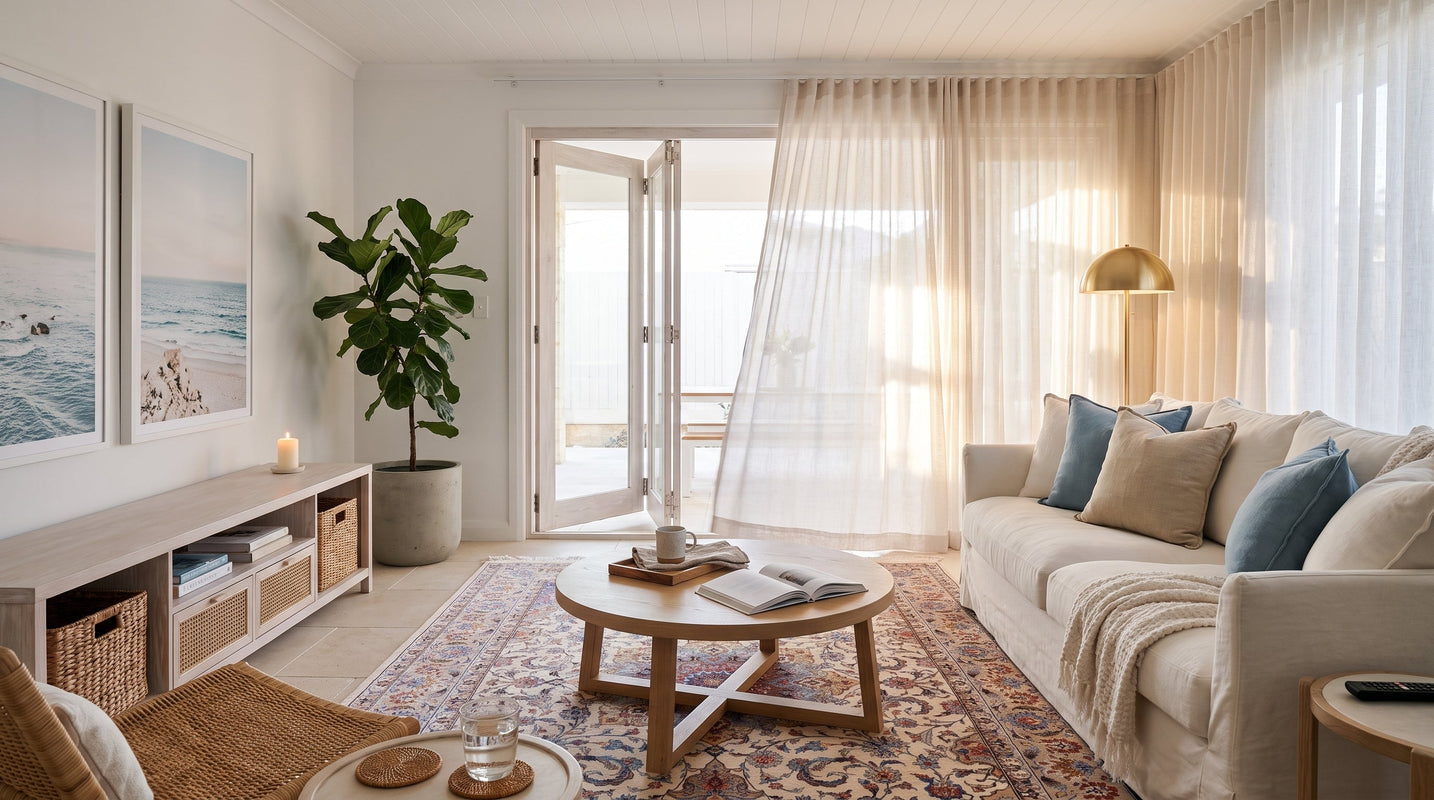
For rooms where the palette is built on restraint from the outset, the Ahoo in cream takes the opposite approach with equal conviction. Its pale field and delicate medallion hold the room's light without amplifying it. In a Gulf interior stripped to white walls, natural linen, and a single low-profile sofa, the Ahoo does not disappear. It defines the floor plane quietly, which in a spare room is a significant act.
The Same Conclusion, a Different Climate
Australian summers arrive at the same lesson through different pressure. Harsh afternoon light in Sydney or Perth does not carry the sustained intensity of a Gulf July, but it punishes rooms that try to do too much in the same way. A living room full of competing surfaces, layered textiles, and objects without clear function reads as visually hot long before the temperature warrants it. As explored in Desert Cool and Forest Calm, both climates are converging on the same biophilic restraint, arrived at through different routes but expressing the same underlying logic.
The Australian move toward warm minimalism, which has been building steadily across Melbourne and Sydney interiors over the past several years, is not a style trend borrowed from Scandinavia or repackaged from mid-century modernism. It is a response to conditions. Rooms that breathe do so because something was taken out, not added in.
The Baam in navy earns its place in this context precisely because it does not negotiate. Deep indigo, a geometric field, a clear border. Placed in a stripped-back Australian living room with timber floors and a single statement piece of furniture, it asks for nothing else. That kind of self-sufficiency is what distinguishes a rug that anchors from one that simply covers. Scale and proportion matter here, but the more fundamental question is always whether the piece has been chosen with enough conviction to stand on its own.
Subtracting Toward Clarity
The rooms most worth studying, whether in a Gulf compound or an Australian terrace, share a quality that is harder to name than to recognise. They feel finished. Not sparse, not cold, not under-furnished. Finished. Every object present has been chosen, and everything else has been removed.
Persian design, at its most disciplined, understood this principle. The garden rugs produced during the Safavid period were not busy. They were structured. The char bagh's fourfold symmetry, the medallion's gravitational centre, the border's clean conclusion: all of it was a system for achieving completeness without accumulation. As The Char Bagh and the Cities That Dreamed It traces, that design intelligence was never decorative. It was architectural.
The overcrowded room does not need more. It needs a decision made with enough confidence that everything else becomes unnecessary. The Gulf summer, ruthless and clarifying, has always known this. The rug that earns its place in a room stripped to essentials carries centuries of the same argument.
Start with the floor. Remove the rest.
Visualize this rug in your room →
Questions, answered
How do I design a UAE summer interior that actually feels cool and calm?
Strip to essentials. Every object must justify its presence, the Gulf's harsh light exposes clutter as noise. Start with perimeter seating and cleared central space, a principle the traditional majlis understood centuries ago. Choose one resolved piece, a rug with depth and saturated colour, and remove everything competing for attention. Restraint here is climate logic, not aesthetic preference.
What kind of rug works best in a minimal, spare room?
A rug that stands alone. In a room with intentional emptiness, the floor carries disproportionate visual weight. Choose a rug with geometric structure and conviction, deep indigo, rich plum, or pale cream with clear medallion, that closes the composition rather than opening another layering sequence. It should define the space quietly but completely.
Why does UAE summer interior design favour empty space?
When outdoor temperatures exceed 45 degrees for weeks, the interior becomes the entire world. Every surface becomes load-bearing. Empty space is not absence, it is where breath moves and the eye rests. Traditional Gulf architecture understood this: the cleared central floor is the room's argument for calm, not a furnishing shortage.
Can a Persian rug work in both Australian and Gulf interiors?
Yes. Both climates converge on the same restraint through different pressure. Australian harsh afternoon light and Gulf sustained heat both punish visually busy rooms. A rug chosen with conviction, geometric, structured, self-sufficient, anchors either space. The rug that earns its place carries centuries of design intelligence refined for clarity without accumulation.